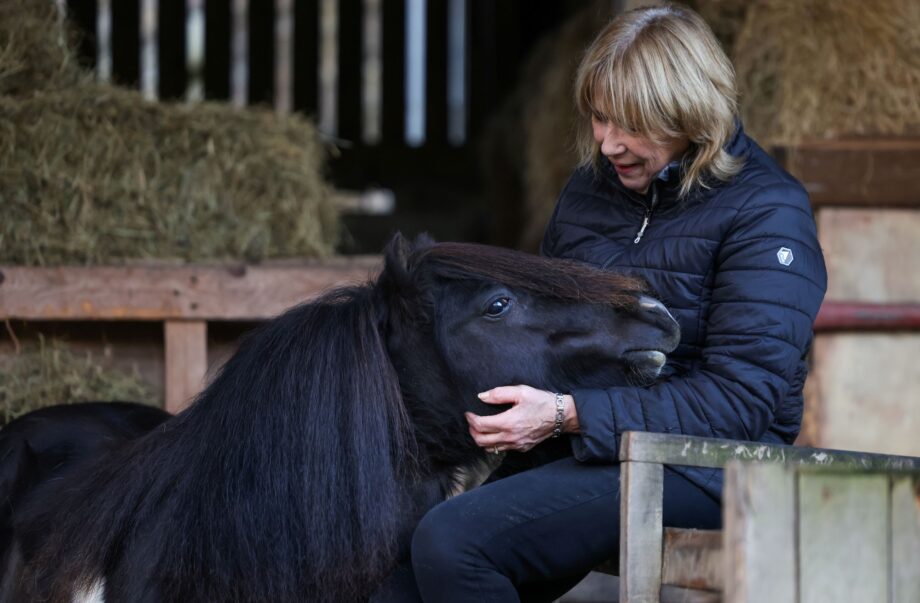
The owner of a pregnant “miracle” mare who survived life-threatening sepsis that made her temporarily blind has praised the vets who saved her – and her unborn foal.
Di Johnston faced the possibility of having to put her seven-year-old miniature Shetland Parlington Flair down as she was so ill with the condition, triggered by an abdominal infection that had spread to her eyes.
She was taken to Rainbow Equine Hospital in North Yorkshire, where the team could only give her a very low chance of survival, and keeping her unborn foal.
A spokesperson for VetPartners, which owns Rainbow, said Di’s usual vet took a sample of fluid from Flair’s abdomen after she had stopped eating and was showing signs of discomfort. This showed she was suffering from bacterial peritonitis, which led to sepsis. Sepsis, a life-threatening reaction to an infection, causes the body’s immune system to attack its own tissues and organs.
“I decided that I had to do what I could to save Flair; she’s only seven and she’s extremely special to us,” said Di. “We bred her, as well as her mother, grandmother and great-grandmother, and her line goes back six generations. She was very sick, but I knew I could trust the team at Rainbow to give her the best chance.”
Rainbow vet Lizzie Cullen, a European specialist in equine internal medicine, said Flair was seriously ill and had to be carefully unloaded when she arrived at the hospital as the infection was affecting her vision.
She added that Flair was a particularly challenging case because as well as peritonitis and sepsis, she had uveitis affecting both eyes, inflammation in her colon and high levels of fat in her bloodstream.
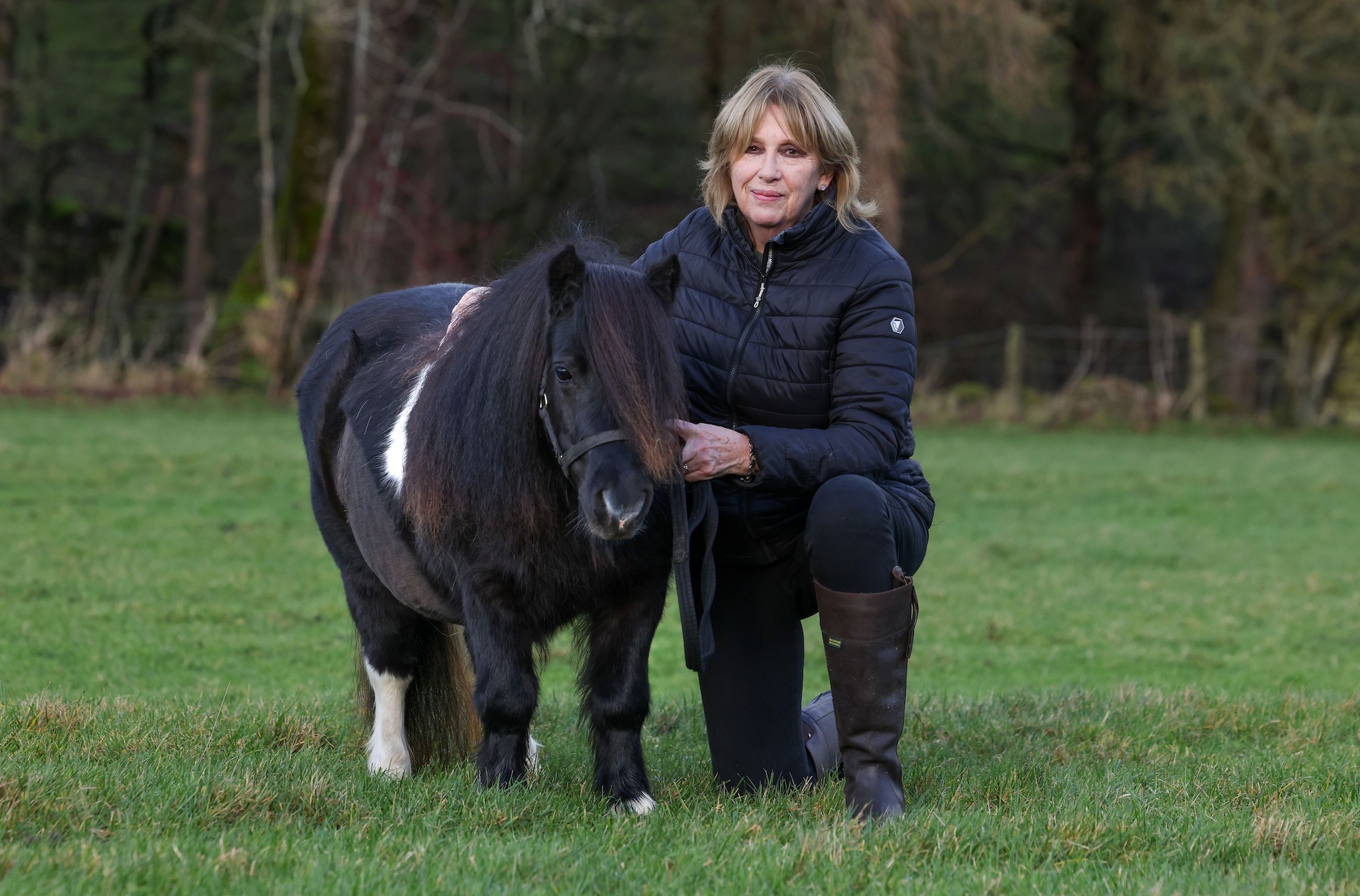
Flair is now recovering at home
“After discussions with her owner, the decision was made to treat her medically, to avoid performing surgery that the unborn foal would not survive,” the spokesperson said.
Flair was given pain relief, intravenous antibiotics, anti-inflammatories and anti-thrombotics to prevent blood clots. She was given intestinal adsorbents, substances that soak up toxins, intravenous fluids to keep her hydrated and progesterone to support the pregnancy.
Lizzie said: “When Flair arrived at Rainbow she was very ill and the odds were stacked against her.
“She had a number of complications and the fact she developed septic uveitis is very unusual. It’s something often seen in critically ill foals, but it’s rare in adult horses and meant Flair was so sick there had been a breakdown of the protective blood-eye barrier, leading to inflammation inside the eye.
“Flair was at Rainbow for 10 days and our focus was on giving her the best possible supportive care. She had vets, nurses and the yard team monitoring her every day and throughout the night, and it was a real team effort to save her. Everyone was absolutely delighted when she turned a corner and felt well enough to eat again.”
Lizzie said it is still unclear what caused Flair’s illness, and she is very lucky her condition responded to the medication.
“Some of the common causes of such severe peritonitis, such as a penetrating wound or a leak in the gastrointestinal tract, would require surgery and the foal wouldn’t have been able to survive, and such causes are also commonly fatal for the horse,” she said. “We don’t know if the foal has been affected by the medication Flair received, but when we gave her a final check before she left the hospital it had a strong heartbeat, which is positive.”
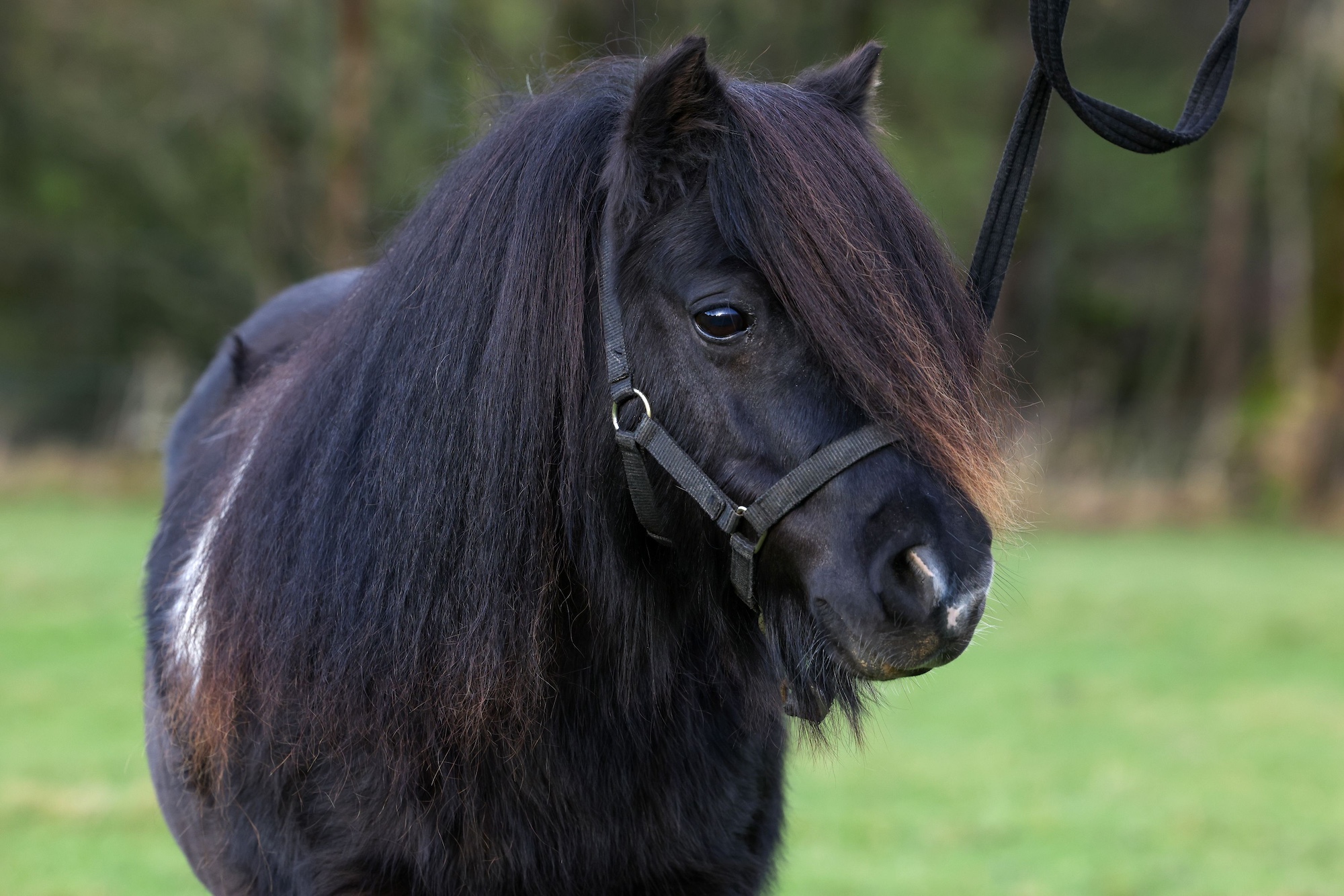
Flair is back at home, Di’s Parlington Miniature Shetland Stud.
“Everyone at Rainbow was amazing,” Di said. “It’s due to their care that she’s still here and I can’t thank them enough. Lizzie was great and explained everything clearly, so we understood what was happening and could make informed decisions, and we were sent regular updates on how she was doing.
“We breathed a huge sigh of relief when they sent through a photo of Flair eating a bowl of grass when she started feeling better. It was my mum, Barbara Johnston’s, 95 birthday, and she set up our stud in 1956, so hearing that Flair was getting better made it an extra special day.
“I’m also very grateful to our usual vet Ellie Keightley of Bainbridge Vets who saw Flair when she was first unwell and diagnosed her quickly and referred us to Rainbow.
“It’s so lovely to have Flair back home with the herd and she’s been out grazing happily and even had a buck in the field, so she seems to be feeling well. It feels like a miracle that Flair is still here, but it will be the perfect ending if she gives birth to a healthy foal next spring.”
Signs of sepsis in horses:
Any source of infection can lead to sepsis if the bacteria enter the bloodstream. Here are some signs to watch out for, although some are not specific to sepsis and can be caused by other diseases:
- Lethargy and depression
- Fever or an abnormally low temperature
- Rapid heart rate
- Rapid or laboured breathing
- Dark red or purple mucous membranes (gums)
- Cool extremities
- Weak or absent pulses
If you think your horse could be suffering from sepsis, contact your vet as an emergency.
- To stay up to date with all the breaking news from major shows throughout 2026, subscribe to the Horse & Hound website
You may also be interested in:

‘The vet said s***t, this is bad’: Gary the thoroughbred survives deadly fungal infection
‘All horses can shine’: meet the ‘miracle’ dressage cob who defied the odds to succeed after a host of veterinary issues

Rider who split liver in fall survives to win again — on 22-year-old pony who also defied the odds

‘He’s the Ribena Kid!’ Horse whose life hung in the balance with tetanus shines at national championships

Subscribe to Horse & Hound magazine today – and enjoy unlimited website access all year round