A legal case involving a dog walker who was injured by cattle is a reminder to horse owners of their responsibilities when public footpaths lead through grazing fields.
A farmer was fined £5,260 having pleaded guilty to breaching the Health and Safety at Work Act in a prosecution by the Health and Safety Executive (HSE), when a dog walker was trampled by cattle on a public footpath.
Litigation solicitor Bridget Sanger of Clark Willmott LLP told H&H that although there is no HSE guidance for horses, the sample principles will apply and the onus is on the horse owner to assess the risk of turning out equines in areas accessed by the public.
“Landowners, including farmers and horse owners, have a legal duty to ensure the safety of anyone on their land, including walkers using public rights of way,” said Ms Sanger.
Equine lawyer Hannah Bradley, partner at Aria Grace Law CIC, told H&H that if a walker is injured by a horse on a public footpath, a claim for damages could be pursued. The court will apply a three-stage test in which the claimant must prove that the horse was likely to cause damage or if the horse caused damage, it was likely to be severe; that the damage related to a characteristic not normally found in horses and that the owner knew about the characteristic that caused the injury.
H&H asked Ms Bradley whether having warning signs at fields with public footpaths could be admitting liability and she said generally speaking, it is not possible to disclaim liability for personal injury.
“A sign that says something like ‘horse may bite’ could arguably create evidence that the owner had knowledge of a certain characteristic, but also it could be used to argue that the claimant assumed the risk,” she said.
Bulls over 10 months old cannot be kept in fields with public footpaths, but there is no restriction on stallions or colts – Ms Bradley said owners should keep in mind the knowledge test the court will apply.
“It is likely that certain behaviours which might cause injury could be said to be more prevalent – and known about – in a stallion or colt,” she said.
Ms Bradley added that owners should give consideration to public liability insurance for horses, taking into account their personal circumstances.
“It is imperative to make sure that the policy has sufficient coverage for the full possible loss caused by an injury caused by a horse. Claims relating to life-changing injuries can run into millions of pounds,” she said.
British Horse Society director of access Mark Weston reminded owners that if they keep horses in fields crossed by public rights of way they have a responsibility to help ensure the route remains safe for everyone.
“It’s vitally important to understand what type of right of way runs through your land to begin with – whether this is a footpath for pedestrian access only, or a bridleway or byway, or restricted byway or bridleway, which can mean cyclists and fellow equestrians can use the route. This helps you understand who can pass through your land and what you need to do to ensure they can do so safely,” he said.
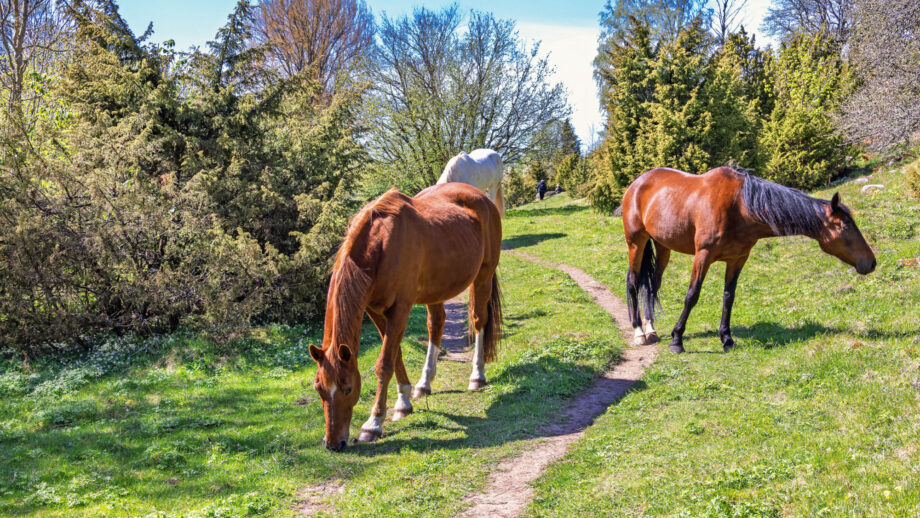
“Owners have a responsibility to make sure that horses grazing in these fields are suitable to be around members of the public and not known to behave dangerously. Extra care should be taken when deciding which horses are turned out in these fields, and we strongly advise against keeping stallions in fields where equestrians have rights of way.
“It’s also important that gates, fencing and stiles along the route are well maintained so people can pass through safely and horses cannot escape if a gate is accidentally left open.”
- To stay up to date with all the breaking news that horse owners need to know about, subscribe to the Horse & Hound website
You may also be interested in:

Cow injury legal case has implications for horse owners
Dispute over dog in divorce case highlights why including horses in pre-nups could be useful

Subscribe to Horse & Hound magazine today – and enjoy unlimited website access all year round