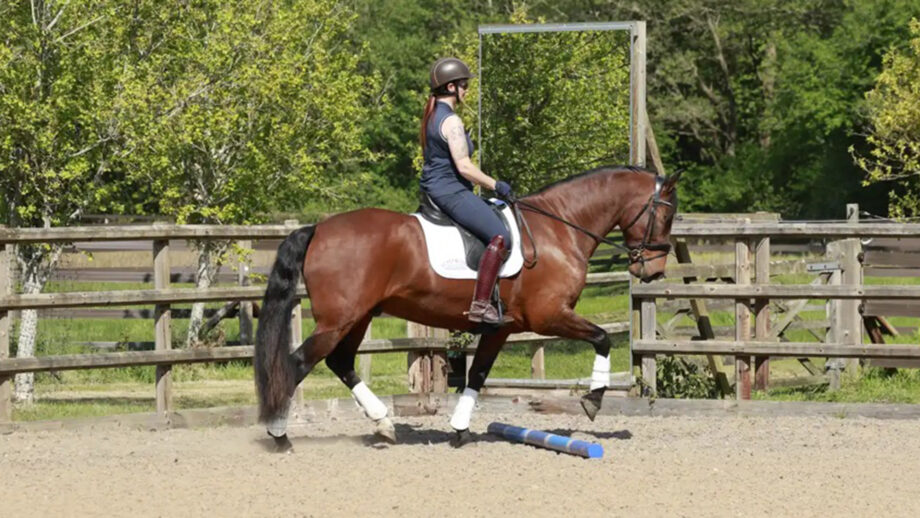
Riding accurate corners is one of the simplest ways to improve a dressage test. Just as importantly, riders must be able to show a clear difference between the corners of the arena and a 20m circle at either end.
Too often, horses drift through the corners as though riding part of a circle, losing both balance and accuracy, but this polework exercise will create a visual guide to help you clearly distinguish between riding a corner and riding a circle.
Aims
- Improve rider understanding of the accuracy points of a 20m circle
- Encourage your horse to bend correctly through the body
- Maximise the benefit of riding purposeful corners in a test
The setup
You need: two poles
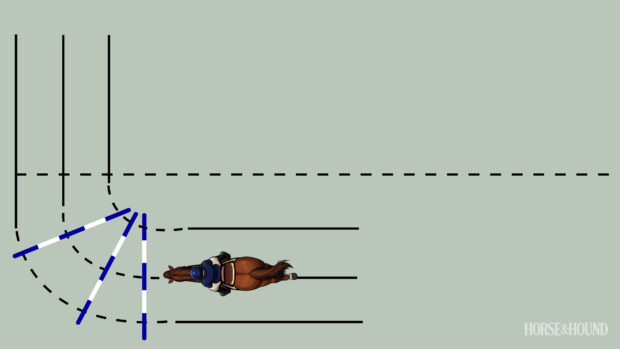
Setup: Place one pole in each corner either side of C, positioned slightly off the track and pointing diagonally towards the centre of the arena.
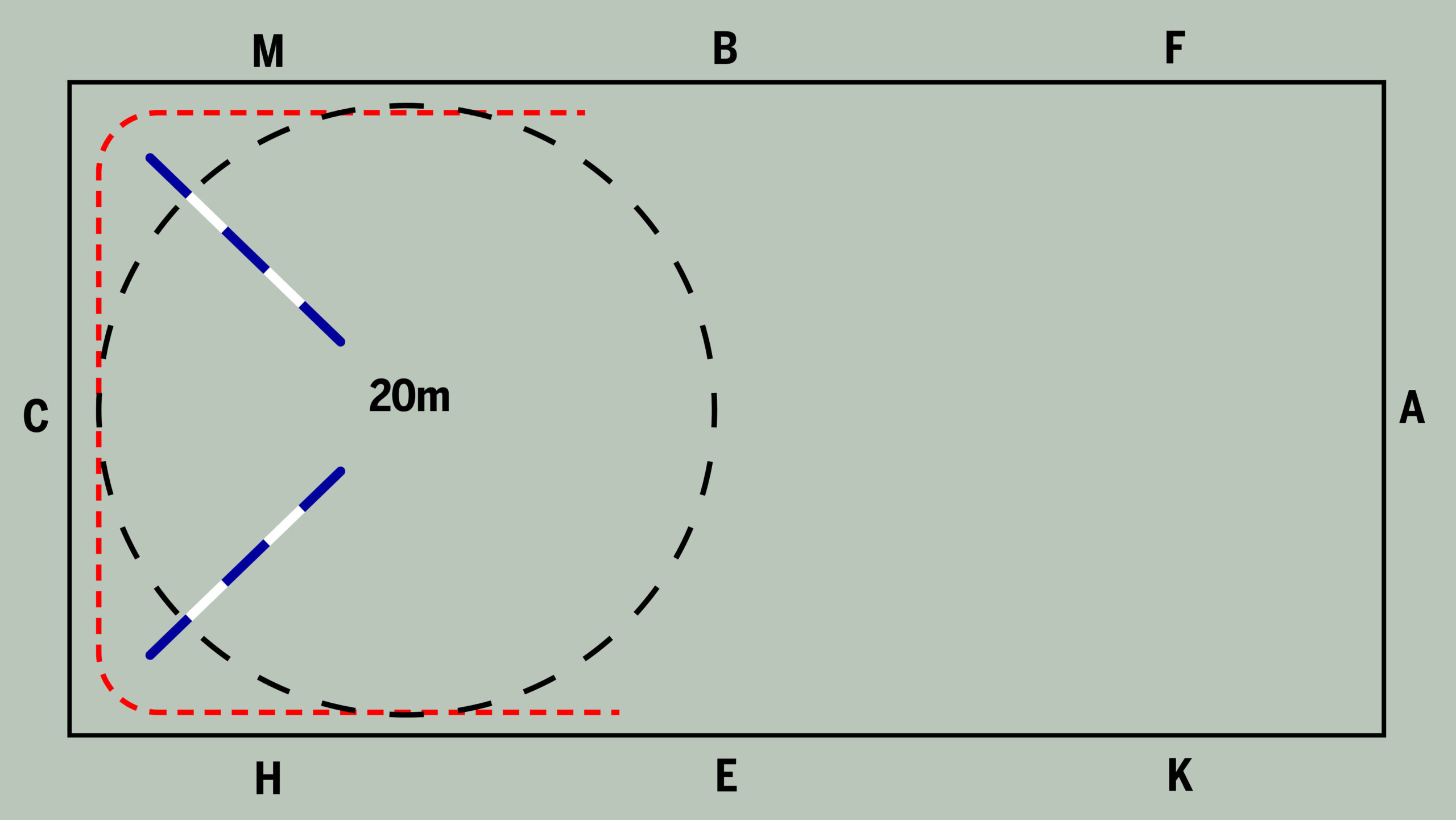
Pole placement should suit your horse’s training level – more advanced horses will be able to ride deeper corners
How to ride the exercise
1. Begin in walk. Ride around the end of first pole, then continue straight along the short side towards A or C. Focus on maintaining a straight line after the turn without allowing the horse to drift.
2. From A or C, begin a 20m circle. Your horse should leave the track to cross the first pole, touch the long side at the correct point, cross the centre line in the middle of the circle, touch the opposite long side evenly, then cross the second pole before returning to A or C.
3. After completing the circle, continue straight along the short side and ride around the end of the pole through the corner. The key is to clearly show the difference between the circle and the corner. For the corner, think about pushing the horse into the turn from your inside leg while controlling the line and balance from the outside aids. Once the exercise feels established in walk, repeat it in trot and then progress to canter.
Pitfalls to avoid
1. Lack of bend on the circle
Many horses fall through the shoulder or overbend in the neck without truly bending through the body. Prepare the circle before leaving the track by asking for a slight flexion at the poll to the inside. Then focus on riding a genuinely curved line, turning every stride rather than making one large steering movement. Keep the inside leg at the girth to encourage bend and maintain the horse’s balance.
2. Rushing
Some horses anticipate the poles and quicken towards them. Maintain a consistent tempo by paying attention to your seat and rhythm in each pace. Use well-timed half-halts to rebalance the horse and encourage them to sit more on the hindquarters rather than running forwards.
3. Breaking from canter
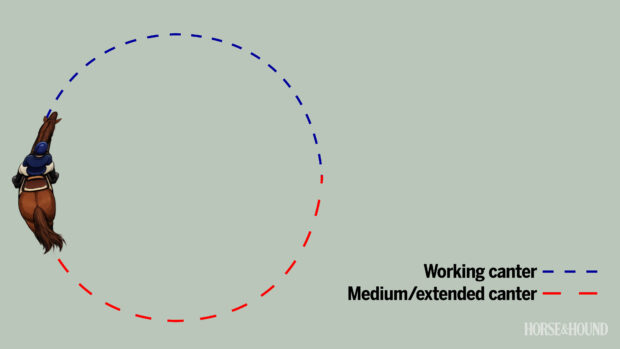
In canter, horses often lose balance in the corners and drop back to trot. Think of riding a shorter, more collected canter through the corner, keeping the strides active and bouncy. On the circle, allow the canter to travel slightly more forwards before rebalancing again for the next corner. Pole placement should always suit the horse’s training level. A prelim horse will not be expected to ride as deep or as collected a corner as a horse working at elementary or above.
Want more ideas? Check out our full daily training inspiration library
- Enjoyed reading this? For more expert training advice from top riders and coaches, subscribe to the Horse & Hound website
You might also enjoy:

Learn how to ride perfect corners with this simple exercise
Does your horse tend to fall in or out on turns meaning you don't end up on the line you
Refine your centre lines using just two poles and two cones
How to ride accurate circles for higher marks – with advice from self-confessed ‘circles geek’ Becky Moody

Top judge reveals how to boost your dressage scores – in ways you may never have considered
Subscribe to Horse & Hound magazine today – and enjoy unlimited website access all year round