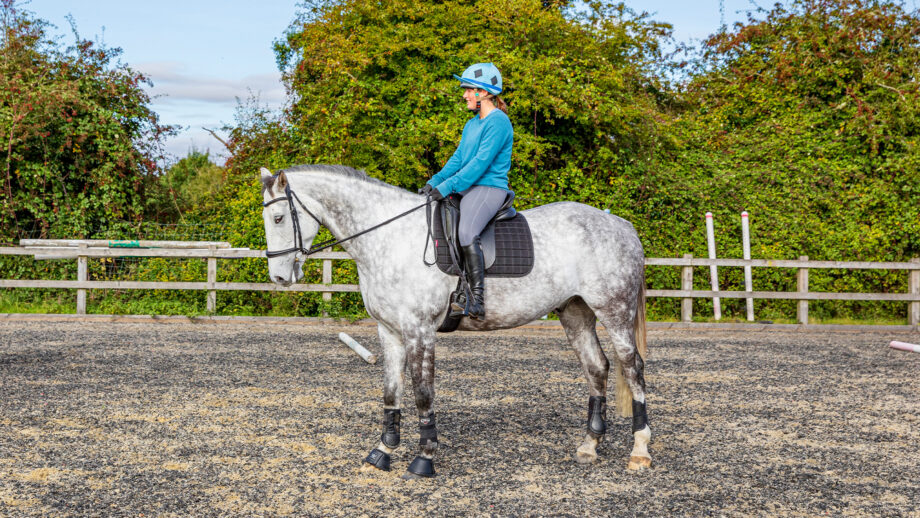
Improving your horse’s way of going doesn’t require a perfect arena or a strenuous workout – this halting exercise is an excellent example. You can make significant gains using simple transitions without ever moving faster than a walk. You can ride this flatwork exercise out hacking, in the field or in an arena.
Aims
- to improve your horse’s responsiveness
- hone your horse’s walk-halt transitions, so you can perform them on demand with light aids
- for the horse to understand that go means go, and stop means stop
Setup
No setup needed: You can practise this exercise in an arena, field or out hacking.
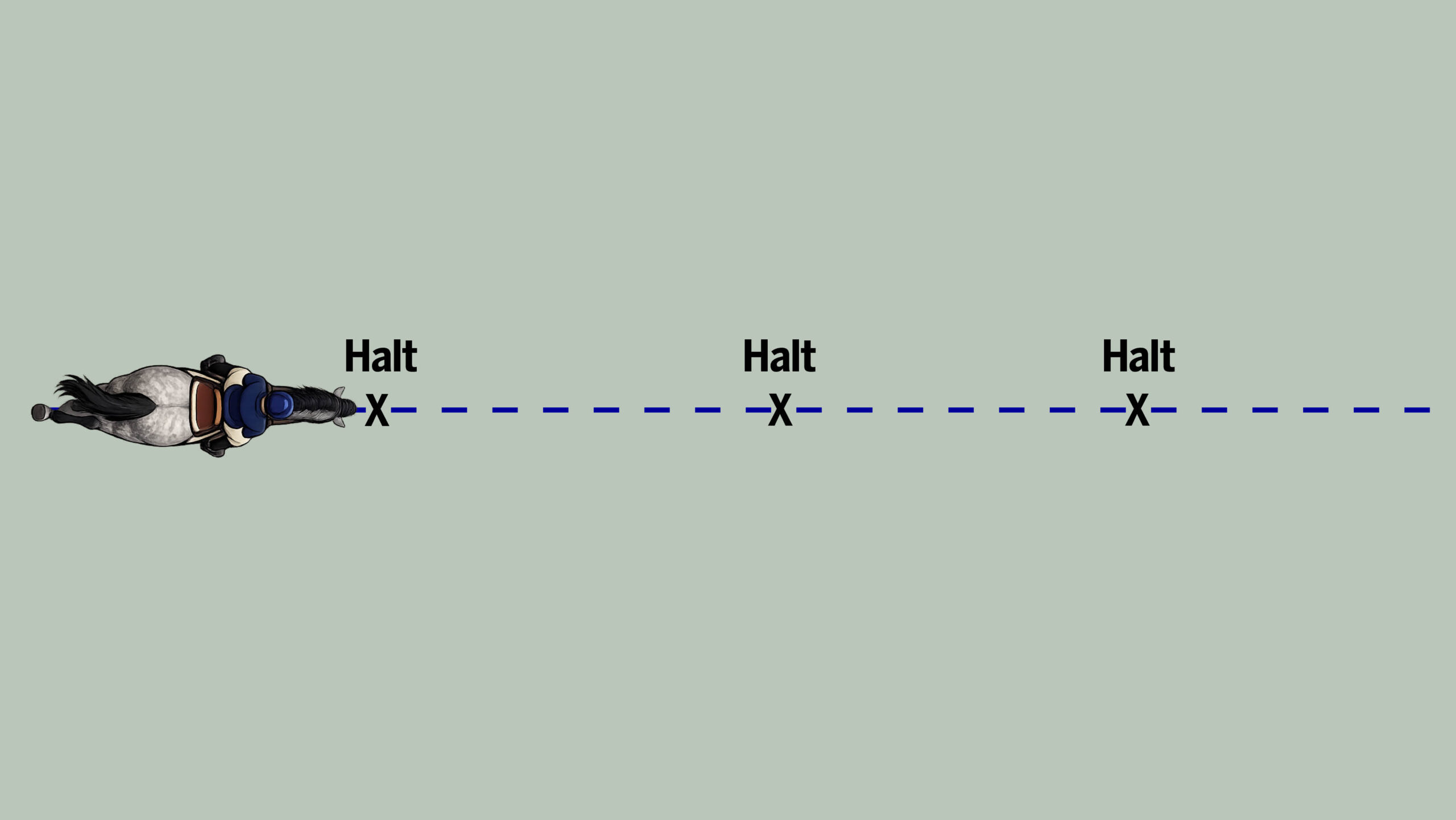
How to ride this exercise
- Once warmed up, establish an active walk. Choose a marker, whether it’s a letter in the school or a bush on a hack, where you will aim to halt.
- Sit up tall and reduce the amount your core and hips are following your horse’s back, then gently close your fingers around the rein to ask for halt.
- If the horse doesn’t stop within two strides, check your aids. Were they clear? Repeat and be black and white. As soon as your horse halts, release the rein and praise, with the voice or a stroke on the neck. How long it took to achieve the halt will give you feedback on how early you need to prepare next time, but your horse should become more responsive as you practise.
- Take a moment to assess the halt. Is it balanced? Is your horse square? Does your horse stand still when you release the reins?
- Ask your horse to move off in walk by giving a light leg aid. If he doesn’t react positively from first touch, immediately reapply the leg clearly. If he still doesn’t react, don’t nag, but give a stronger leg aid – it doesn’t matter if the horse trots off as long as he goes forwards. More refined seat and back aids can come later, but the horse can only interpret a limited amount of information, so start with the basics.
- Practise this exercise at regular intervals until your horse is responsive while remaining soft and in a good balance through both the upward and downward transitions. You can do it after four strides or after 40 – what matters is that the horse is listening and responding to your aids.
Tips and troubleshooting
1. It’s a conversation
Give your horse a chance to understand what you’re asking him and try to make it enjoyable. When he tries, show him you appreciate his effort.
2. Don’t fidget with your hand and leg
Many riders never stop twittering with their hand and leg, so the horse learns to ignore them as he doesn’t understand what’s being asked. Ride with clear intent. Ask for a reaction and then leave your horse alone as a reward. Be decisive and have clear boundaries.
3. Let your horse find his balance
If your horse needs to put his head up initially to find his balance, let him. To start with, it’s about the legs: do they go, do they whoa?
Want more ideas? Check out our full daily training inspiration library
- Enjoyed reading this? For more expert training advice from top riders and coaches, subscribe to the Horse & Hound website
You might also enjoy:
Sharpen your transitions using this simple exercise on a circle
Subscribe to Horse & Hound magazine today – and enjoy unlimited website access all year round