We all know that horses are incredible animals but none more so than when it comes to adapting to life with limited eyesight. Partially sighted, one-eyed and even blind horses have proved time and again how adaptable they can be, with many competing successfully in the top tier of the sports of racing, showjumping, eventing and dressage, despite limited eyesight or vision.
So whether a horse has been born with a limiting eye condition, or has lost an eye through injury or common eye disease, how do you train or retrain a partially sighted horse? How can you help them in their daily lives after such a life-changing event? We asked those with experience for their expert opinions.
How to help partially sighted horses: a case study
South Yorkshire-based showjumper Jessica Hayes, who runs Belton Sport Horses, is currently producing the “very special” four-year-old Humoso, AKA Bazil, who was born with a condition that meant he’s only had vision in one eye from birth.
His breeder Dawn Slater approached Jess last year, asking if she’d take on her beloved youngster, who’d been assessed by vets and she’d been told that he should be able to live a very normal life, despite having no vision in his right eye.
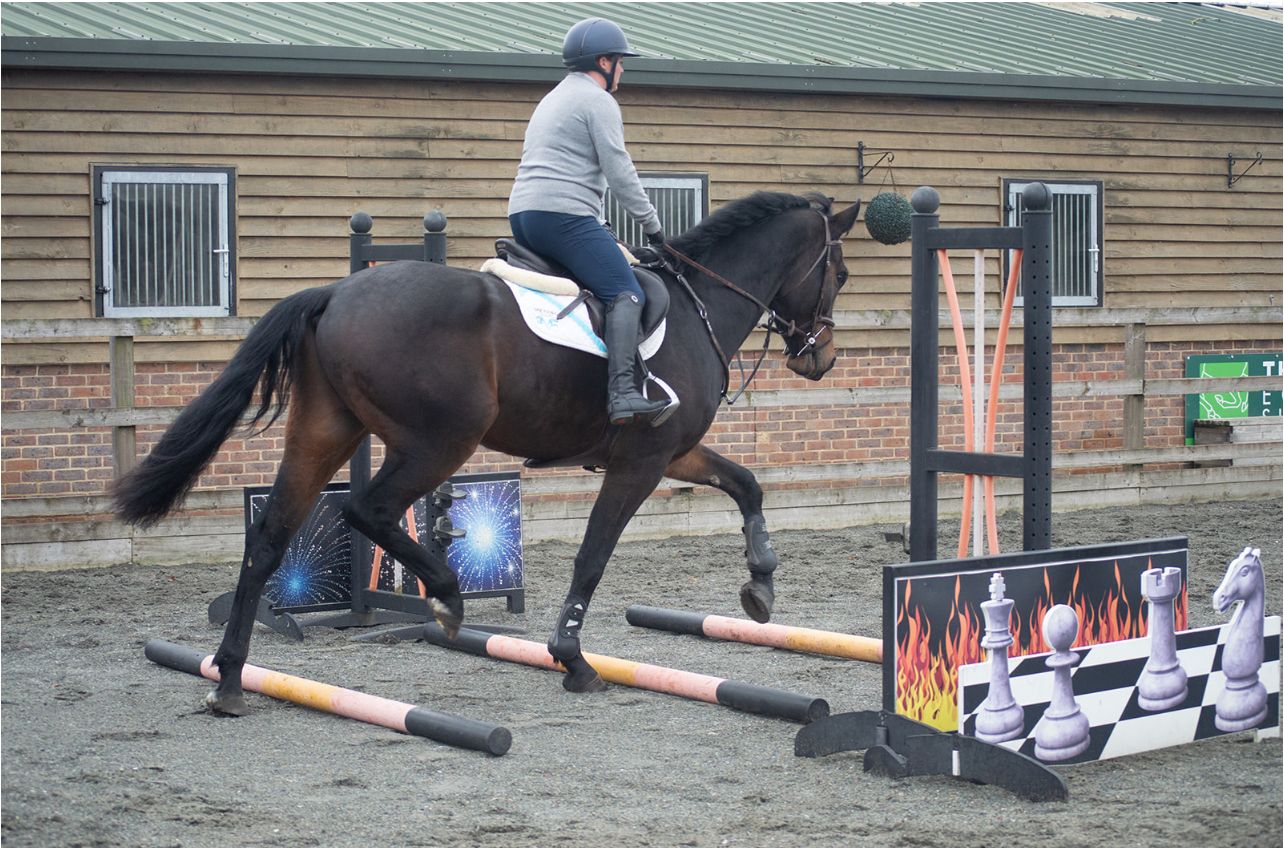
Jess Hayes and the one-eyed Humoso going through their paces over poles, part of his routine to help manage the gelding’s restricted vision.
“Dawn told me, ‘This is his drawback, I just want somebody to give him a chance,” recalls Jess. “I said I’d pick him up tomorrow!
“Obviously we had to consider how we were going to train, manage and treat him – the vets had said that hopefully he would adapt well as he’s never had sight in one eye, but that’s easier said than done because he cannot see us at all on his left-hand side, so do we still lead him, mount him and break him in from the left?
“I’d love Bazil to stay with us for the rest of his life but, if he ever needed to do a different job or go to a different home, we needed to give him every chance of having a normal life in a normal home. So we thought ‘OK, we’ll just do everything from the left’ and we did it.
“Flying by the seat of our pants is the best term for what we’ve done!” says Jess, who was helped in the backing process by Jakob Bartlett. “It’s been a huge learning curve because he’s had to adapt to us and we to him.
“The key to helping him as a partially sighted horse is being very vocal and very hands on with the patting, the rewarding and the reassurance. You can see his ears twitching as he listens. I think he has a personality where he tries that much harder – he absolutely loves his job – which also helps.”
Partially sighted horses may naturally have a tendency towards sharpness and Jess says that’s the case with Bazil but “he harnesses that in a positive way” she says of the gelding by Chrysler Key SR x Quidam.
“He’s very sensitive to ride but he does it all himself – flying changes and I cantered him over poles for the first time last week and he travelled down them on the biggest, bounciest, level canter like these poles were nothing. I just thought ‘Wow’.”
Teaching a partially sighted horse to jump seems daunting, but Jess lay the foundations early on with Bazil.
“Every time I ride him, I lay poles around for him to walk or trot over – often tight off the corners so he’s always thinking ahead, looking for them and learning to judge them,” she explains. “I thought that was the best thing I could do for him at this early stage where we’re keeping everything easy and basic for him, so by the time he’s jumping a course, he’ll come off the bends looking for the poles – it’s part of his routine now. He’s had a little jump under saddle and the bolder and brighter the filler is underneath, the better he jumps. I don’t think he’s going to be spooky!
“We’re training his mind and his eye to see and judge as best we can.”
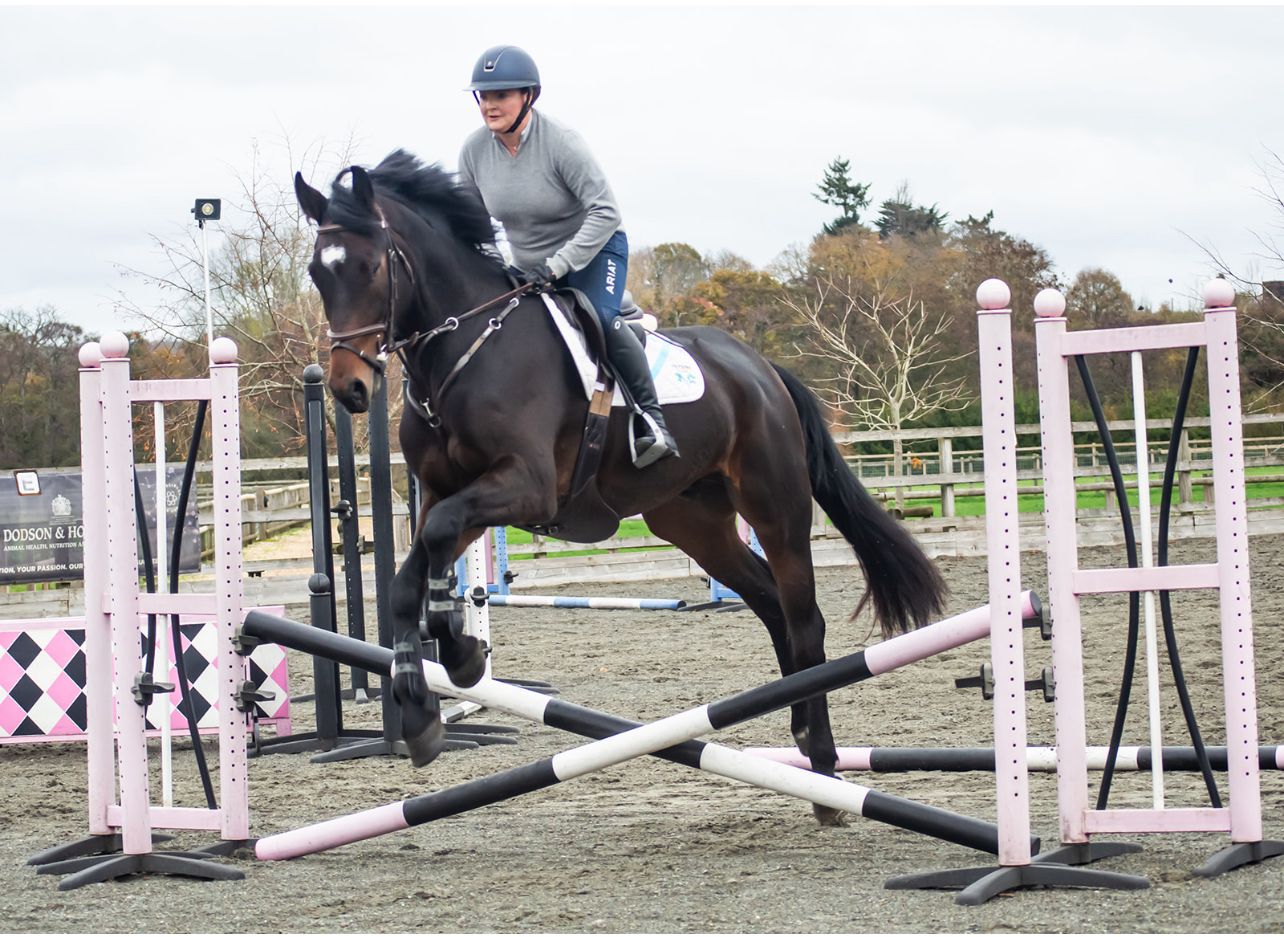
Jess Hayes and one-eyed Bazil have been working on jumping under saddle
Jess says that riding Bazil doesn’t feel much different to fully sighted horses other than he occasionally wants to tilt his head.
“I use my voice, put a bit of leg on and encourage him and he goes ‘OK, I get this, I’ll keep listening to you’ – his full trust is in us,” says Jess. “When I hacked him out for the first time, we passed tractors and all sorts, but he was so good. He gets turned out every day with my mare, he loads well, he just does everything!
“I don’t think he knows he’s blind. We haven’t told him and people laugh when I say that but this has been him since birth so he doesn’t know any different. As long as we don’t treat him differently we won’t let the cat out of the bag and we can carry on as normal.
“Of course, it’s been challenging but so rewarding – all my reservations and concerns have been blown out the water,” adds Jess who hopes to take Bazil to the Met Tour in Spain in the spring to contest some of the five-year-old classes with a view to producing him to a top-level showjumper alongside her other horses.
“I’d like him ultimately to be one of those horses who can hold his own on the global stage – whether that’s with me or someone else,” she says.
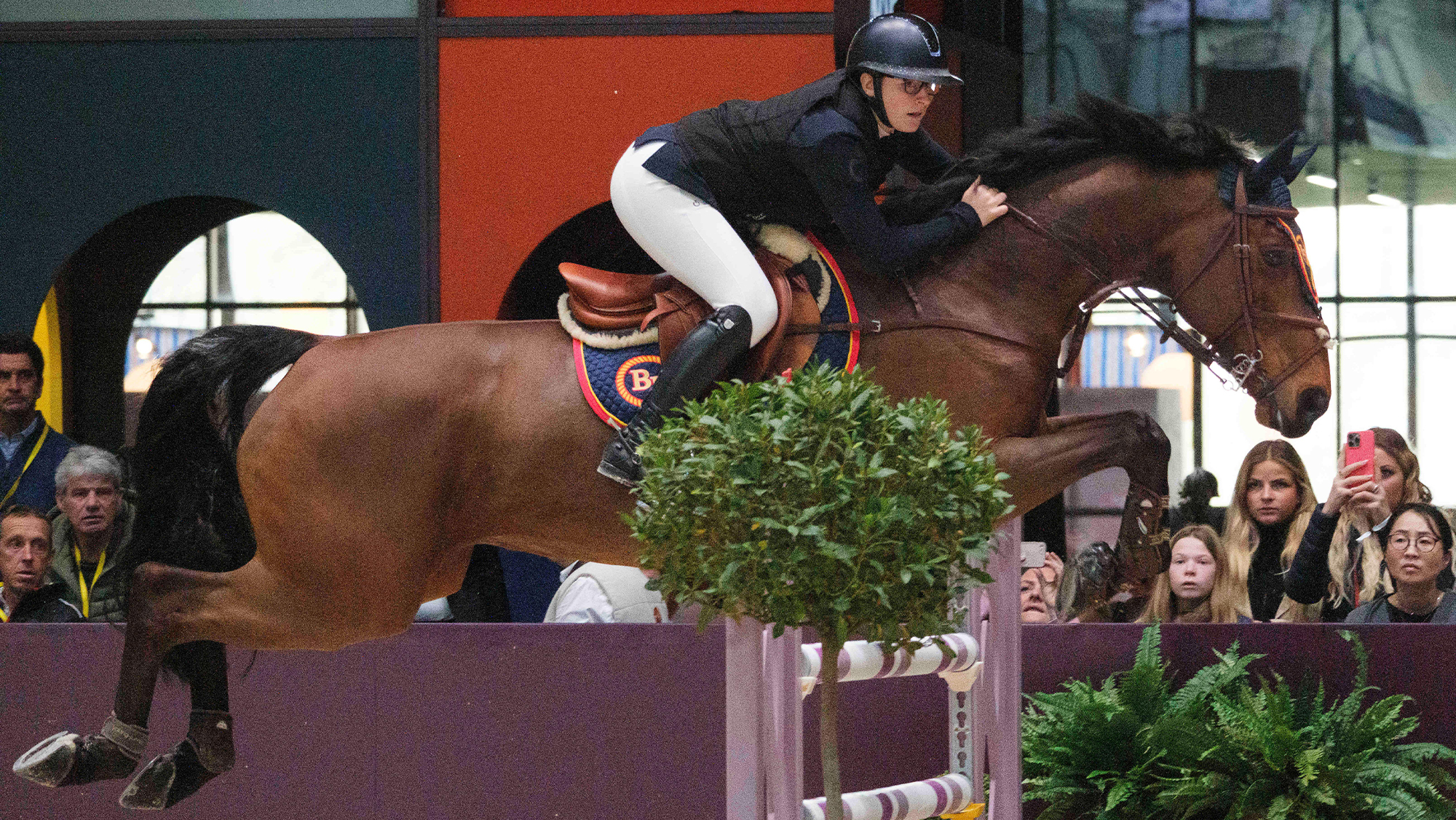
Despite being blind in one eye, Flipper Darco UK Z is having a very successful career with Jennifer Billington
Flipper Darco UK Z
Jennifer Billington’s top showjumping horse Flipper Darco UK Z is blind in one eye but has been a “horse of a lifetime” for his young rider, jumping at London Horse Show, Bolesworth and representing Great Britain at the junior and young rider Europeans.
“He runs off trust,” says Jennifer. “He needs complete confidence in the rider, especially if you’re coming to a water tray – he was shy and spooky with me in his early days, but that perseverance has paid off. Coming off a left turn in a jump-off, I always try to make sure I’m straight enough to allow him to see the fence, but otherwise it doesn’t affect him at all, it’s amazing.”
Flipper Darco’s breeder Caroline Phillips says, “I knew he was blind in one eye from a three-year-old, so when I backed him and rode him, I taught him to listen to my body and understand the turns by riding him round bending poles. He is the most amazing horse I’ve ever ridden.”
How to help partially sighted horses
There are some practical steps you can take to help partially sighted horses in their daily life.
- Provide a safe environment with padding on any sharp edges
- Keep to a familiar, safe routine
- Turn out in the field with a quiet, calm companion
- Place haynets, feed and water buckets in the same position, ideally against a wall or solid object
- Introduce new environments quietly and slowly
With time and a little extra consideration, partially sighted horses have just as much chance as any other horse to life a happy life with a successful career.
Do you have any more top tips for looking after horses with limited vision? Let us know your experiences with partially sighted horses by emailing hhletters@futurenet.com with your name, nearest town and county
- To stay up to date with all the breaking news from major shows throughout the year, subscribe to the Horse & Hound website
You may also be interested in:

Equine eyesight questions answered, plus vets share advice on common vision problems to look out for

‘She’s incredible’: meet the pocket-rocket thoroughbred winning with one eye
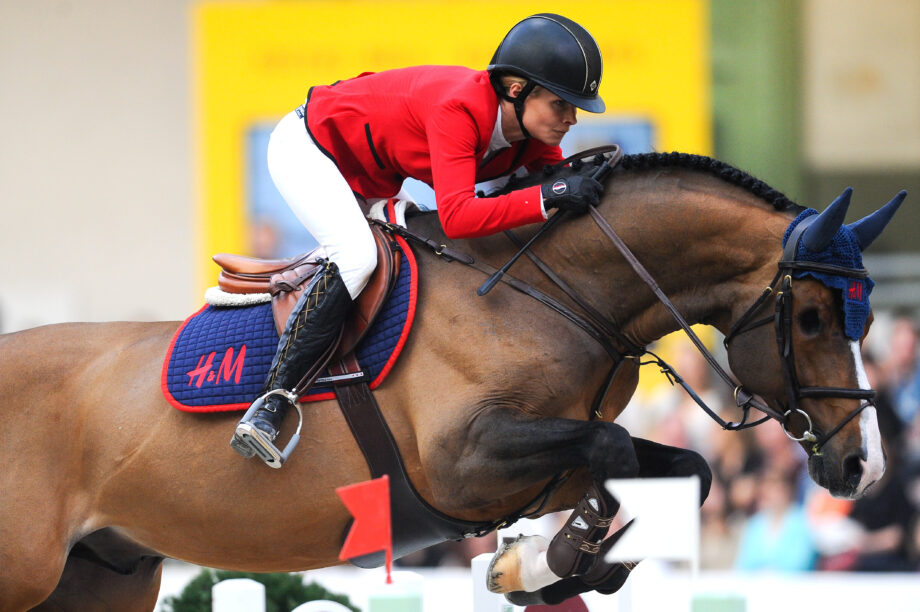
7 famous one-eyed horses who have excelled in their careers

Examining the equine eye *H&H Plus*
What does an ophthalmic exam entail? Ria Chalder MRCVS explains all
Subscribe to Horse & Hound magazine today – and enjoy unlimited website access all year round