Feeding horses with or prone to laminitis requires you to reconsider their whole diet, whether they’re retired or at the peak of their competitive career.
Laminitis is a common, painful condition which manifests itself in one or more of the horse’s hooves. It is a multifactorial condition, which means it can be caused by a number of factors, but it frequently arises as the result of a metabolic upset.
While laminitis is often seen in native ponies during periods of peek grass growth, overweight horses of any type can be at risk – and suffer from the condition – at any time of year. Horses with underlying issues, such as Cushing’s disease or Equine Metabolic Syndrome, are also at greater risk.
“The modern equine lifestyle of cosy stables, rugs and over-full haynets is often where the problem of laminitis stems from,” says Kate Hore, head nutritionist at NAF.
“The largest part of any diet should be forage and grazing. When that is rich spring grass, it can be a real risk for the laminitis-prone.
“We should be feeding as naturally as possible, which means feeding a high-fibre, high-forage diet with little to no starchy cereals, such as may be found in concentrates.”
So, how to approach feeding horses with laminitis, or those at risk? Read on for advice from nutrition experts. It’s important to note, however, that laminitis is a veterinary emergency – if you suspect your horse has it, please call your vet before doing anything else.
Feeding horses with laminitis – in the bucket
If a horse has been diagnosed with laminitis, then take individual advice from your vet, but generally speaking, they should be fed little and often in line with good equine feeding practice.
Fibre should form the bulk of their diet alongside essential vitamins and minerals, while sugar and starch levels should be kept low. Because hay, haylage and grass are naturally deficient in some nutrients, forage alone is not sufficient to deliver a fully balanced diet, so a top-up of essential vitamins, minerals and trace elements is required.
Pelleted forage balancers are an ideal bucket feed for laminitis-prone horses. Balancers work to ensure horses receive their recommended daily intakes (RDA) across the full spectrum of their diet. Some of these feeds are formulated specifically for horses prone to laminitis.
While they provide key vitamins, minerals and quality protein to suit the horse’s lifestyle and workload, they also keep calorie, starch and sugar intakes low. However, they must be fed according to the manufacturer’s recommendations to be effective.
“Ensure you maintain a good vitamin, mineral and quality protein intake. This supports muscle, hoof health, coat condition and internal nutrient reserves and healthy fibre levels to support gut function,” says Emma Short, equine nutritionist at Baileys Horse Feeds.
“For horses that need additional calories for weight gain, high-calorie fibre sources can be added along with the balancer. These might include unmolassed alfalfa chaffs with added oil, or soaked beet products. High oil supplements are also available,” she adds.
If a balancer is not the right option for your horse, you can also feed a supplement specifically for horses on restricted grazing, which will ensure they get the nutrients they need.
Feeding forage to a laminitic
Forage should make up the bulk of any horse’s diet, because it’s essential for healthy gut function. What’s more, it’s a horse’s chief source of energy (calories).
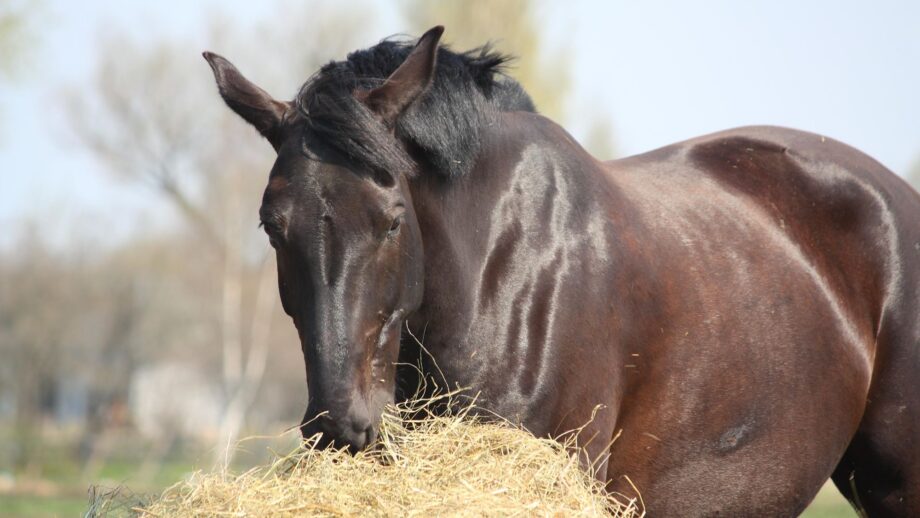
With this in mind, it’s important to consider how much hay to feed a horse. Most nutritionists say horses should ideally eat forage on an ad-lib basis.
However, this method delivers too many calories to some horses. Therefore, most nutritionists agree horses should eat between 2–2.5% of their bodyweight in dry matter forage (i.e. weight of hay less its moisture content) to maintain condition, or 1.5–1.8% for weight loss.
Another approach to feeding hay is to ensure your horse never has to fast for more than four hours. Consequently, you may need to look at ways to increase his chew time by making his ration last longer. You can do this using forage blocks, small-holed haynets and slow feeders.
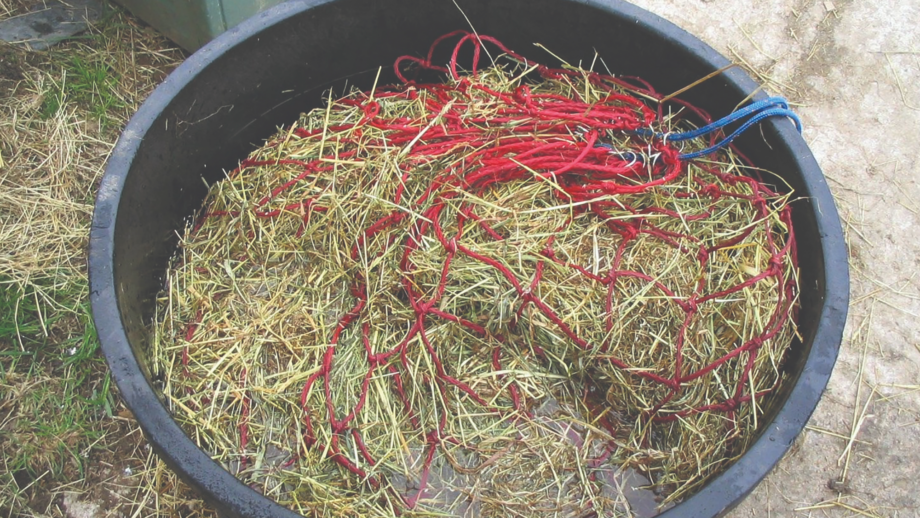
Soaking hay will help to reduce the sugar content and calorie intake, while clean mature (stalky) hay is preferable to fresh green hay.
Feeding good quality oat or barley straw as part of a horse’s forage consumption is also an option. Because it’s low in calories yet high in fibre, it helps extend chew time without oversupplying energy.
Always ensure the straw is a nice yellow colour and free from mould. As with hay, there should be no airborne spore clouds emerging when you pull it apart.
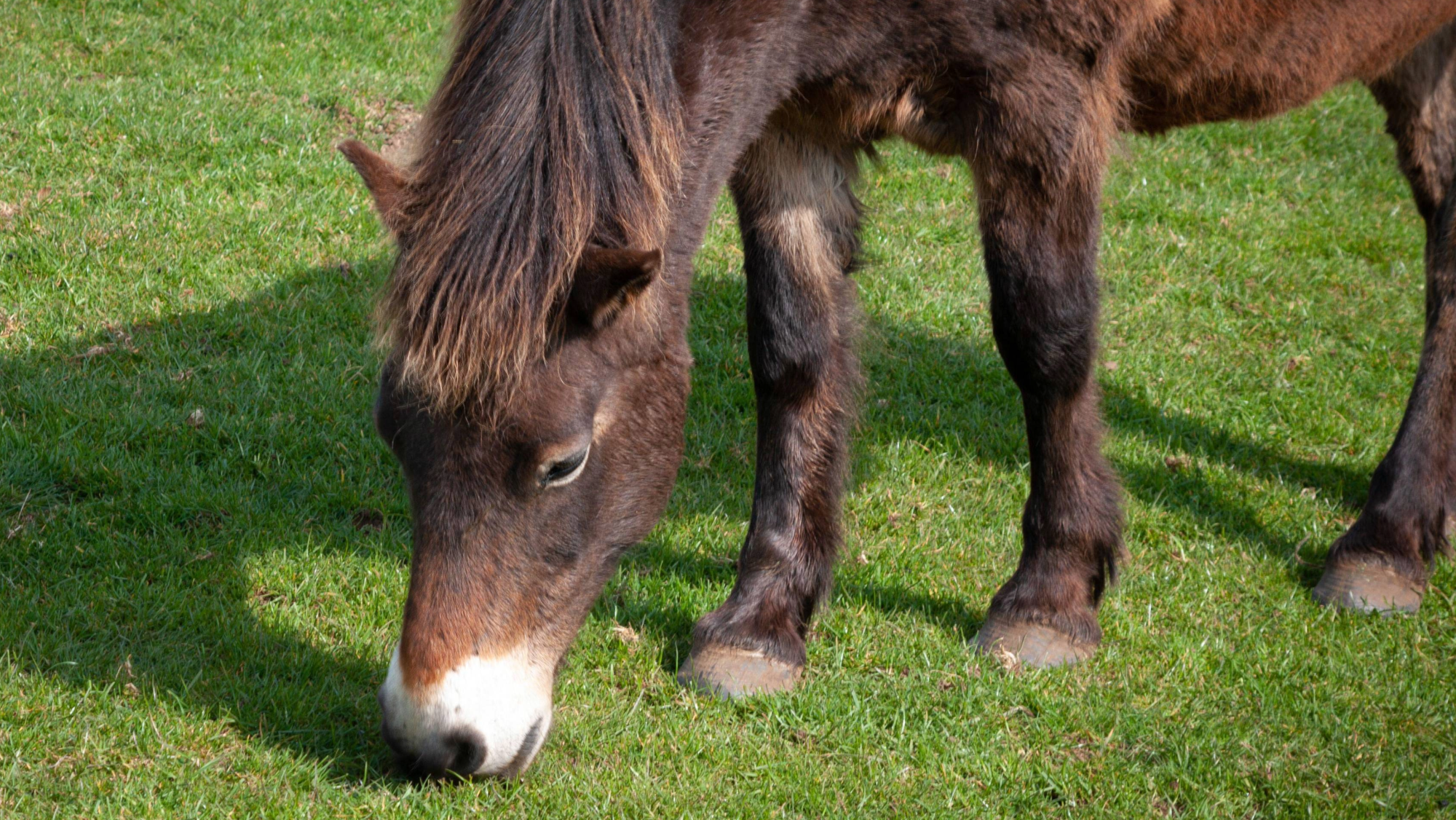
Ponies prone to laminitis often require restricted access to grass – perhaps none at all. Photo: Alamy
Is hay or haylage better for laminitics?
The right type of forage for feeding horses with laminitis is low in WSCs (water-soluble carbohydrates, which include sugar and fructans), starch and calories.
Forages vary widely, and these factors could be true of either hay or haylage. It’s also true that some hay types deliver more calories than haylage.
Therefore, it’s best to consider what to put in a laminitic horse’s haynet in terms of its content. You can ask the manufacturer for advice, or send samples of your forage off for analysis. Bear in mind, you would need to do this regularly and comprehensively, which is an additional cost.
If you feed hay, a late-cut crop is the most suitable. Late-cut hay is typically a stalkier, more mature plant that is less nutritious than early-cut hay, which is soft and leafy.
However, you can further reduce your hay’s WSC and calorie content by soaking it. The degree of nutrient reduction required determines how long to soak hay.
Soaking hay also reduces its fibre and dry matter content. This means you can safely feed a greater quantity to a laminitic horse, so they can chew for longer.
Grazing horses prone to laminitis
Feeding horses with laminitis can mean avoiding grass entirely, depending on their health or weight status. Always adhere to veterinary advice when considering turnout for a laminitis-prone horse. Vets recommend active laminitis cases be kept indoors in a deep, soft bed to minimise the risk, or degree, of pedal bone rotation.
Generally speaking, the grass is at its most dangerous for laminitis-prone (i.e. producing the most sugar) when it is…
- experiencing flush, fresh growth
- under stress from over-grazing
- covered with frost on a bright morning where temperatures are below 4ºC (as sugar is produced but cannot be used for growth)
“For an overweight pony in light work, ideally we want to limit access to fresh grazing,” explains Kate. “If he needs additional fibre, ensure it is a low WSC hay or haylage, and consider soaking to reduce sugars.”
Many laminitics are notoriously good-doers, and love their food. Research shows that ponies on restricted turnout can adapt both bite rate and the amount taken in each bite, so that they can essentially eat as much in three hours as they would naturally do in 12 hours.
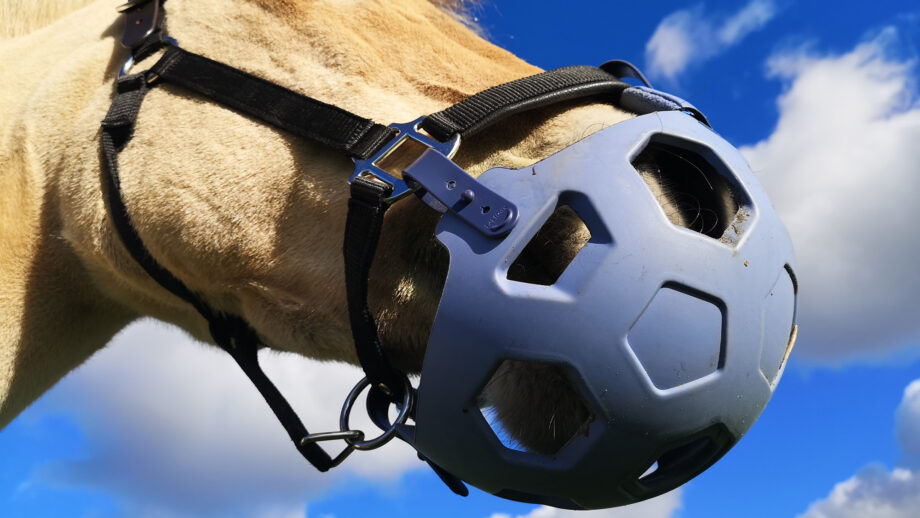
“Think of ways that you can maximise the time turned out, but still control access to grazing. It’s best to avoid a small cornered off area as that encourages them to stand and eat; natural movement is what we want. Track systems can be really useful, if practical, alternatively look at using a grazing muzzle or strip grazing to limit intake whilst encouraging mobility,” continues Kate.
But what about the horse in a higher level of work? The basic feeding principle with a laminitis-prone animal is really the same as with any horse, and that is “feed to work done”.
“For a fit but insulin-resistant eventer, we might be looking at alfalfa chaffs and controlled grazing, with additional oil, to provide all the energy they need,” explains Kate. “Supplement these with concentrated vitamins and trace elements to balance the diet.”
Prevention is better than a cure
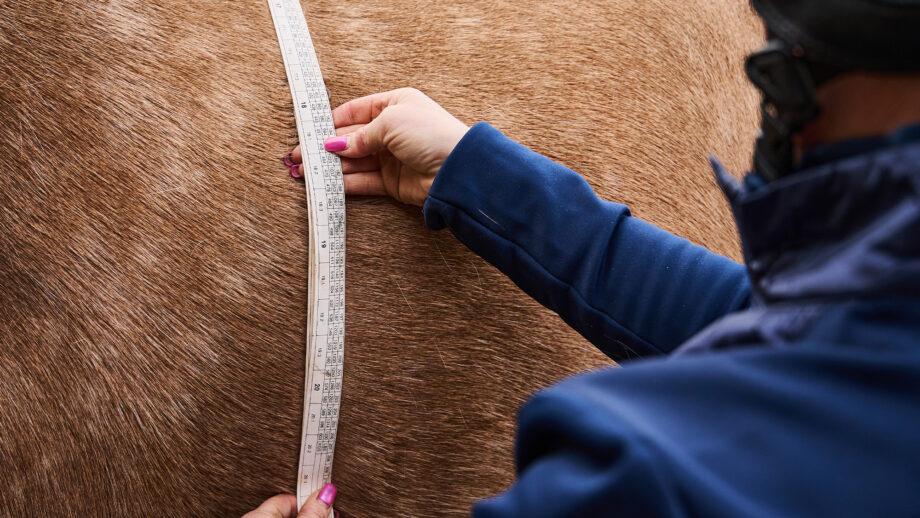
If your horse is prone to laminitis, it’s important to regularly body condition score them to monitor their weight.
Ask for advice from your vet or nutritionist if you’re unsure how to do it. Plus, keep a record so you can track the results. Taking photos can also be useful.
“One of the key messages is working towards stopping laminitis happening rather than dealing with it,” Lizzie Drury, senior nutritionist at Saracen Horse Feeds.
“Be on high alert with your horse, particularly if he’s prone to laminitis, and don’t allow him to become overweight. Be constantly aware of what and how much you’re feeding him and his exercise level. Ask whether he needs to be rugged. Be aware 365 days a year,” she concludes.
Feeding competition horses prone to laminitis
The effect of the diet on laminitic horses is complex, and requires expert tailored advice from a nutritionist. Spillers nutritional content manager Vanessa Allen emphasises “prioritising health over performance”.
“We would recommend feeds based on body condition first and ridden energy levels second,” she explains. “For good-doers, balancers would be the first choice. Ensure all essential nutrients are provided, then choose a balancer specifically aimed at harder-working horses. Protein quality is just as important as quantity – for example, deficiency in lysine can limit protein synthesis, affecting muscle health and overall performance.”
Even if you feel your competition horse needs more oomph, if he’s prone to laminitis, most traditional competition course mixes are off the menu.
“This can make balancing energy levels difficult,” says Vanessa. “Some low-starch, high-energy performance feeds could be sensible options, ideally providing energy from oil and fibre rather than cereal.”
Meal sizes are another factor when considering starch and sugar intake, don’t just look at percentages.
“A balancer with a combined starch and sugar content of 15% provides just 75g of starch and sugar when fed at 500g per day; a feed with just 5% provides 150g when fed at 3kg per day,” Vanessa points out.
“As a guide, restrict non-structural carbohydrate (NSC) or ‘starch or sugar’ to less than 0.5g per kilogram of body weight per meal – less than 250g for a 500kg horse – for those who are not severely insulin-dysregulated. For the latter, seek advice from a nutritionist or vet; testing the horse’s insulin response to their normal feed and/or forage may be helpful.”
For laminitics in particular, Vanessa warns: “It’s important to tackle the whole diet, with potentially stricter forage and grass management – don’t just concentrate on the bucket feed. Consider all strategies to reduce sugar intake: soaking hay and reducing access to grazing.”
Vanessa would also recommend having your forage analysed for water soluble carbohydrate (via the “wet chemistry” method) to discover if it is suitable for your horse to eat.
- For unlimited access to advice on how best to care for your horse, subscribe to the Horse & Hound website
You might also like:
17 ways you can help your horse lose weight
Best grazing muzzle options to help reduce your horse’s daily intake

23 feeds suitable for horses prone to laminitis
How long should you be soaking hay for horses? An expert explains
Wondering how much hay to feed your horse? A nutritionist reveals how to calculate their ideal daily ration

Expert advice for feeding a horse to avoid gastric ulcers

12 supplements formulated for horses on restricted grazing

Subscribe to Horse & Hound magazine today – and enjoy unlimited website access all year round