“Your foundations will be tested and you’ll know you’ve got a nice horse when you ride through the finish,” is five-star eventer Kitty King’s summary of the 2026 Badminton Grassroots cross-country course.
Designed by James Willis, the LeMieux Grassroots Championships course runs anticlockwise this year, mirroring the Mars Badminton Horse Trials five-star.
Starting near Huntsman’s Close, competitors go down in front of the house, then ride a loop through the lake (skipping past Eric Winter’s five-star fence in the water) before heading out across the park.
The second half of the course contains most of the terrain and the more challenging questions. And for those wondering, the rail-ditch-rail combination is back for 2026.
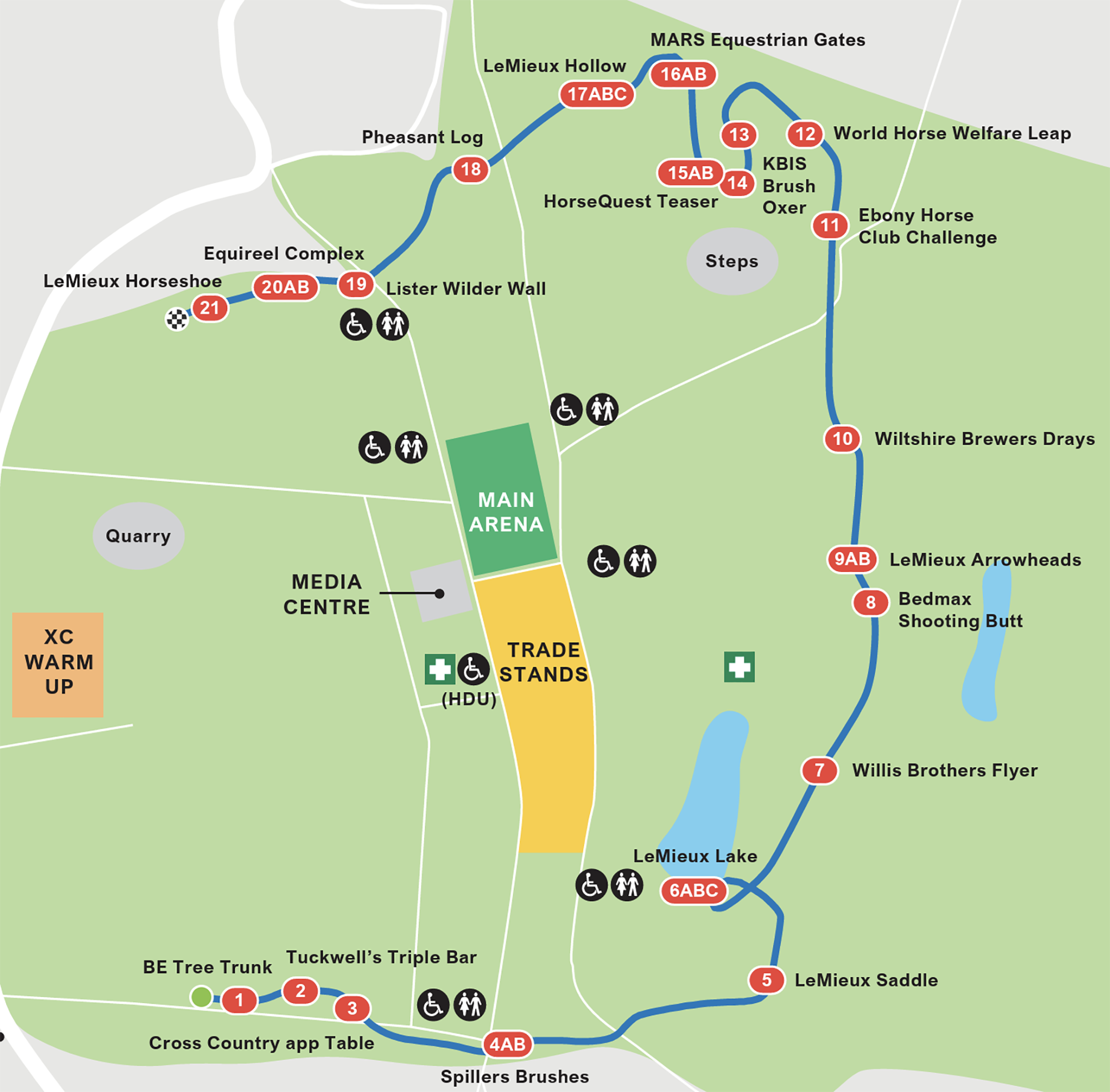
Download official map of the Badminton grassroots showground [PDF]
Kitty King hopes riders will have done their homework, and enough fitness work – for both horse and rider – to tackle the challenges on the approximately 3,000m-long course.
“It’s more intense towards the end than last year,” she says. “It’s a decent course with lots of good questions that will test everyone’s training. If you’ve missed any of the foundations, you’ll get found out. Riders will have to stay really focused right to the end.”
James adds: “Hopefully we’ve set a good test. With the layout of the five-star this year it’s a bit tight in the lake, but we’ve gained access to a lot of ground in the last third of the course and it’s quite intense there.
“Because it’s a championship we’re allowed an extra 400m and five extra jumping efforts. While the course stays within the maximum dimensions, the technicality is a step up, with some novice-style questions in the BE100 class and BE100 questions in the BE90.
“We’ve given riders black flag options at some of the tricker fences as we want everyone to get home. The grassroots finish line is the happiest place on the showground.”
Early indications are that the going will be good with excellent grass cover. Badminton’s team are primed and ready to work on it as needed.
“Going expert Mark Lucey has given us great readings on the ground,” explains James. “We just need to keep at it. It’s already been spiked and we have plenty of grass. We all learnt a lot during the dry spell last summer on how best to manage ground and it will be prepared as best we can. We have plenty of water and equipment available if we need it.”
So what questions will the BE90 and BE100 competitors be facing on Wednesday 6 May?
LeMieux Grassroots Championship cross-country courses
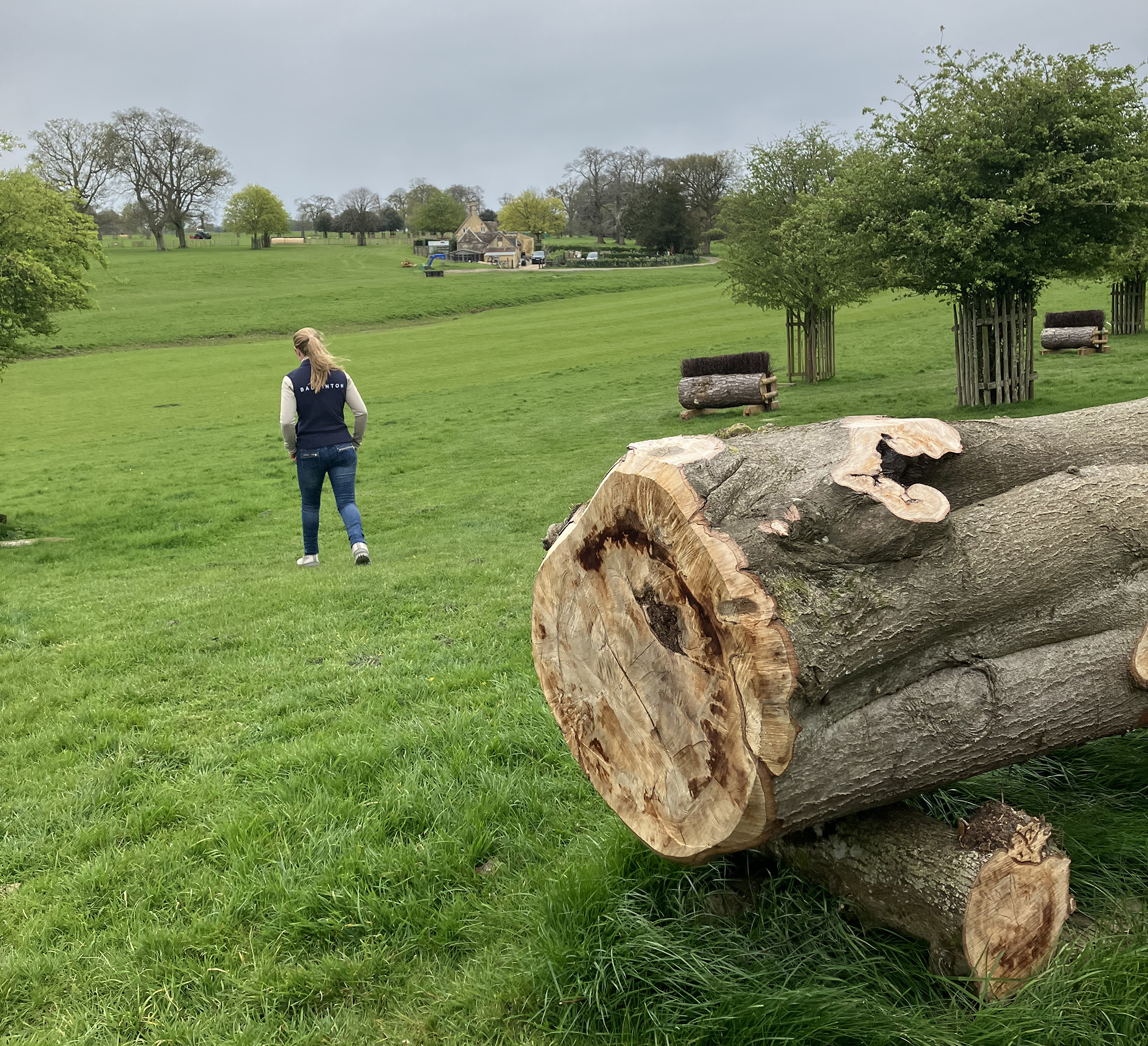
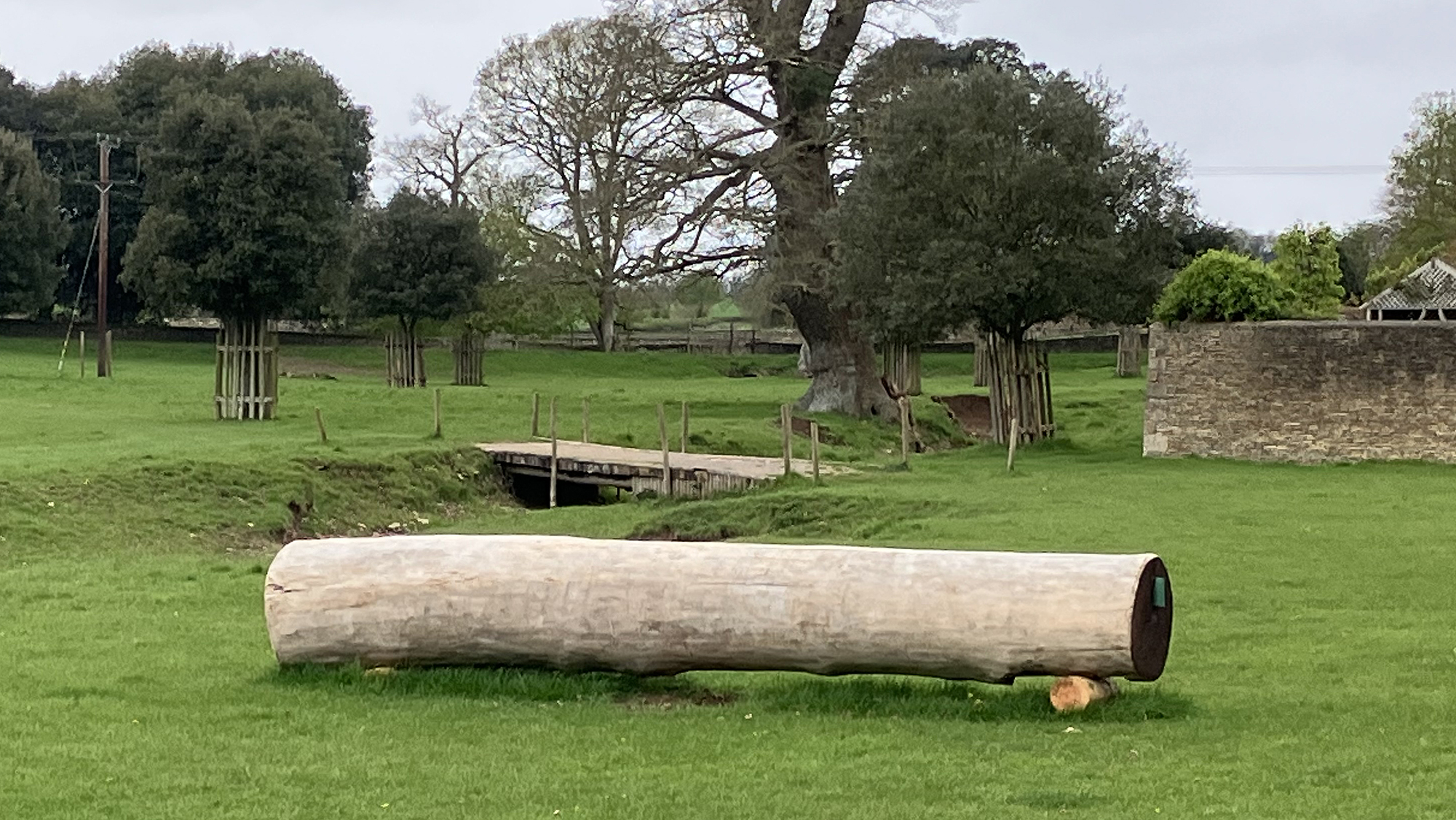
Fence 1. BE Tree Trunk
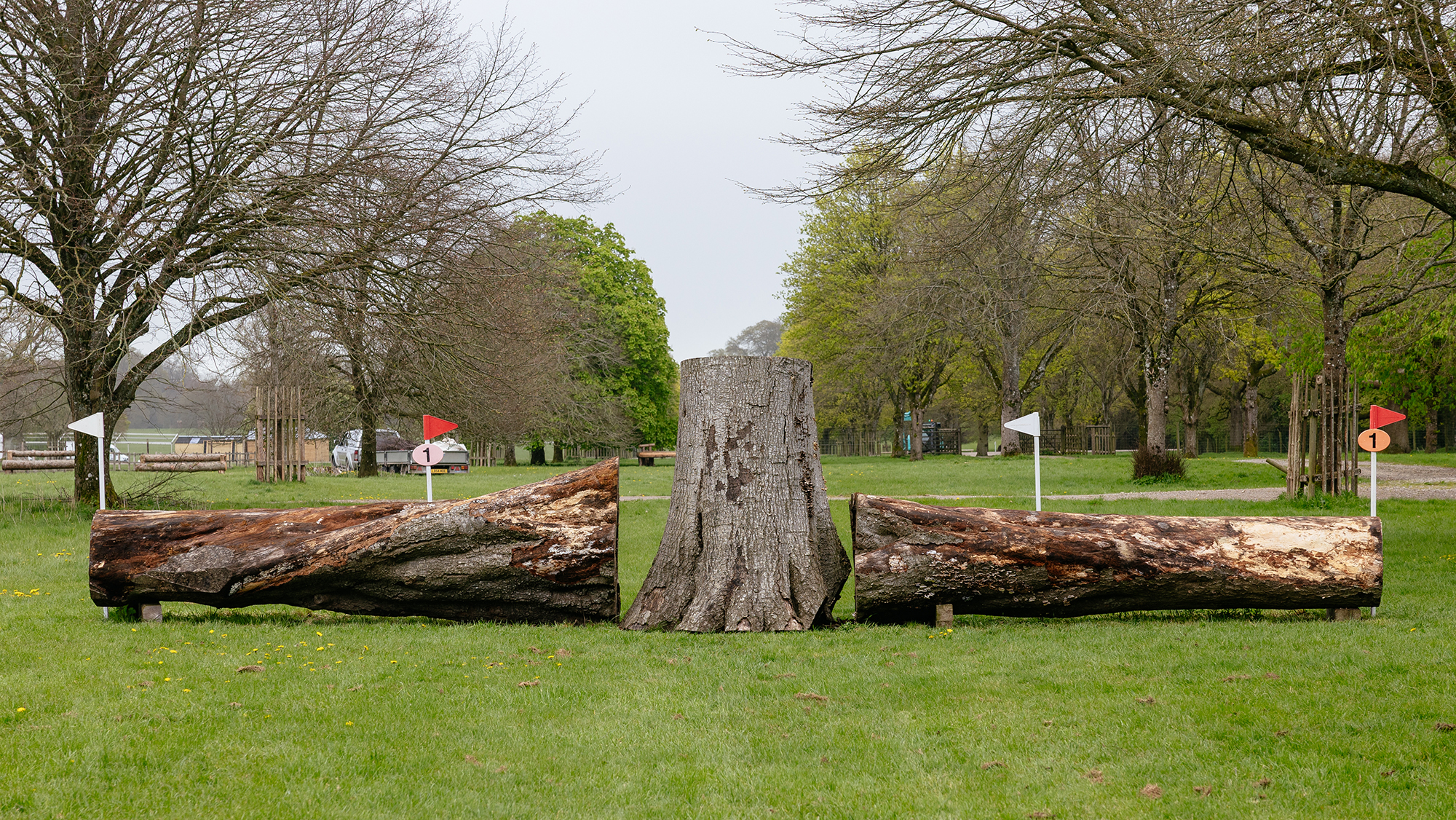
The new first fence is a fallen beech tree from the Badminton estate. James says: “We had to race the forestry team to get to it first! There will be a bit of groundline added when we dress the fences.”
Kitty approves: “It’s a nice first fence, we all like an inviting log.”
Fence 2. Tuckwell’s Triple Bar
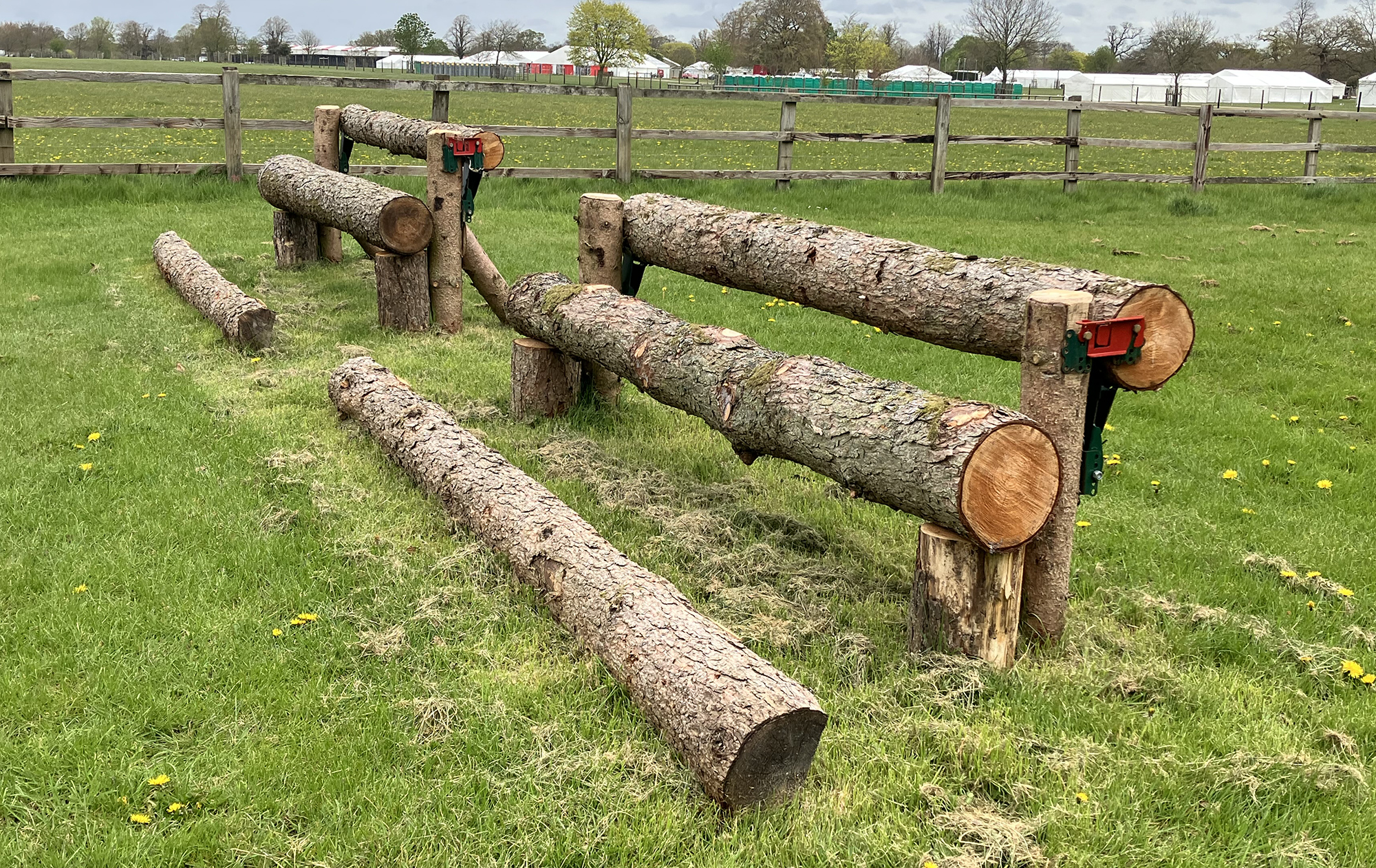
The Badminton team is big on sustainability reusing as much timber as possible. The rails for this fence were previously on the five-star Vicarage V.
Kitty says: “It’s important to get into a good rhythm early on. This fence comes off a nice curve, which will help engage the horse’s hindleg. Riders need to establish a good flow to help the horses to relax by setting up their rhythm and concentration early.”
Fence 3. CrossCountry app Table
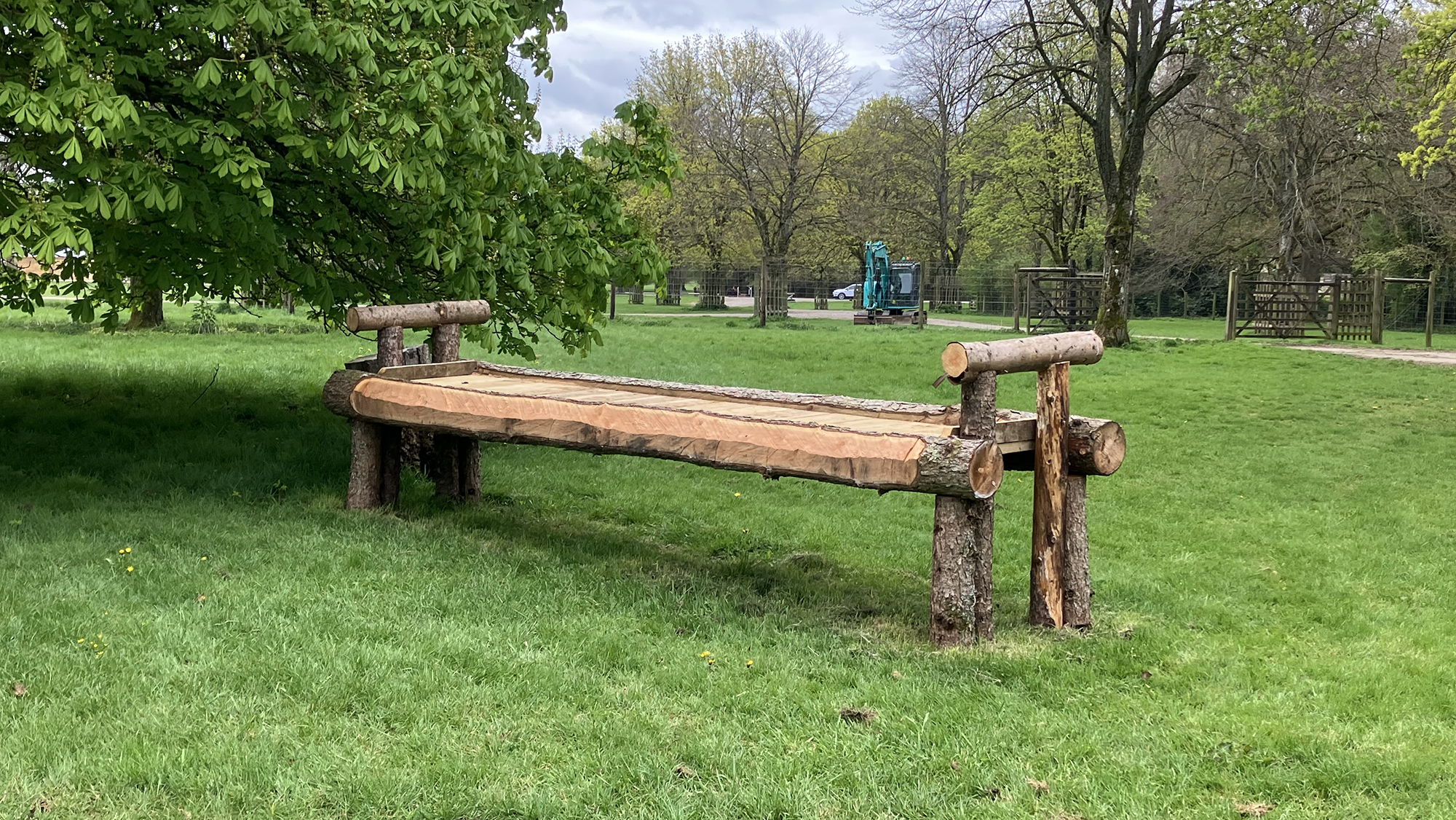
This table is shared with both courses jumping the same fence. It is also set off a curved approach.
Kitty says: “Keep your leg on, ride forward and use the turn to help with the horse’s balance. The first three fences have been built to help riders set up their horses to jump well.”
Fence 4AB. Spillers Brushes
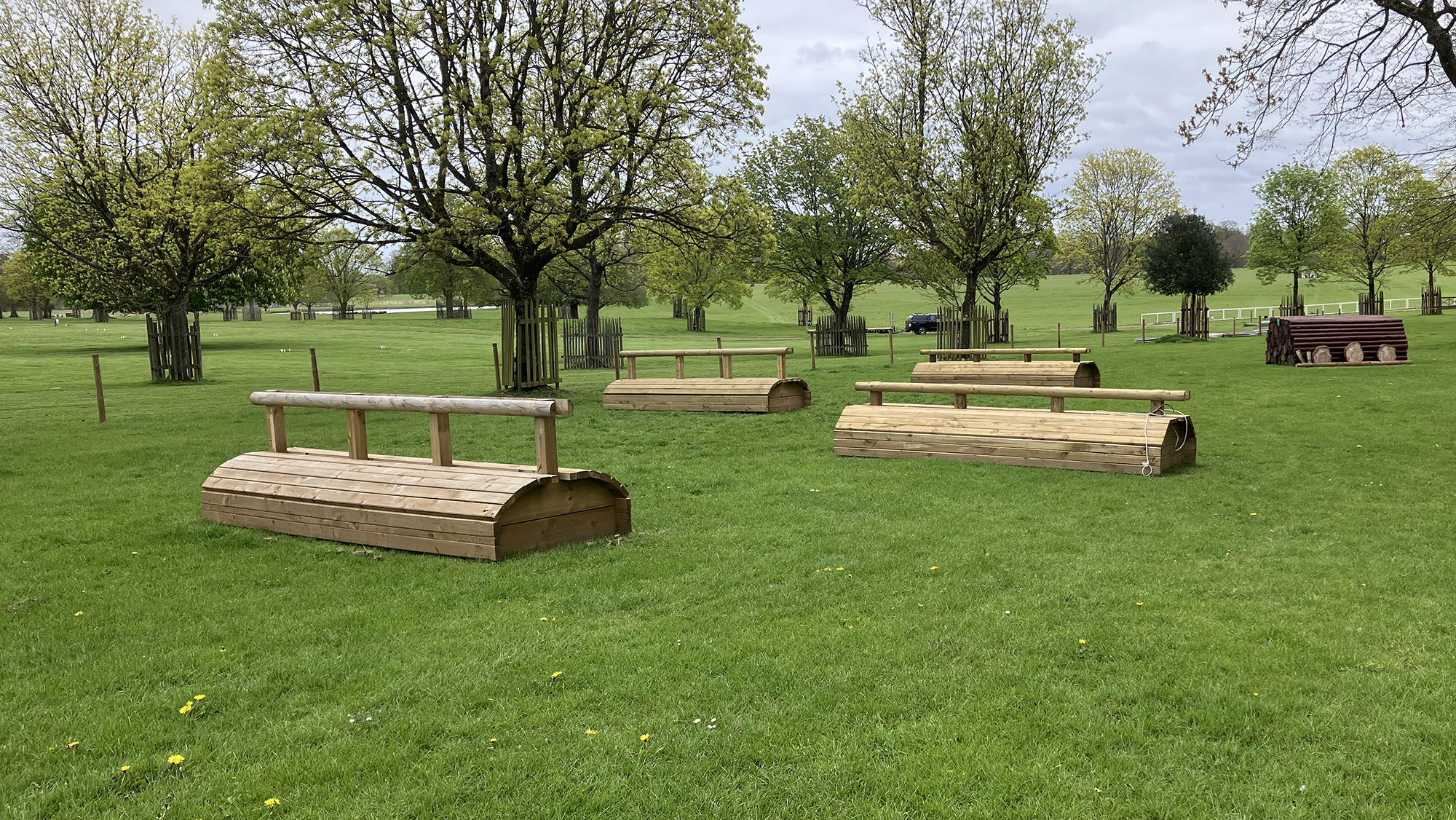
The light coloured frames lined up on the right are the BE90 fences. These frames will be filled with brush.
The first question on the course, this combination of two angled brush hedges (pictured before the brush is added to the wooden frames) is on a two-stride distance off a downhill approach after crossing the road.
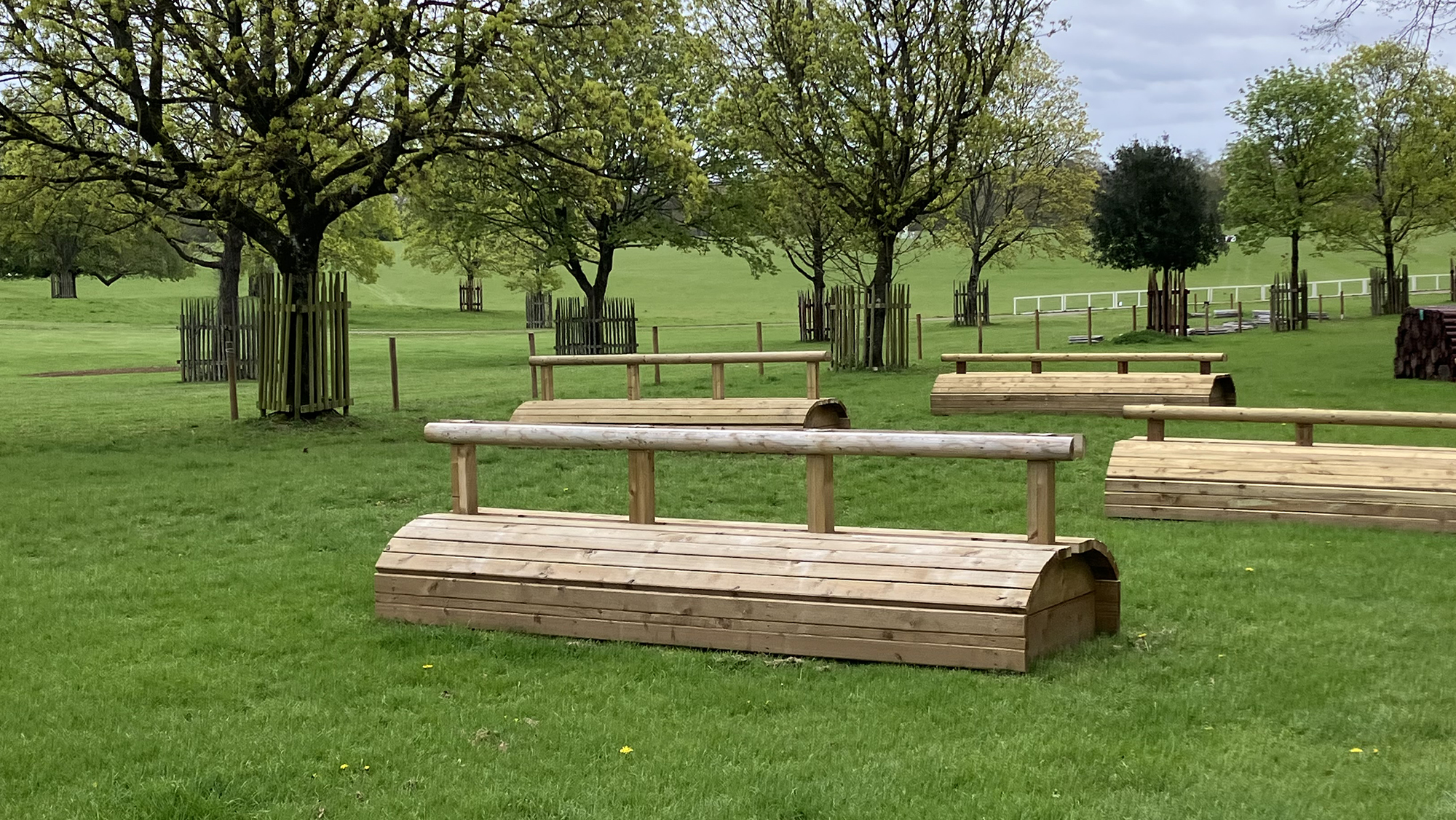
The BE100 fences on the left will also be filled with brush, making them quite an imposing obstacle.
James says: “These will likely be max height so will look quite big; how we trim the brush will affect the difficulty of this fence. There will also be spectators in the horse’s eyeline on the landing side.”
Kitty adds: “Riders will need to find their line and stay on it to avoid an early 20pen here.”
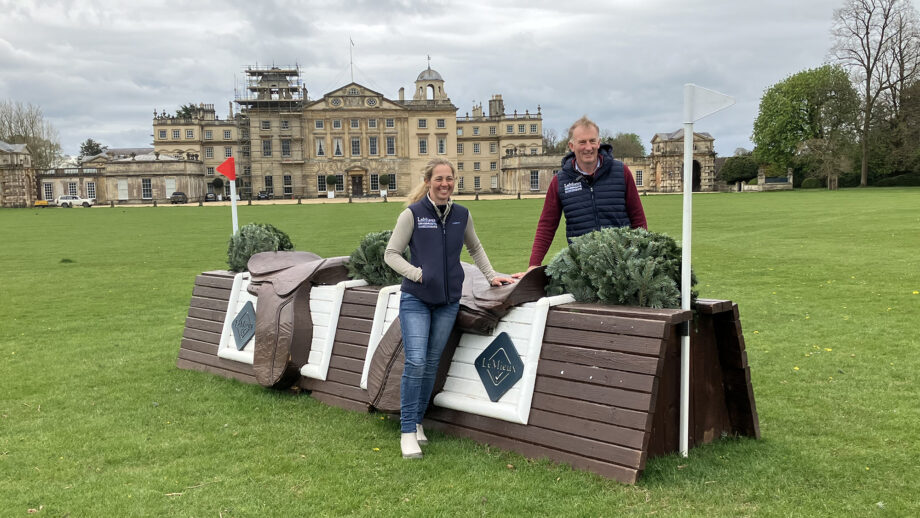
Fence 5. LeMieux Saddle
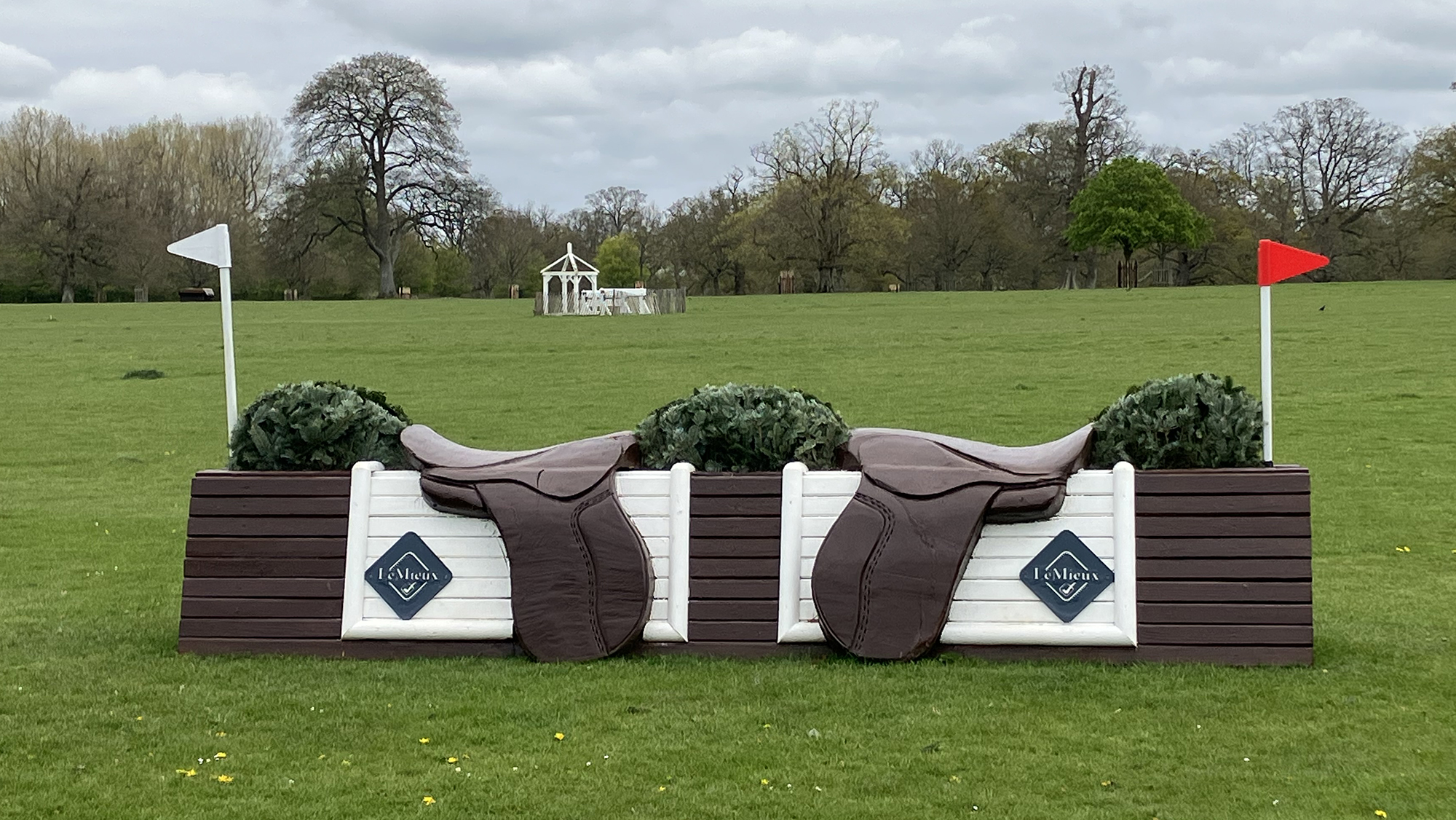
The famous saddles fence, which used to be the final fence in the five star, is positioned in front of the house for the perfect photo opportunity. Kitty says: “One to enjoy – remember to smile for the photographer.”
Fence 6. LeMieux Lake
James describes this year’s question as “simpler than last year as it is early on and there is a lot more coming later in the course”.
Horses jump a rail at A that is set a little way back from the water’s edge, pass through the B flags that will be on the exit of the Lake, then follow a curving line left to the skinnies at C, which have also previously featured on the five-star course.
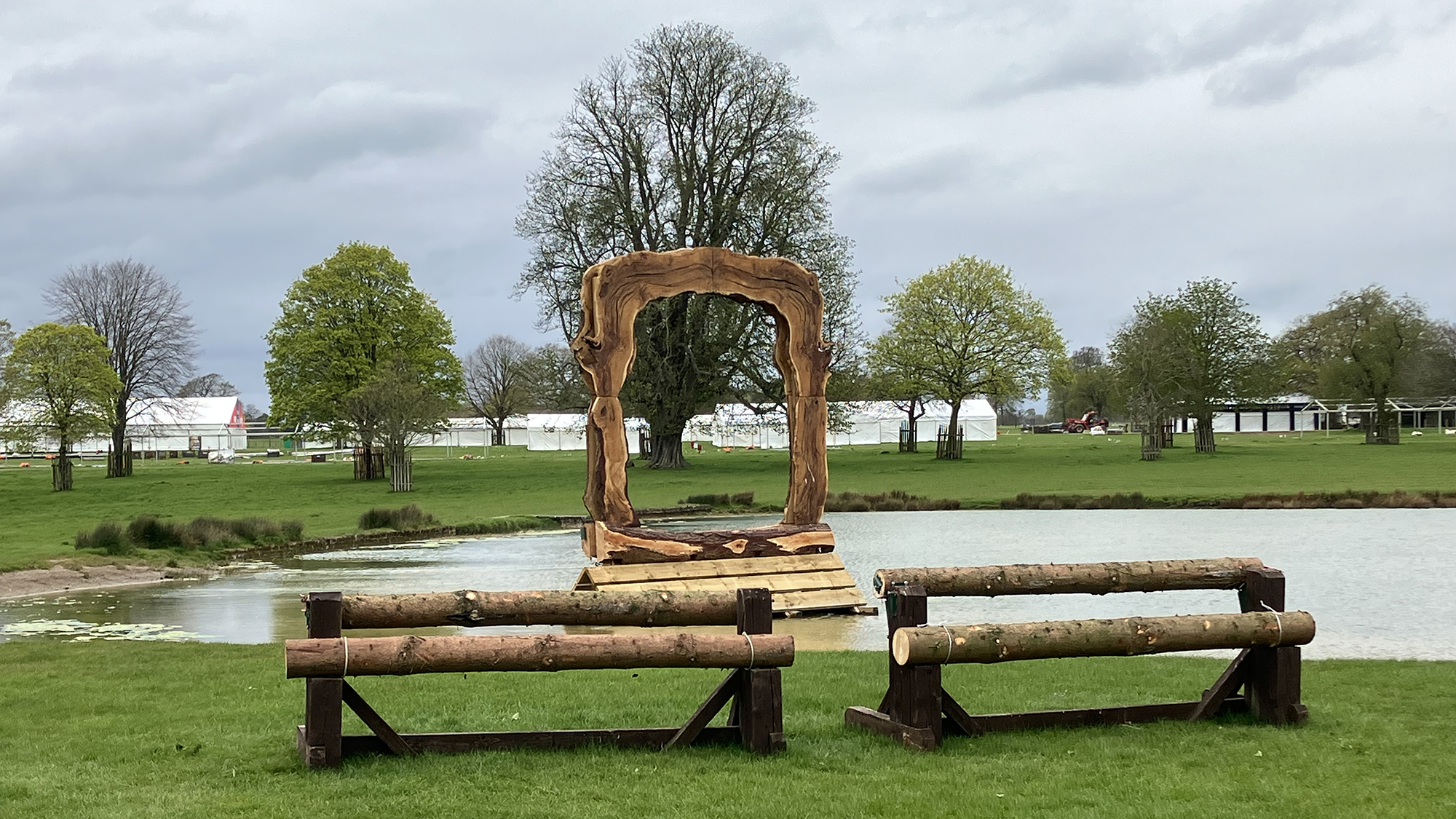
Riders jump the rails at A then head into the lake avoiding the five-star fence to pass through the B flags as they leave the water.
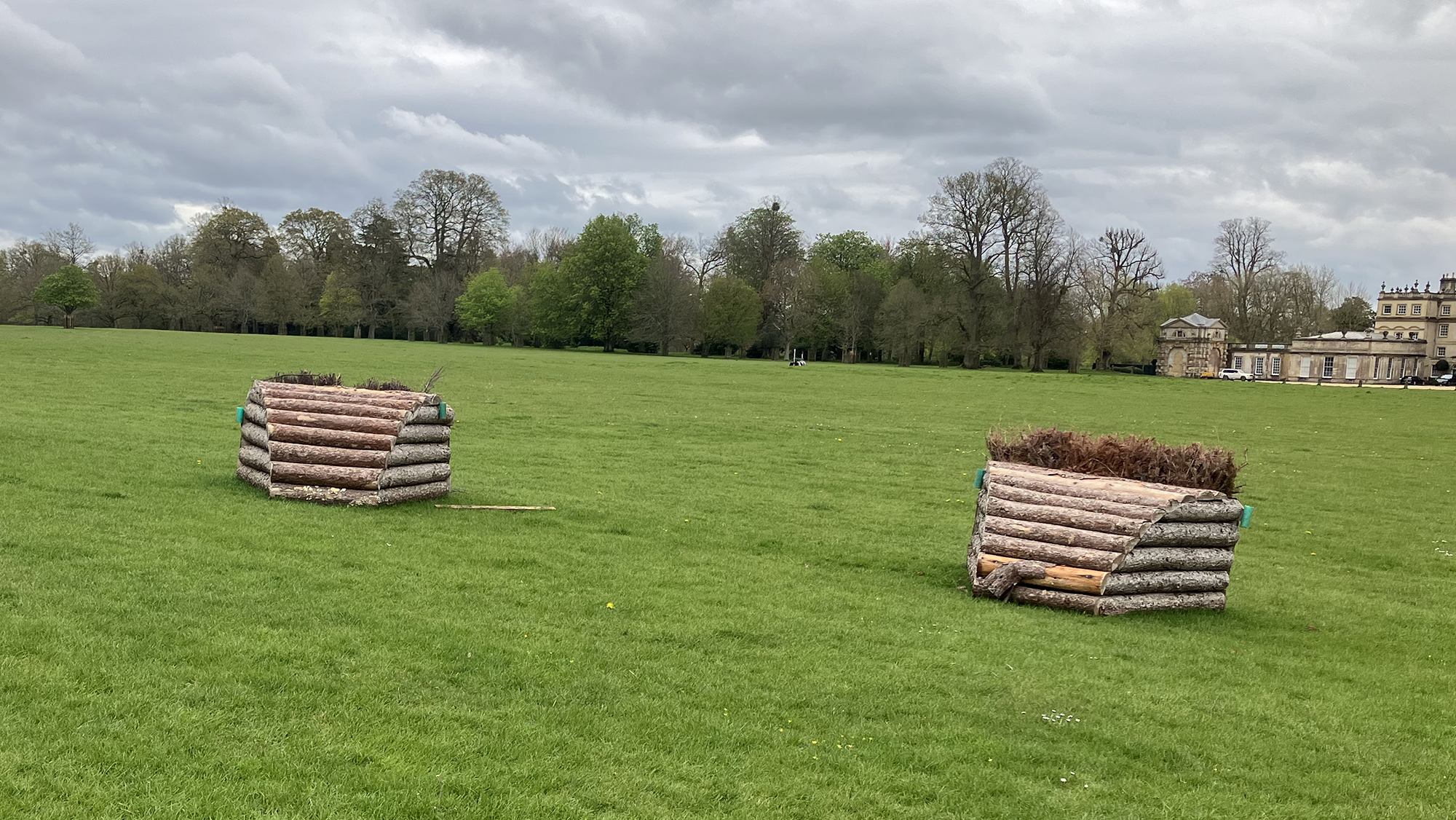
After leaving the lake, there is a left hand turn to one of these skinny rolltops at 6C. Both will have fresh brush added.
“There will be lots of people here, which can be distracting, but there is plenty of space after the rails to get into the water,” says Kitty. “Some horses may spook away from the five-star jump in the water, but the long curve to the skinnies will encourage riders to get their leg on to the C element.”
Fence 7. Willis Brothers’ Flyer
“The biggest fence on the course” says James, as the rules allow the brush behind this solid rolltop to add 20cm to the maximum height.
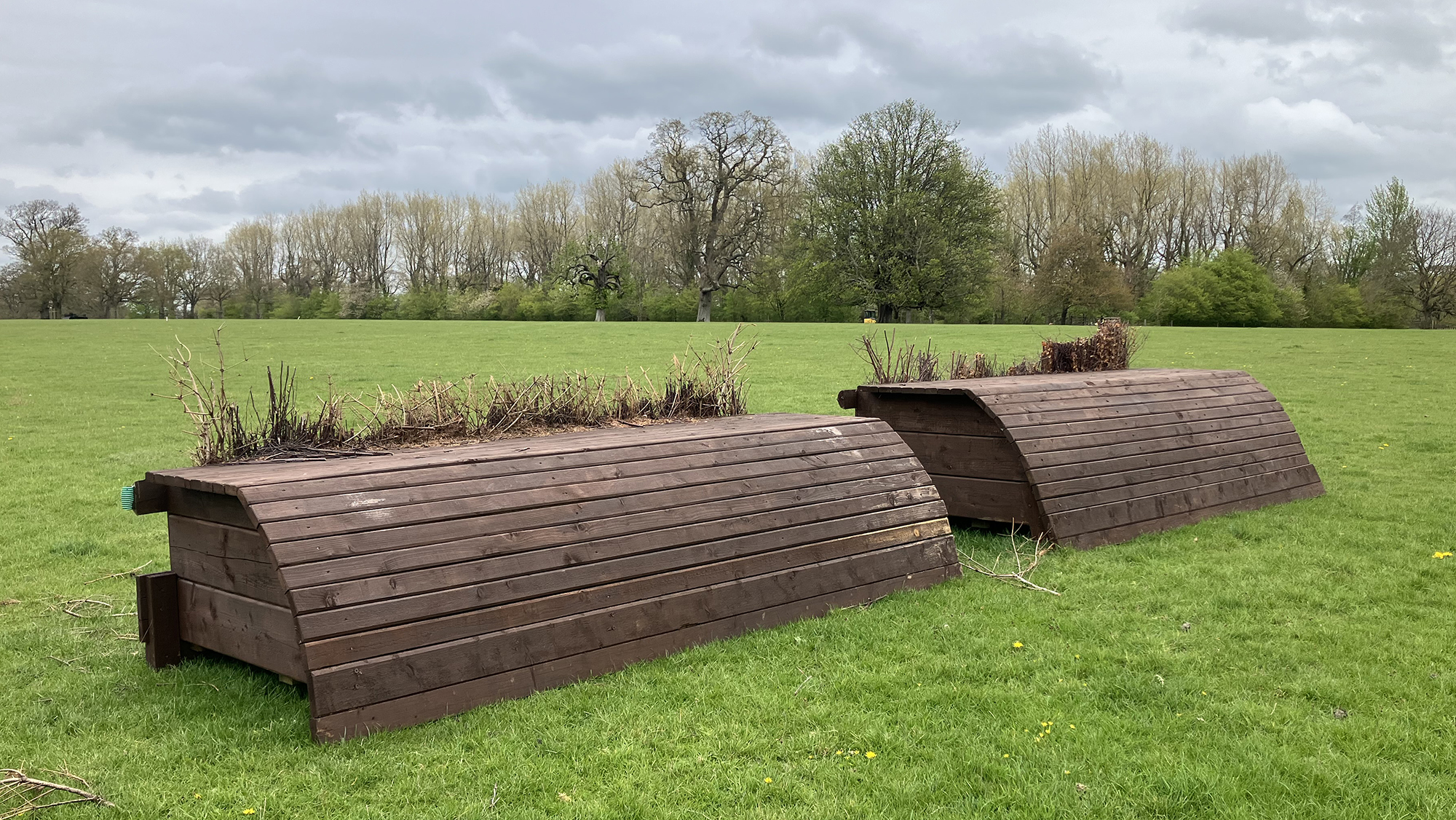
Fresh brush will be added to the back of both fences.
Although imposing, it is on slightly rising ground so Kitty says riders can just “keep travelling” to it and it should jump well.
Fence 8: Bedmax Shooting Butt
This brush corner fence was awaiting a refresh with new birch. The 90 riders jump on the left, and the 100s on the right. Although a slight accuracy question, the corner is not very deep, so should be straight forward.
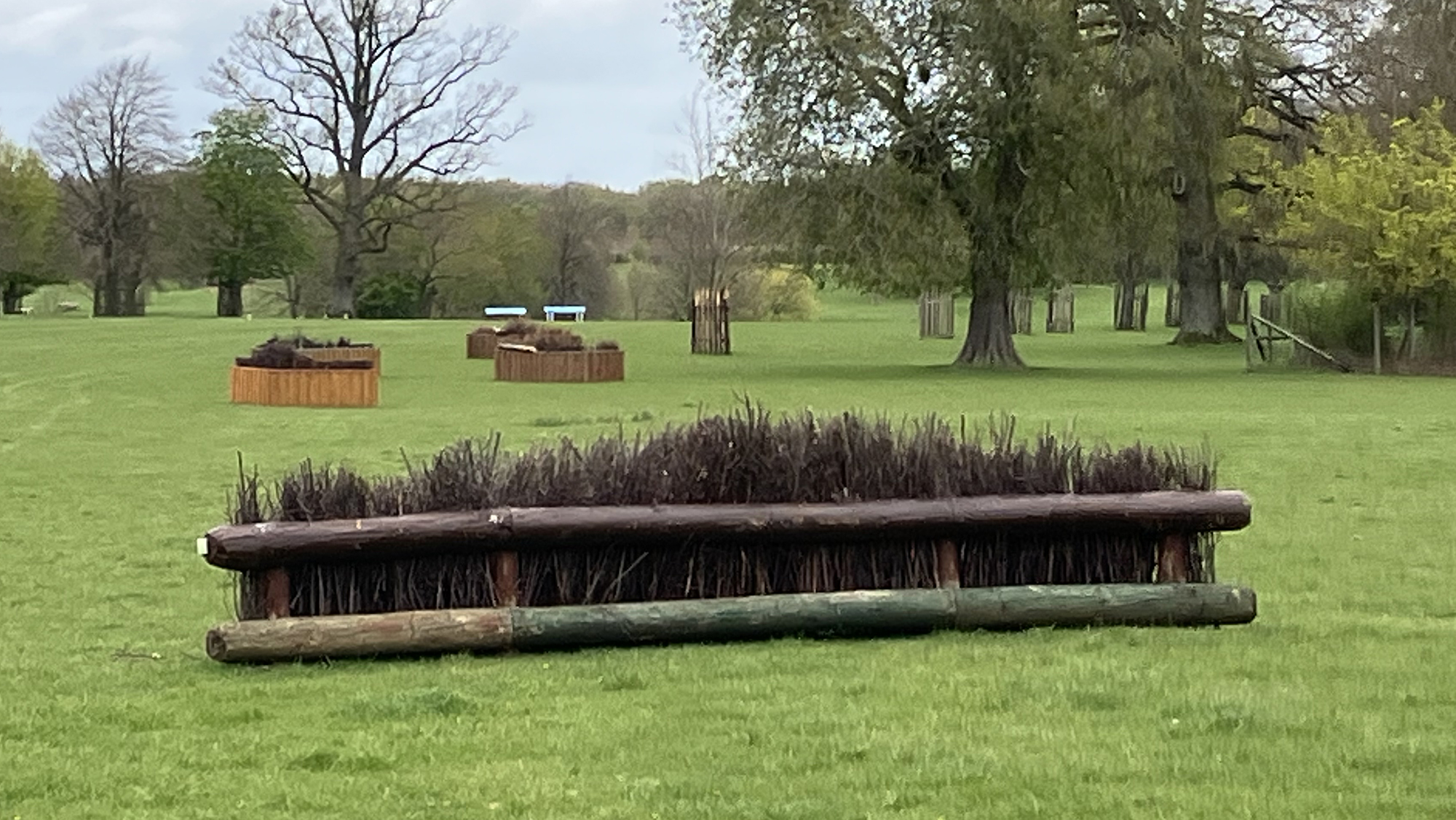
This fence will be refreshed with new birch before the competition. Fence 9 can be seen in the background.
Kitty says: “This is a useful setup fence for the question that follows.”
Fence 9AB. LeMieux Arrowheads
This combination can be jumped in a number of ways so the key is to know what suits your horse best.
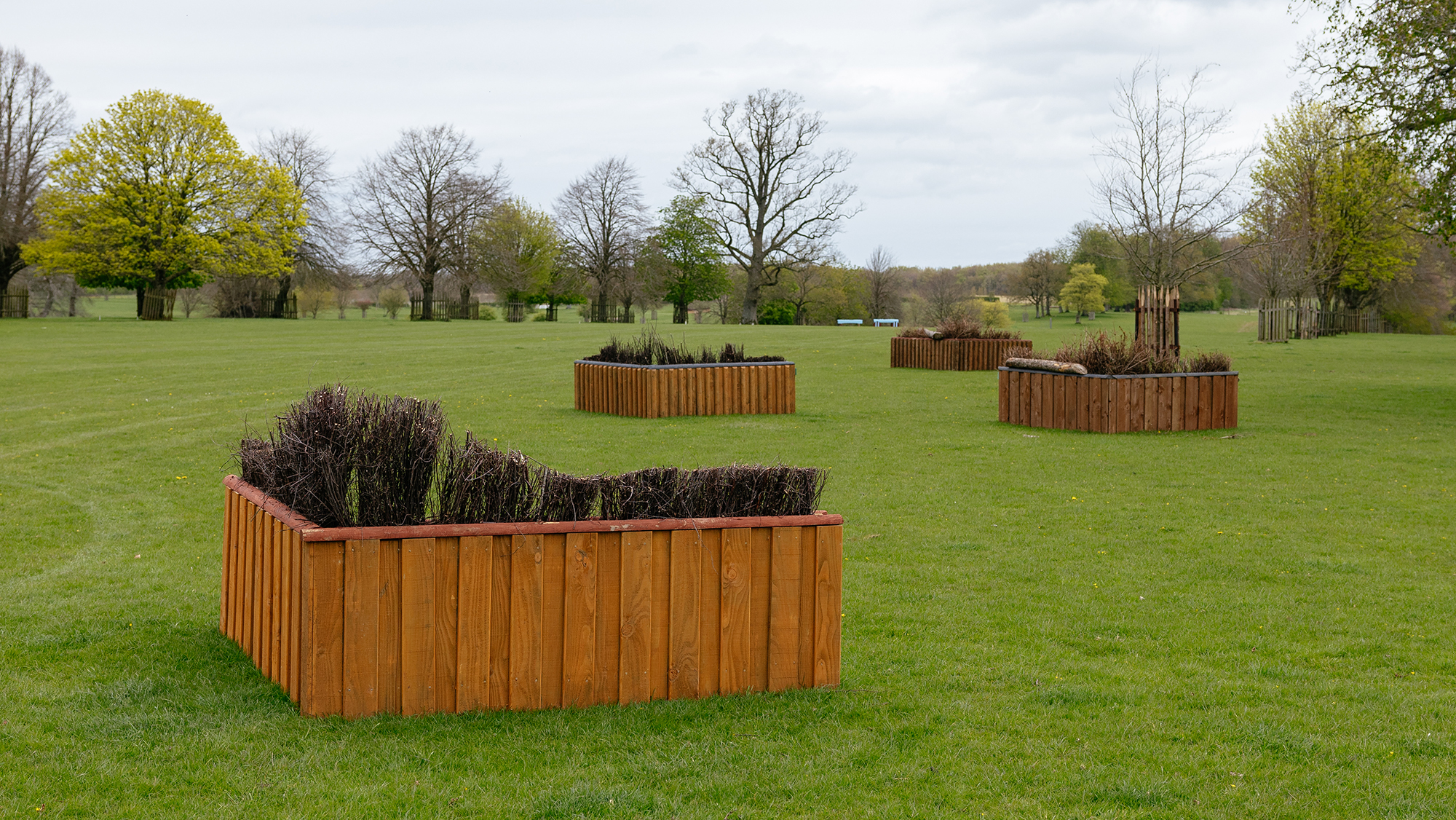
The fence in the foreground and on the right are in the BE100 course. The fence on the left in the middle ground and the one furthest away from the camera are the BE90 jumps. All will be refreshed with new birch before the competition.
“Although the ground is flat, you don’t want to arrive here going too quickly,” warns Kitty. “The direct route is to go left to left or right to right, taking both fences on the angle. But you can also put a bend in between them and jump right side to left side, or left side to right side.”
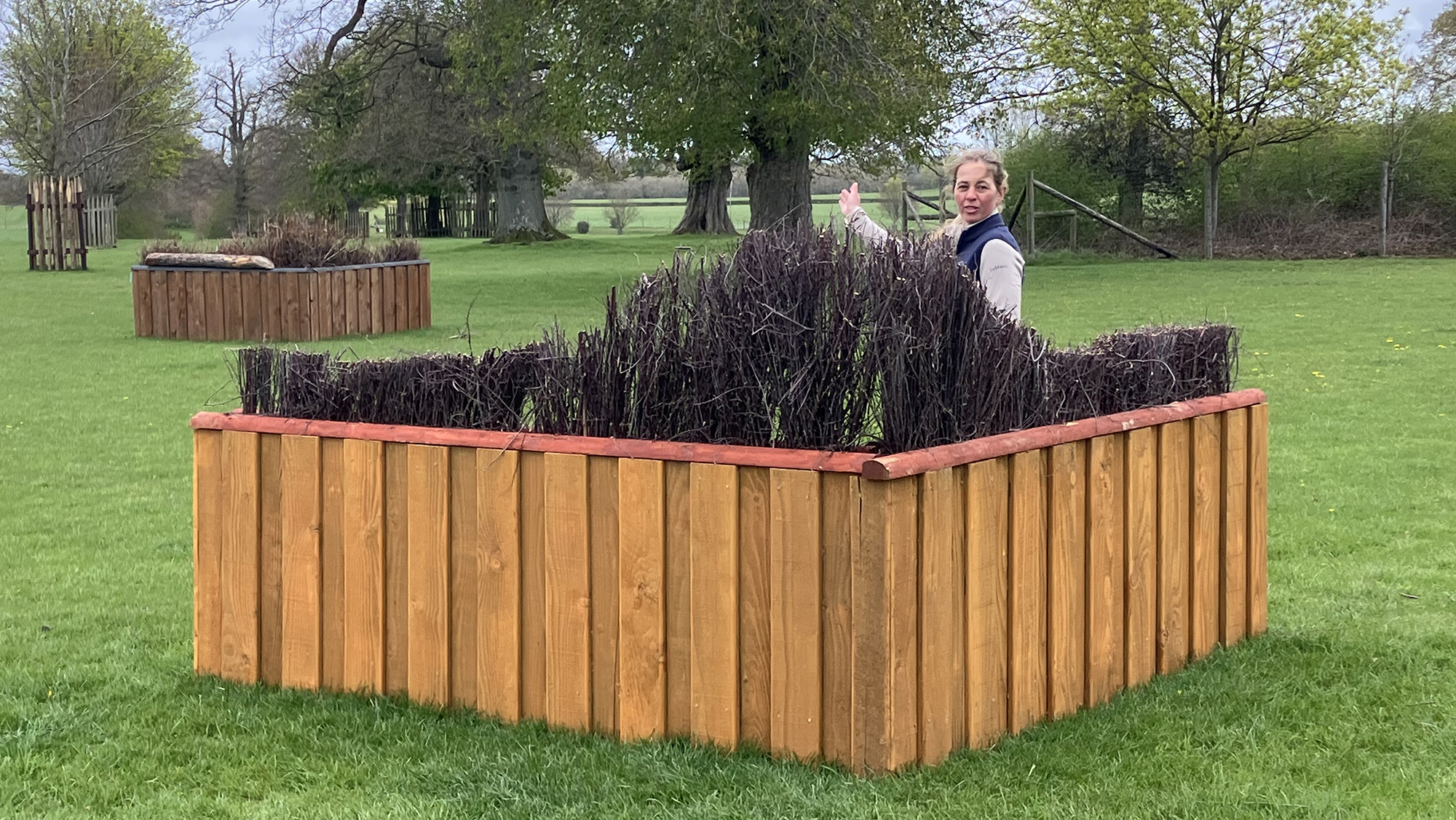
Kitty stands behind the first BE100 element showing the route when jumping the right hand option then taking a curve to the left hand option.
Fence 10. Wiltshire Brewers Drays
These drays are set on a slight downhill, although you land on the flat before the ground really drops away down into the valley.
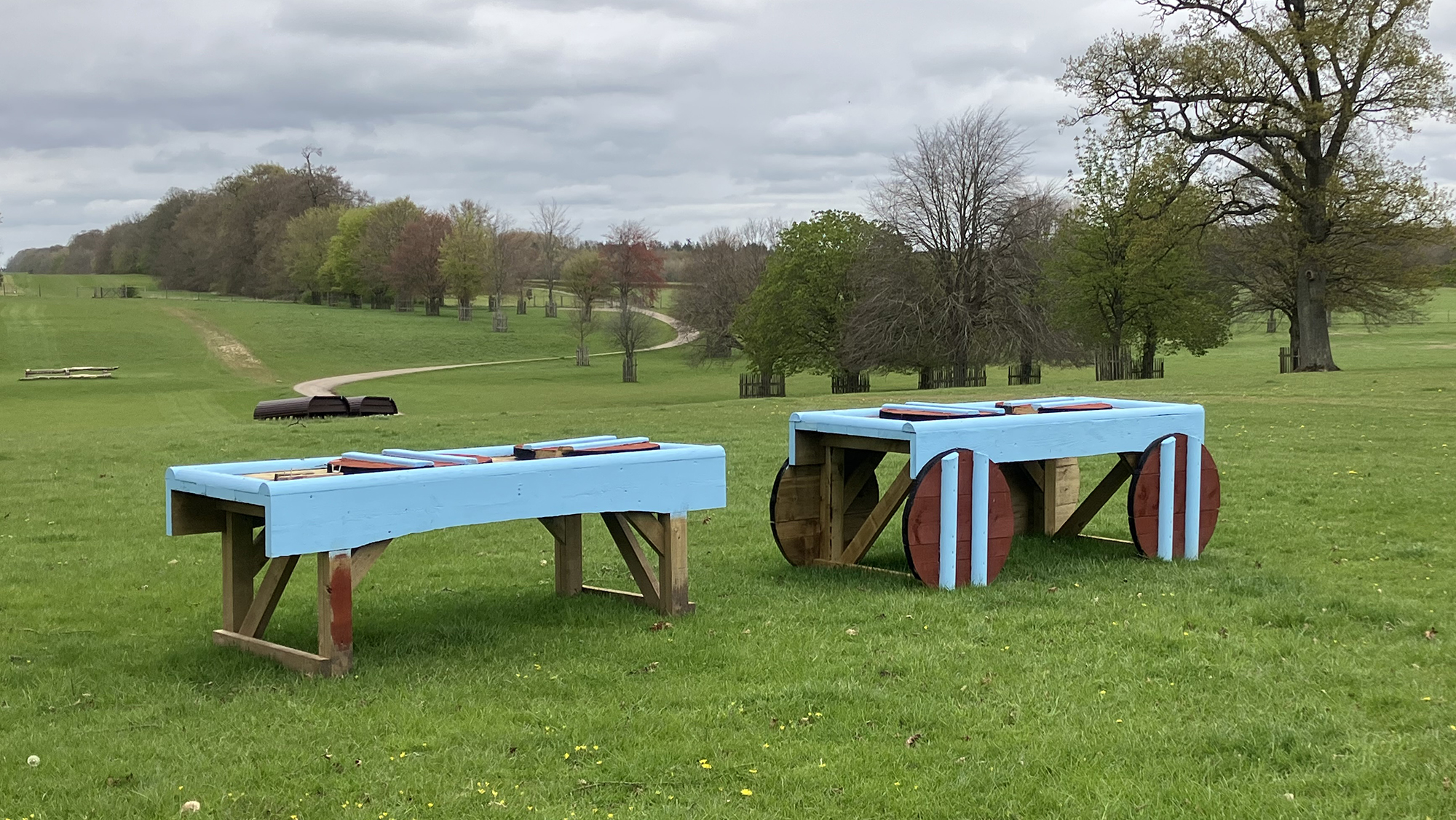
Kitty says: “I expect these will jump well because they are quite bright. Some horses may look through the gap at the bottom so you need to keep them up and in front of your leg. The high sides that will be added make the jump look more impressive, but work like a cross pole to channel the horse to the middle.”
Fence 11. Ebony Horse Club Challenge
Another reused fallen tree from the estate is set on rising ground coming out of the valley. Kitty says: “This is up a nice slope, so just keep the horse’s balance and move them up to get a good jump here.”
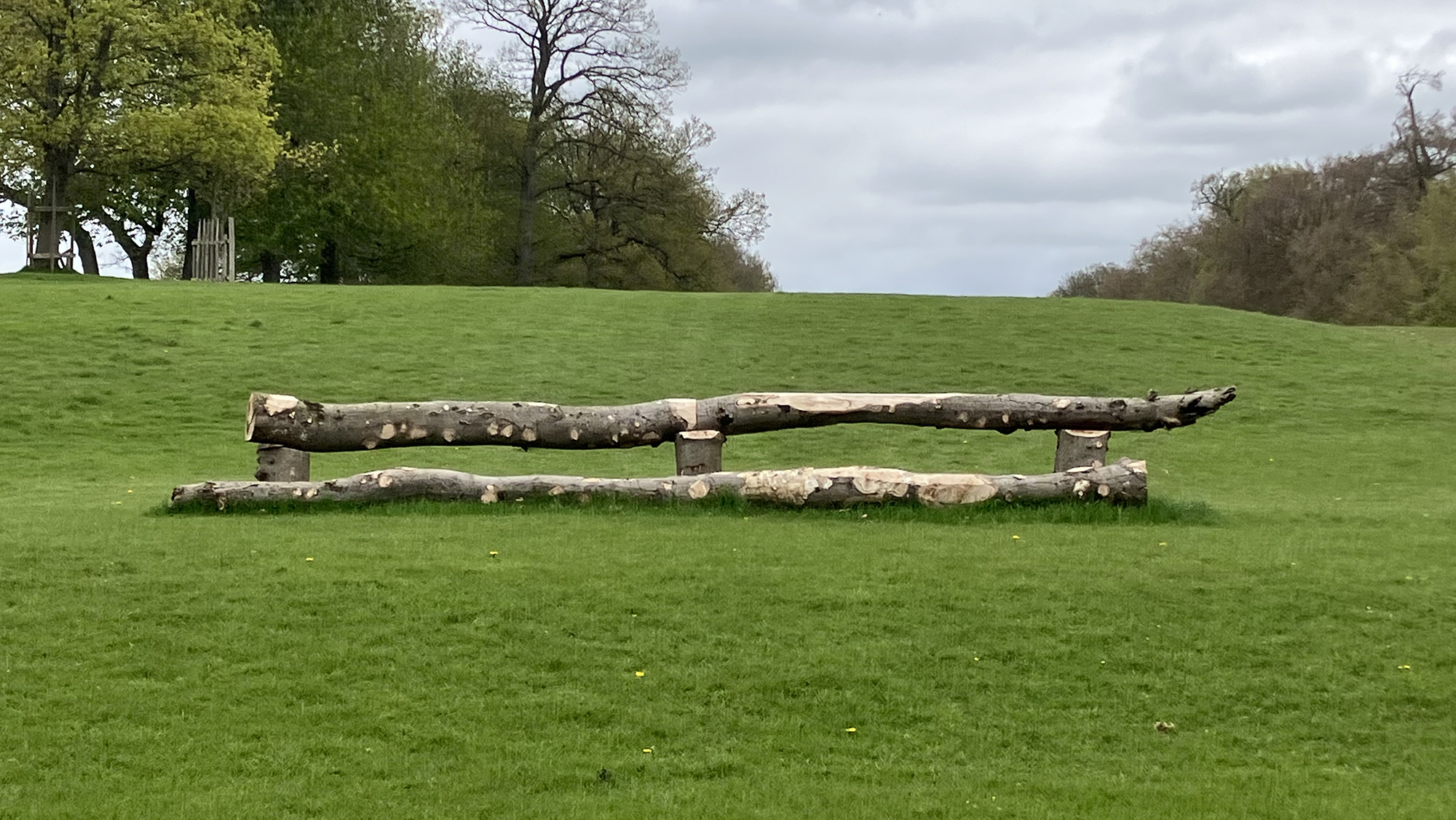
There is a strong pull up rising ground to the next few questions. “It gets more intense from here on,” warns James. “If horses aren’t fit enough things could start to unravel,” adds Kitty.
Fence 12. World Horse Welfare Leap
For the 90s the ditch and brush is jumped straight, while the 100s face an accuracy question, reminiscent of the Vicarage V, with the ditch and brush being jumped on an angle.
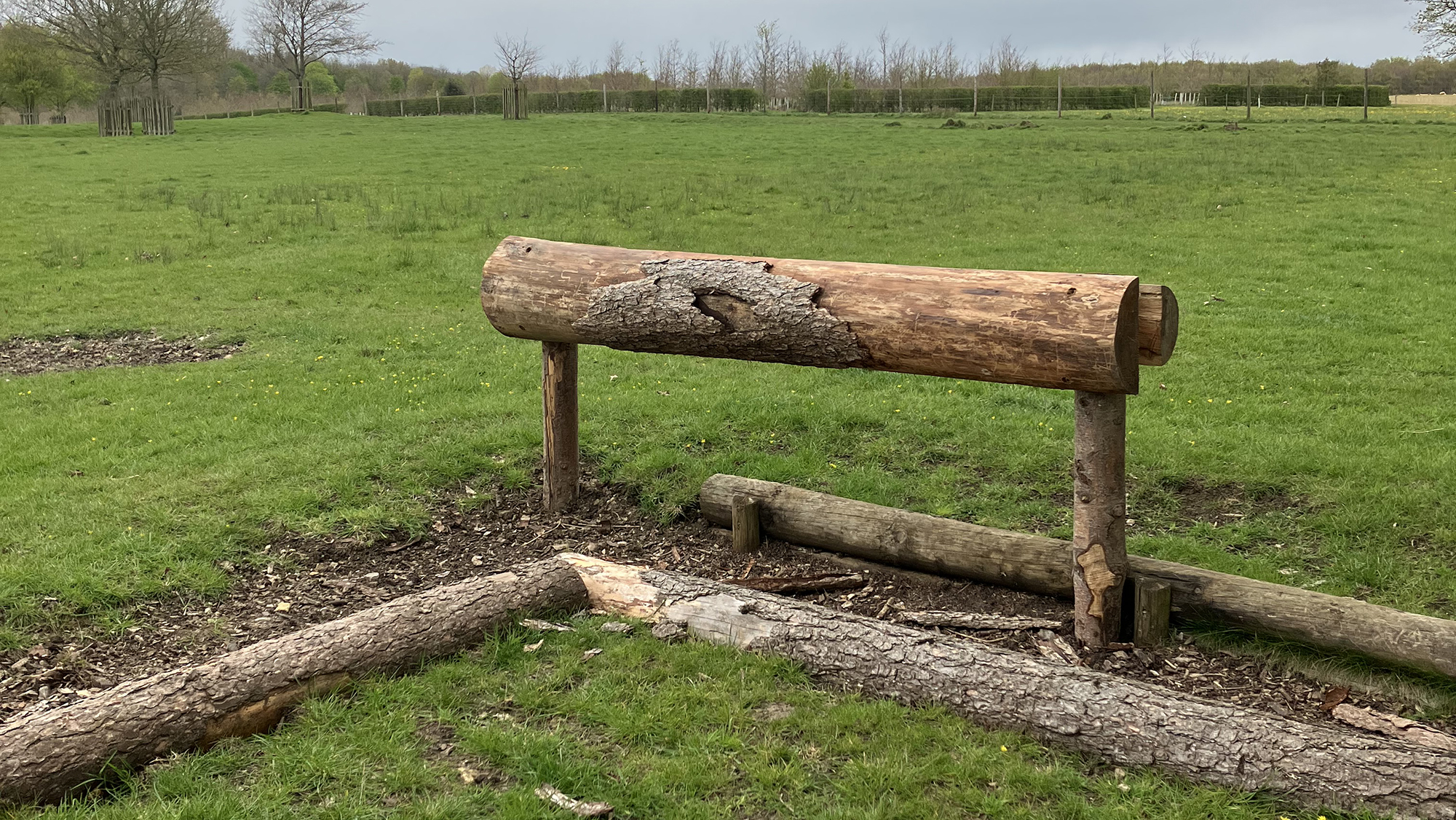
The BE100 fence without the brush showing the angle of the ditch.
The ditch is very shallow and filled with chippings. James expects this fence will look quite imposing once it’s dressed and how his team trim the brush will influence how strong this accuracy question is.
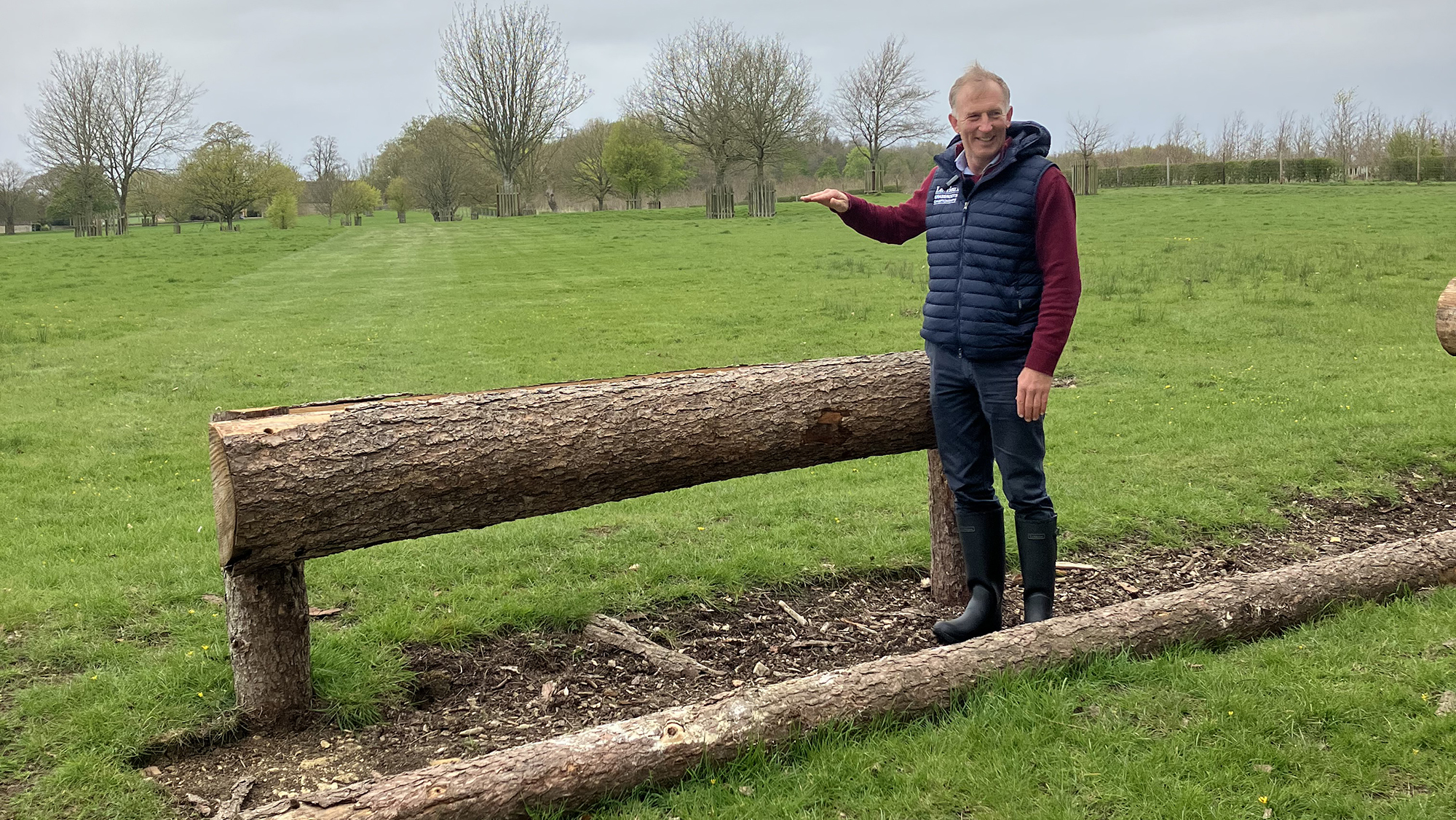
Course-designer James Willis illustrates how adding birch to this wooden frame will increase the challenge of this BE90 fence.
Kitty says: “This fence follows a decent pull up so horses may need a moment to catch their breath. Then riders need to get the engine back underneath them so they aren’t running flat. This is a great accuracy fence – you don’t see many questions like this at this level.”
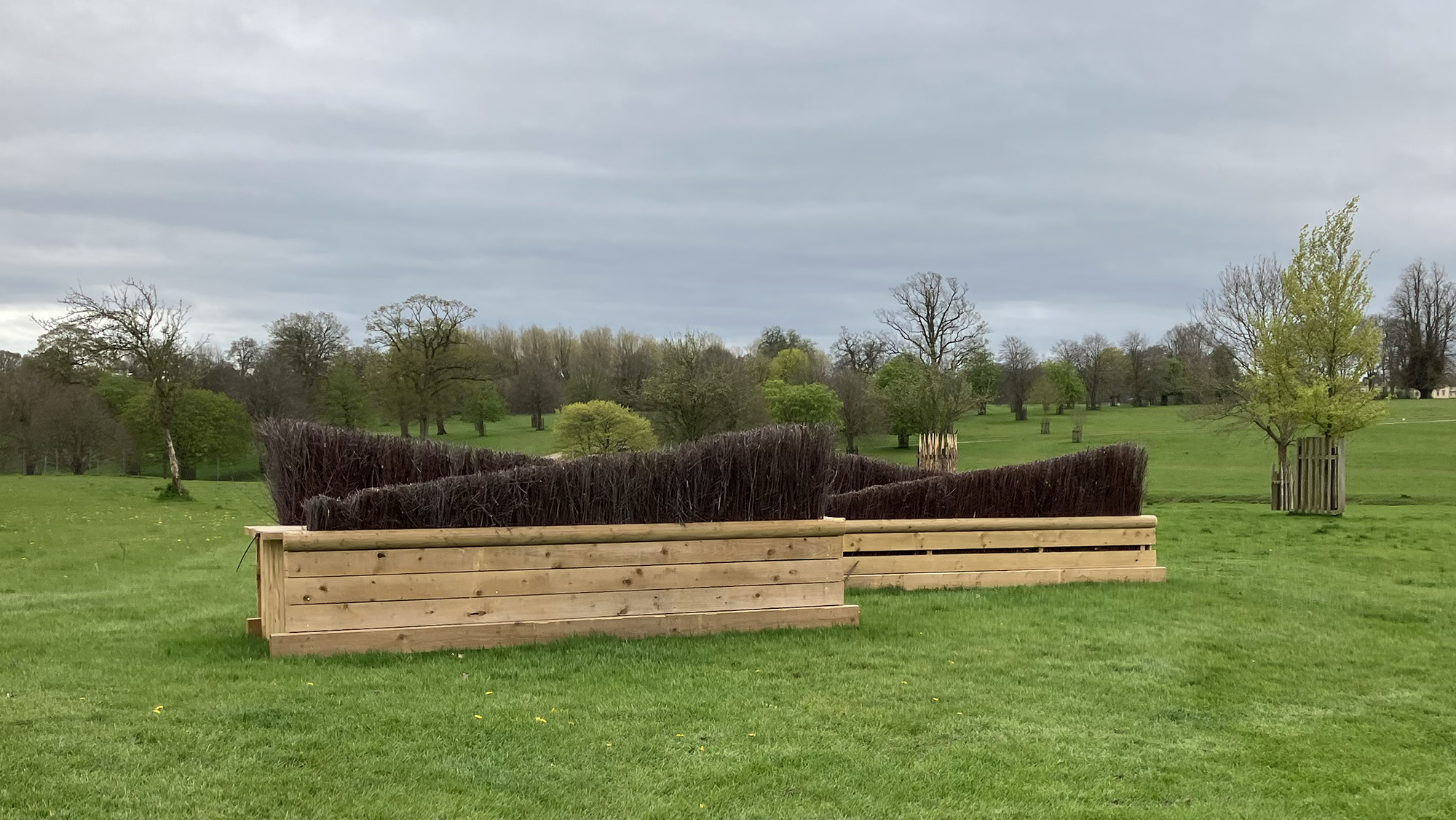
Fence 13. KBIS brush oxer
Once the hedge and ditch is out of the way, riders swing around to the left before heading over a nice X-shaped brush oxer, inspired by a similar fence at Burghley.
Fence 14/15AB. HorseQuest Teaser
The 100 log looks like you are jumping into a void on the approach, although there is a plateau of ground to land on before it drops away. The land slopes down to the left as you turn right for the skinnies, inviting horses to run out to the left.
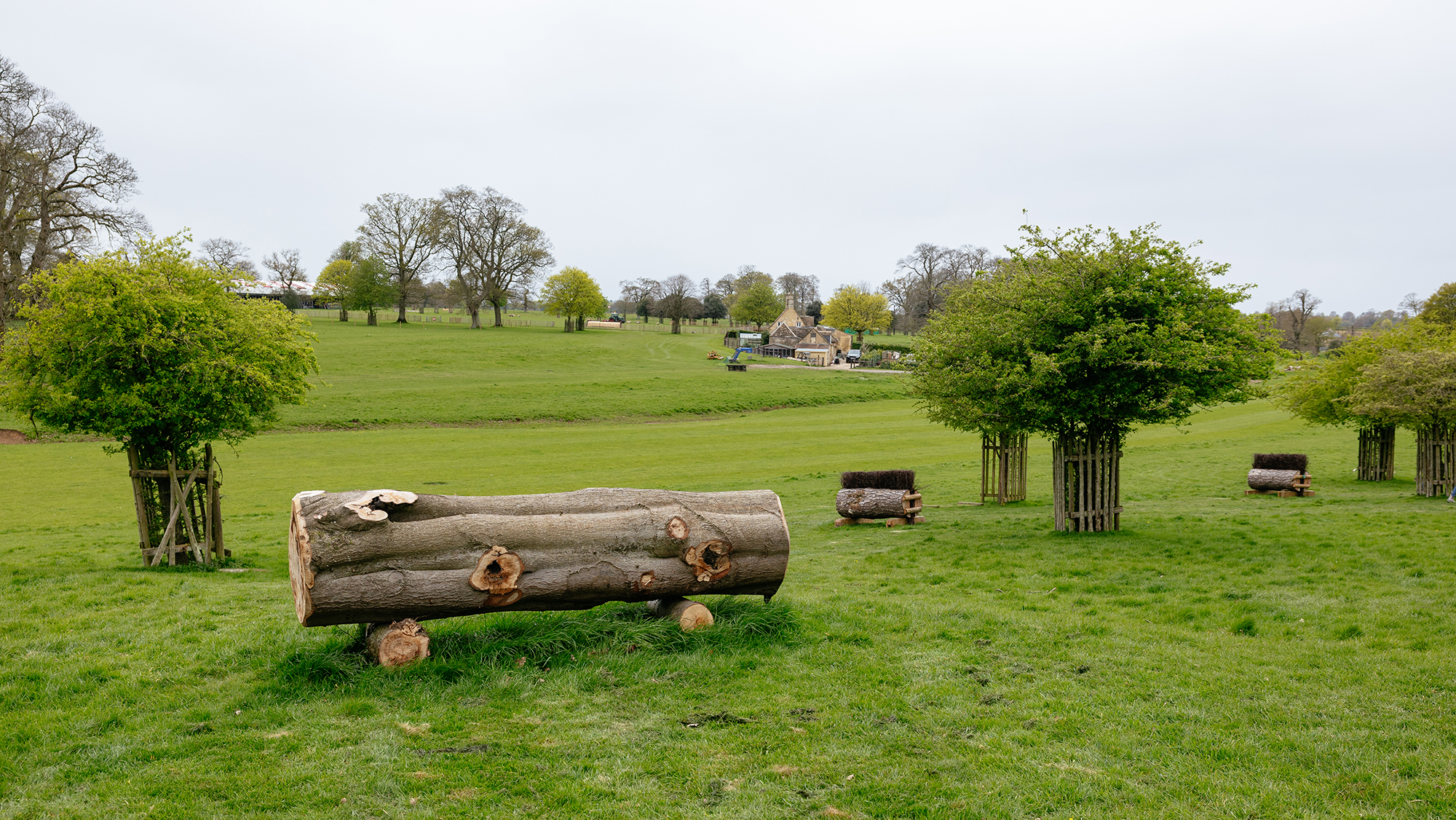
The 90 question is on a less severe right curve and flatter terrain, but will still need riders to be switched on here.
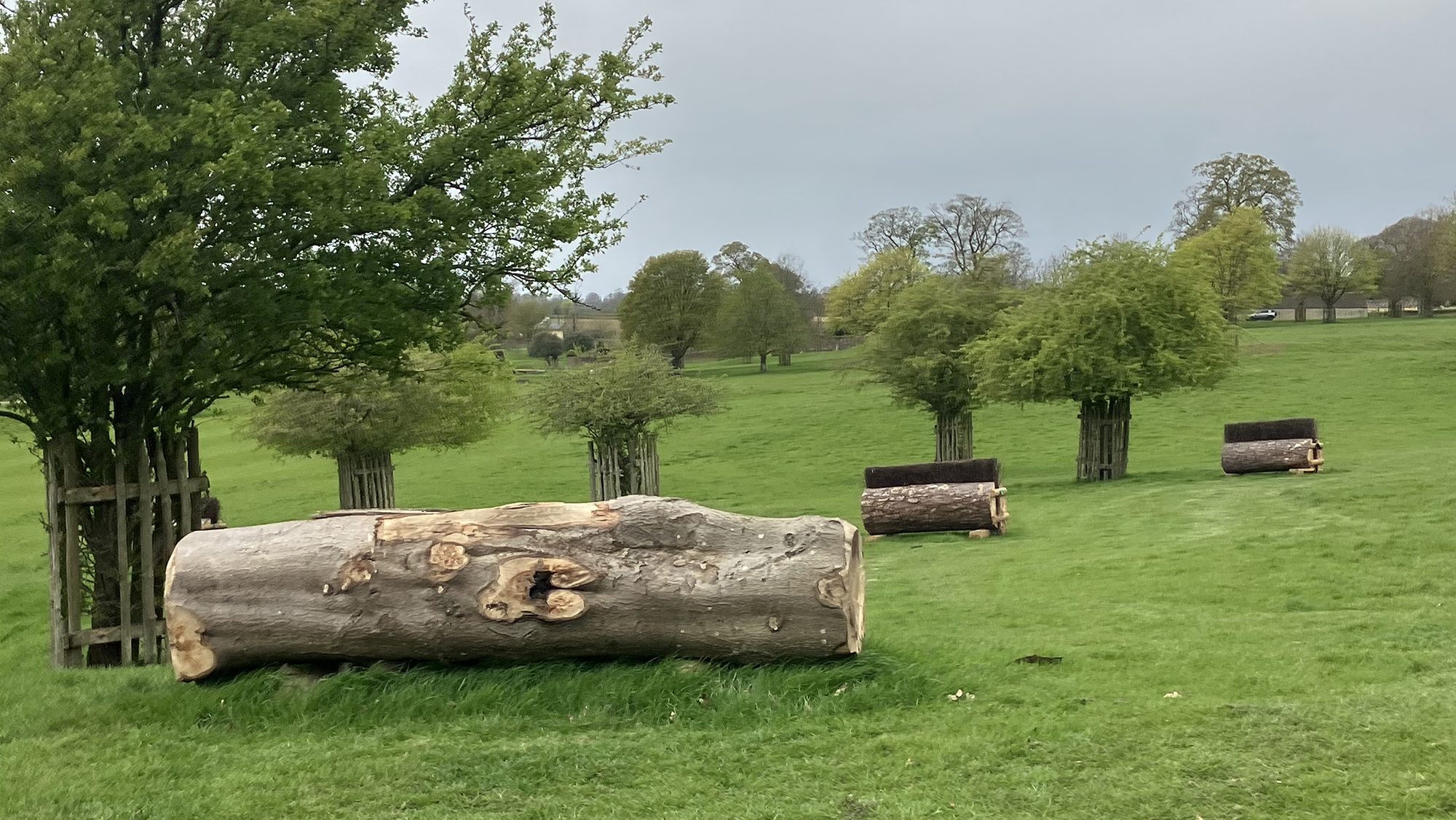
Kitty says: “The curving line to the two skinnies will test the rider’s control and the horse’s balance. If you haven’t got your fundamentals in place, you could be caught out here. This is another good test.”
James adds: “As the log is numbered separately riders can circle before approaching the skinnies without incurring jumping penalties if they lose control down the slope after the log.”
Fence 16AB. Mars Equestrian Gates
Riders head back up the slope to white rails and gates set on undulating ground. All are fitted with frangible devices.
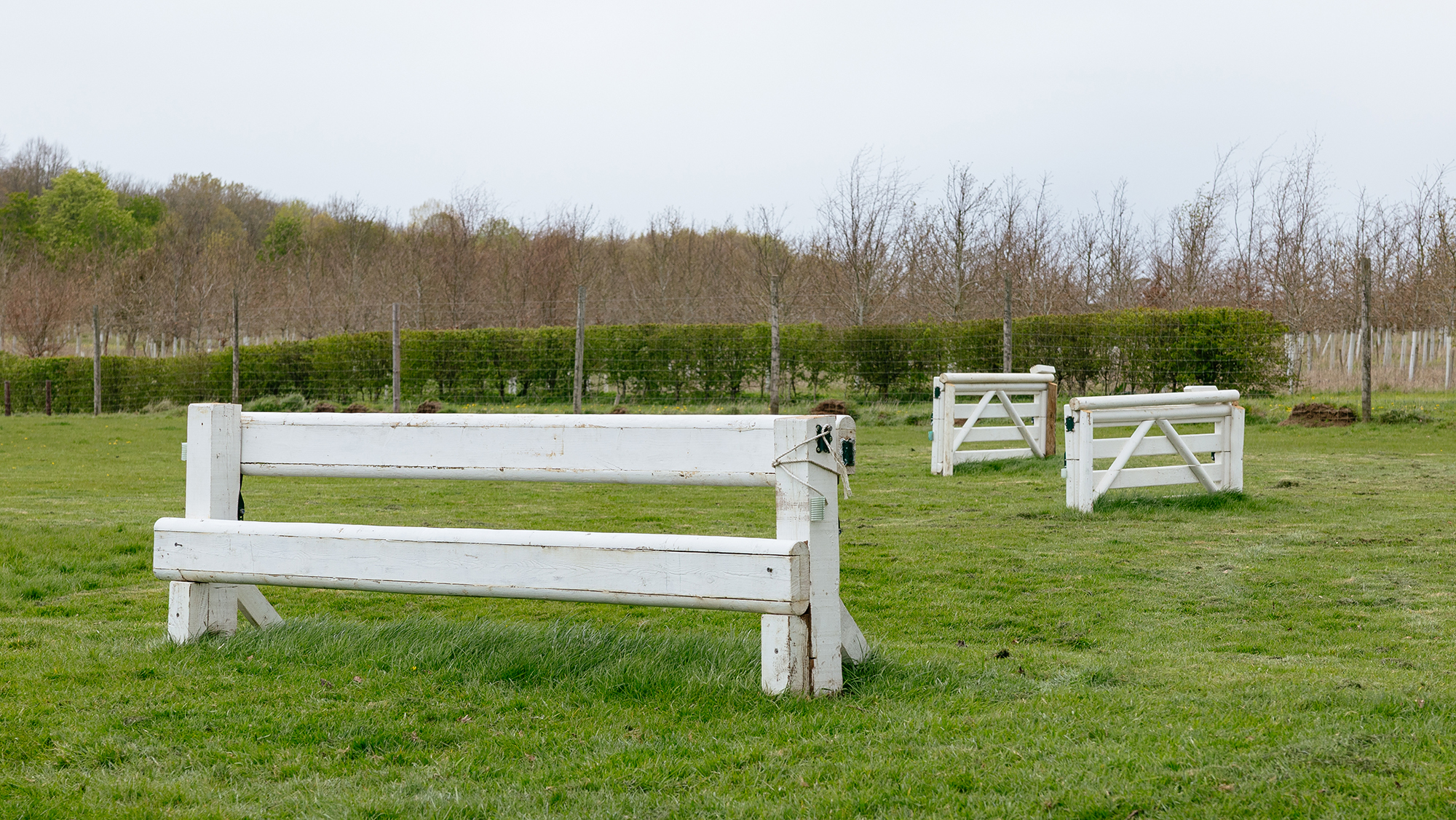
The BE100s jump the rails on the left, then head to the gate pictured furthest away, which is set at around 90 degrees to the first element.
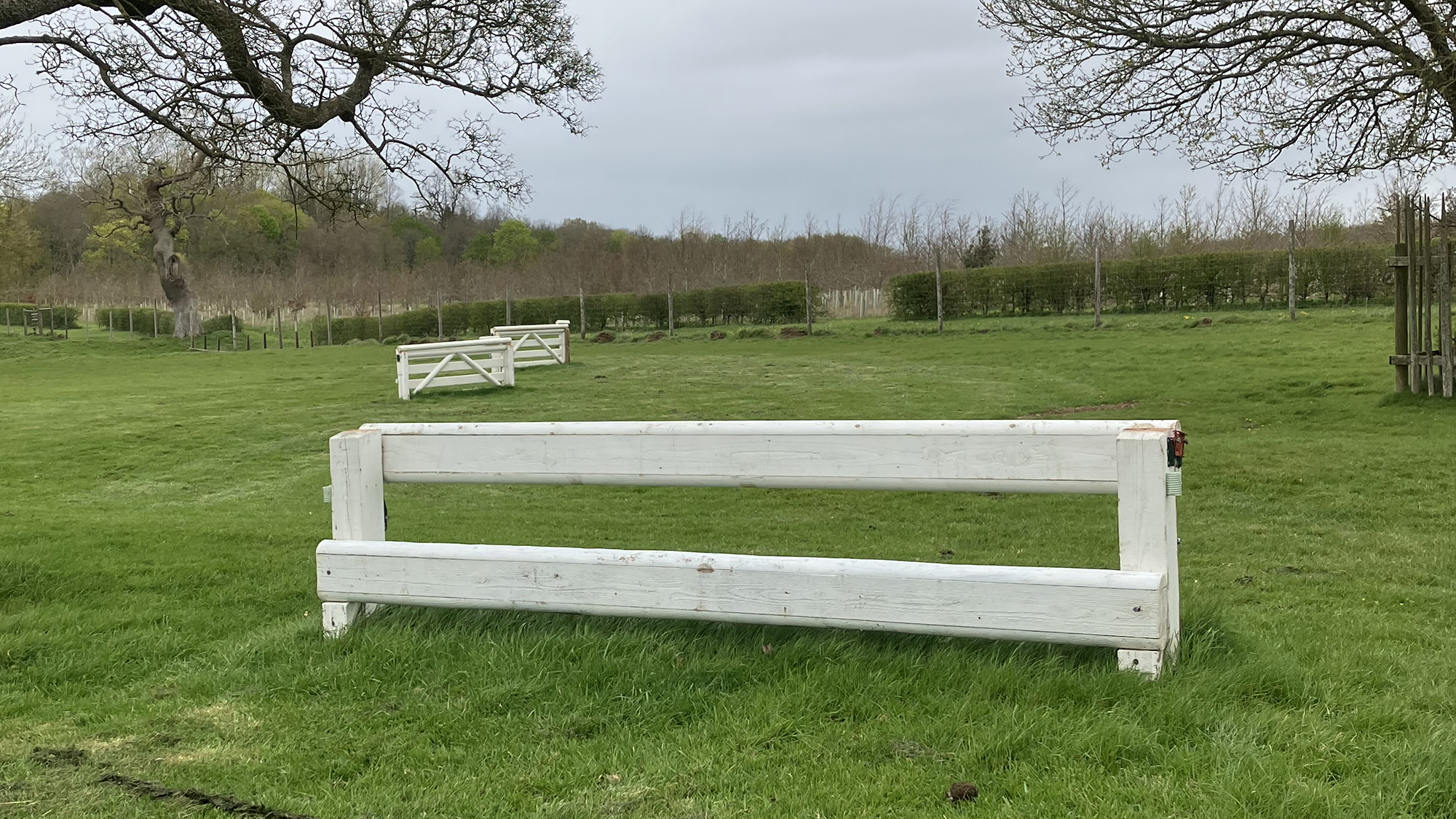
The BE90 riders jump the rails on the right, turn left and jump the left of the two gates.
Kitty warns: “This isn’t one to jump at speed or on an angle. It’s a real speed bump, needs respect and a showjumping-style canter. Because of the turn between the fences there won’t be a set number of strides here; riders need to ride forwards – not backwards – but keep the canter short and bouncy so the horse can get their shoulders up.”
Fence 17ABC. LeMieux Hollow
It’s back! This rail-ditch-rail combination has earnt something of a reputation among grassroots riders, with hopes and dreams made or broken here. Riders have to traverse the uneven ground of the moguls after fence 16 on their way to this fence.
This combination is easier to tackle in this direction, with flatter ground (and more space for the 90 competitors) between the first rail and ditch than in the other direction. All the rails are frangible. In previous years the dressing of this fence has been minimal.
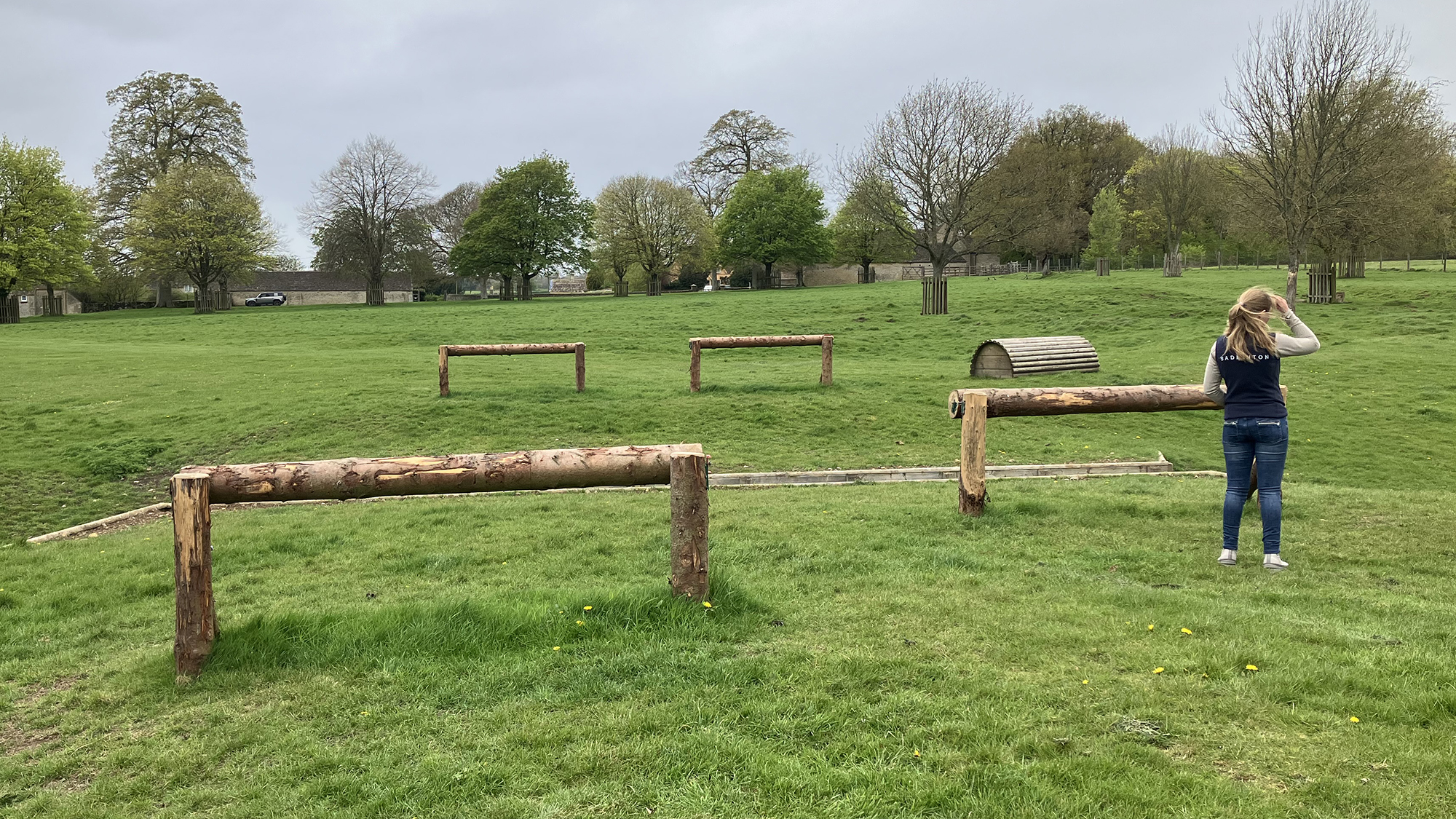
Kitty says: “Riders need to get their shoulders back here. Set up a good canter around the turn that isn’t too forward with the horse in front of your leg. You don’t see many fences like this at the level so it is likely to catch a few people out.”
The course-builder has provided the rolltop pictured alongside the second set of rails as a black flag option here.
James explains: “This fence has been influential in the past so we’ve added a rolltop black flag option so riders can get home even if their horses take exception to the ditch or final rail.”
Fence 18. Pheasant Log
The course now flows down the hill to a straightforward log for BE90 riders, followed by a bridge over the ditch.
The BE100 riders face the trakehner. The ditch was dry when we visited but James warned that it’s one of the first places to gather water when it rains, so it is quite possible there will be water in it on the day. BE100 riders have a black flag option to jump the BE90 log in the wrong direction if they have a problem here.
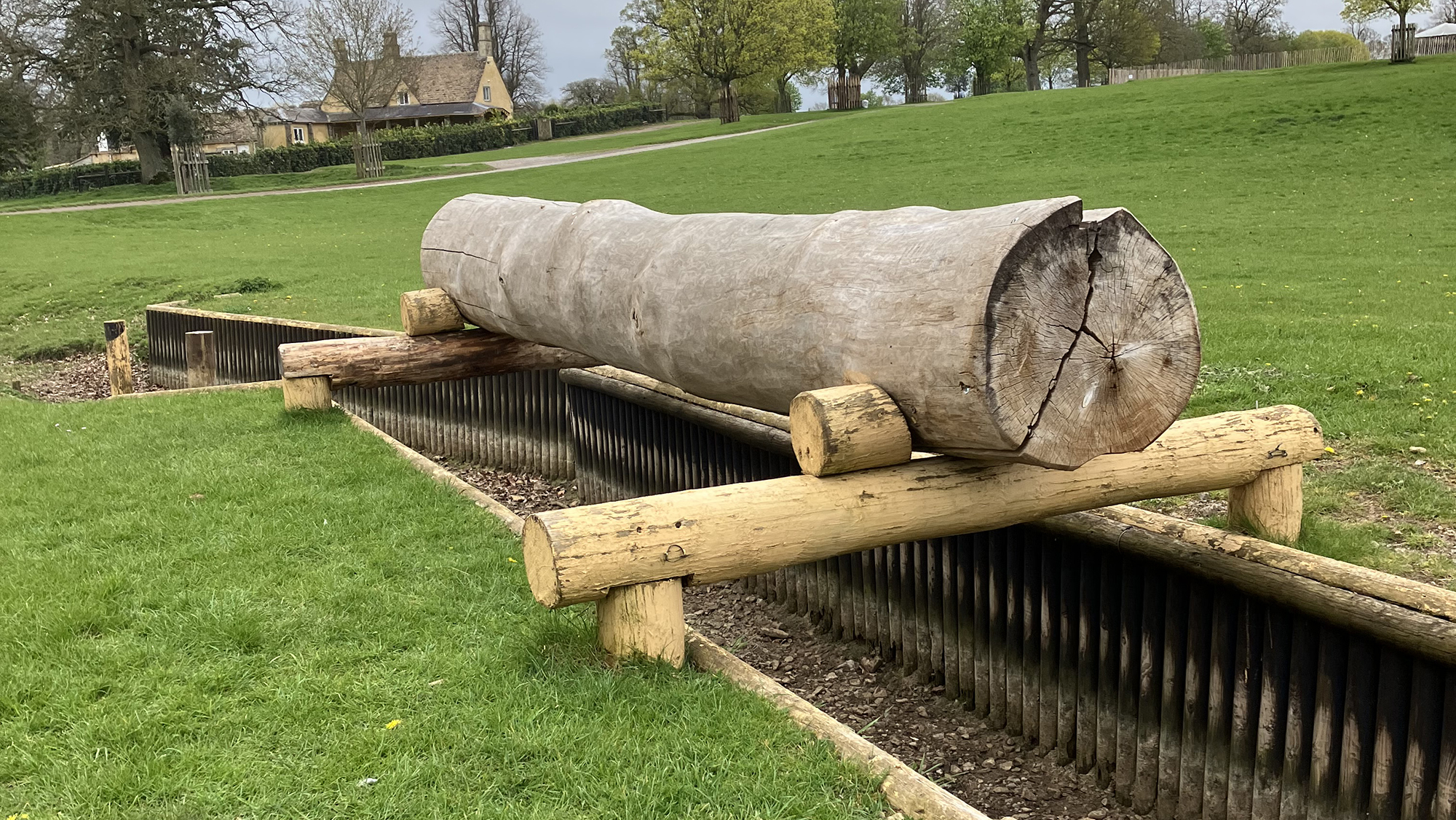
Kitty says: “This BE100 fence will be influenced by how you’ve jumped the one before. If you’ve had a tricky time at the ditch, you’ll need to be switched on here. Keep your eyes up, your weight back and support your horse between your leg and hand. If you’re having a great trip around, this fence will feel fantastic.”
Fence 19. Lister Wilder Wall
Riders head back up the hill to the famous stone wall, which our older readers will remember being jumped by the likes of Ian Stark and Ginny Elliot in the five-star. Both the BE100 and 90 riders tackle an easier section to jump into the next field, where the final fences and finish line await.
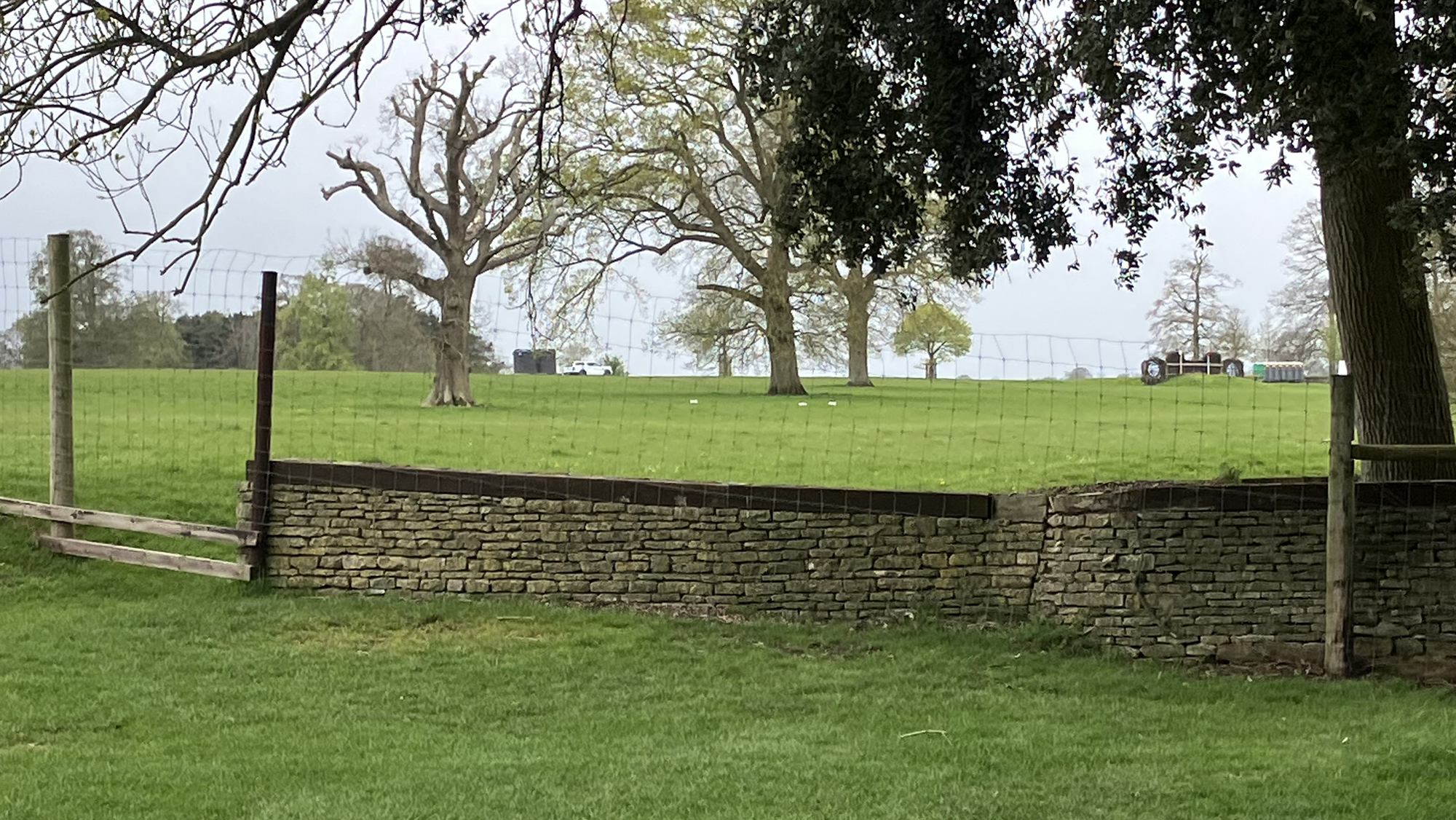
The wire fencing will be removed before the competition.
Kitty says: “Keep the horse balanced across the road and make it clear where you want them to go on landing.” The 90 riders follow the line of the wall on the right, while 100 riders make their way up a natural bank.
Fence 20. Equireel Complex
The BE90 riders face a step up then turn right to a roll top, while BE100 riders drop down over a small log on top of the step before turning left to their roll top.
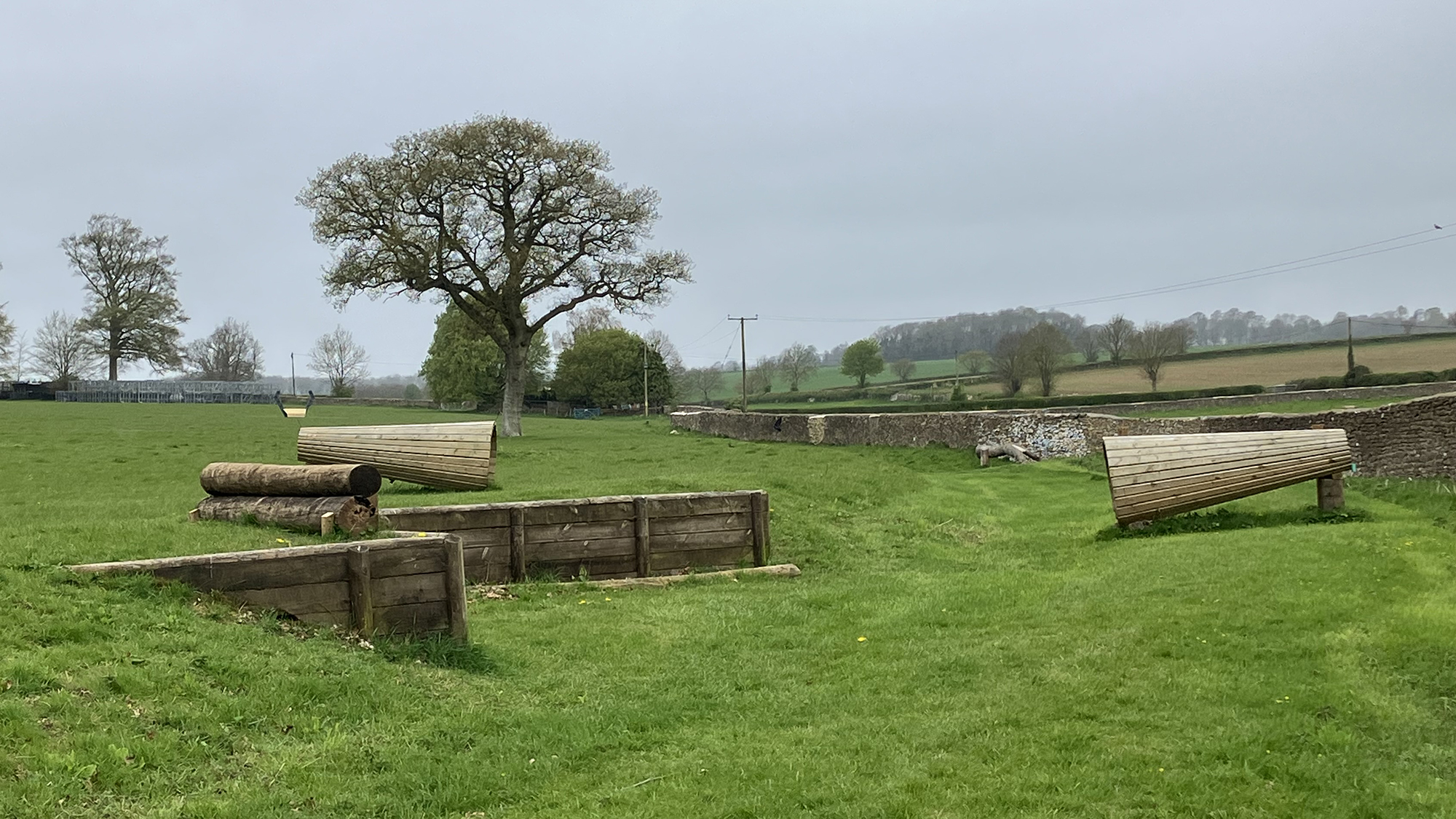
The two logs on the lip of the BE100 step down may be replaced with a single log of a similar size before the competition.
Kitty says: “The distance here will depend on how the horse jumps up or down the step. For the 100, if you get a nice jump down then it will be three strides to the rolltop and the wall on the right will help direct you. Once you get this far, you should get home nicely.”
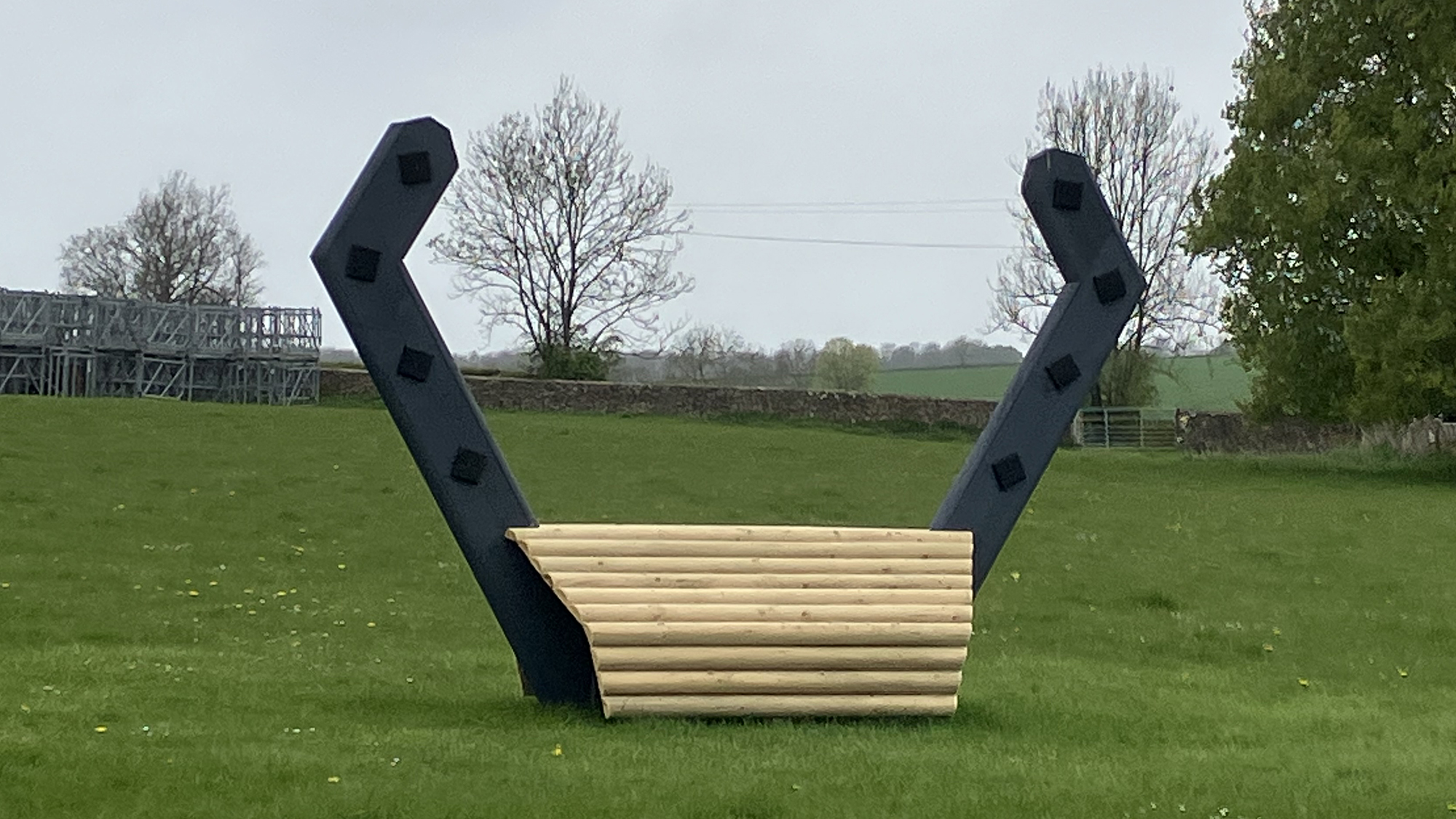
Fence 21. LeMieux Horseshoe
The final fence on the course is the horseshoe and then it’s on to the finish line and time to celebrate!
Pictures by Carol Phillips and Seth Zworestine for LeMieux
Kitty King’s top Badminton Grassroots cross-country tips
- Make sure you’re both fit enough – the terrain comes at the end
- Train your horse to stay on their line – there are many accuracy questions
- Work on your balance when galloping – when you bring your shoulders back the horse should come back to you
- Keep your horse in front of your leg – if things start to unravel, you should still be OK
How to watch and listen to Badminton Horse Trials
To watch every phase of Badminton Horse Trials live or via catch up, including the trot-ups, from the comfort of your home anywhere in the world, you need a 2026 Badminton TV Pass. Badminton TV is once again powered by ClipMyHorse.TV, but you do not need a full ClipMyHorse.TV subscription to watch – you can just subscribe to Badminton TV for £22.99. Go to badminton-horse.tv to sign up. If you are already a ClipMyHorse.TV premium member, Badminton TV is included in your subscription. Also check out the Badminton app, which provides free live results and much more this year. Sign up for Badminton Plus membership for £4.99 to access the live Radio Badminton broadcast and receive exclusive offers from on-site exhibitors. Search for Badminton Horse Trials in your app store.
Enjoy the best of Badminton with Horse & Hound
To ensure you keep up to date with all the breaking news, behind the scenes insight, and the best of the action throughout Badminton Horse Trials with no limits on how much you can read, subscribe to the Horse & Hound website from as little as £1 a week. Sign up now. And don’t miss our bumper 28-page magazine report on Badminton, including in-depth analysis and exclusive comments from top names, in the issue of Horse & Hound dated 14 May.
You may also enjoy reading:
How to watch Badminton Horse Trials live from anywhere in the world
Horse & Hound’s exclusive Badminton 2026 form guide, featuring every horse and rider
How much prize money can riders win at Badminton Horse Trials?

‘We must keep doing the things we love’: Badminton grassroots rider speaks up about menopause
Not sure what to wear to Badminton Horse Trials? Here are some ideas to give you inspiration

Subscribe to Horse & Hound magazine today – and enjoy unlimited website access all year round