The best rope halters are a popular choice for groundwork, training and everyday handling, as they offer lightweight control and clear communication without the bulk of a traditional headcollar. They are favoured by many riders and trainers practising natural horsemanship methods.
In this guide we’ll break down the best rope halters for horses, explaining key features such as material, thickness and fit. Whether you’re working with a young horse, refining groundwork or looking for a durable rope halter for regular use we’ll help you choose a reliable option for your needs.
It’s important to know that rope halters are not recommended for tying your horse up as they don’t have break points – they should only be used while training, rather than as a replacement headcollar.
Best rope halters for horses: H&H’s quick guide
Best rope halter for size options: Hunters Natural Horsemanship
Best rope halter for colour options: Weaver Leather Diamond Braid
Best budget rope halter: Rhinegold Rope Halter
Best decorative rope halter: Majestic Ally Padded Beaded Nose Braided
Best rope halters for training and everyday use

Hunters Natural Horsemanship Rope Halter: Best for size options
Colours: 10 options
Sizes: 9 sizes (mini foal – draft)
Made from high quality soft polyester ¼in (6mm) braided rope that is sweat-, dirt- and wear-resistant, so it will stay truer to its original form for longer without fading, stretching, weakening or breaking. It’s available in a wide range of colours and a very wide range of sizes.

Weaver Leather Diamond Braid Rope Halter: Best for colour options
Colours: 14 options
Sizes: One size
This halter is made from a continuous piece of ⅜in polypropylene rope with a hand-knotted construction and a double noseband and crown strap. It comes with a matching 10ft rope which can be removed if needed.

Rhinegold Rope Halter: Cheapest rope halter
Colours: Black or blue
Sizes: Pony, cob or full
This halter is lightweight and simple to fit, and gives you a bit more control than a traditional headcollar. It’s also the cheapest halter in this guide, so great if you’re on a budget or just want to try one out.
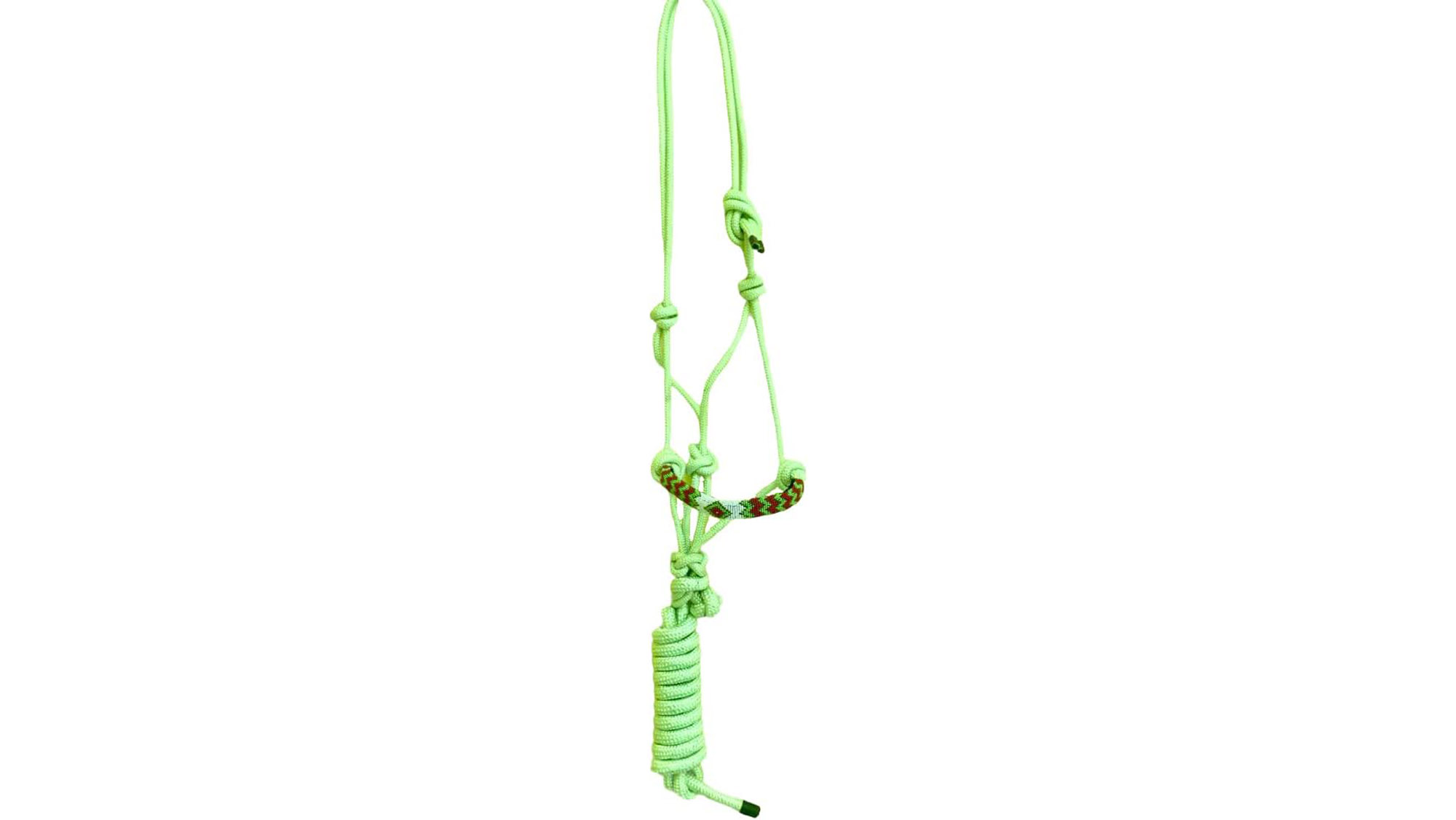
Majestic Ally Padded Beaded Nose Braided Rope Halter: Best decorative rope halter
Colours: Black, green or purple
Sizes: One size
This adjustable halter has a beautiful beaded design on the padded nose section. It’s made of a highly durable stiff polyester that holds up well in adverse weather conditions and stays firmer to its original form for longer without fading, stretching, weakening or breaking. Comes with a matching 10ft leadrope.

Hy Equestrian Rope Halter
Colours: Black, red, navy, green, blue or purple
Sizes: Cob/full
This adjustable rope halter is useful where more control is required.
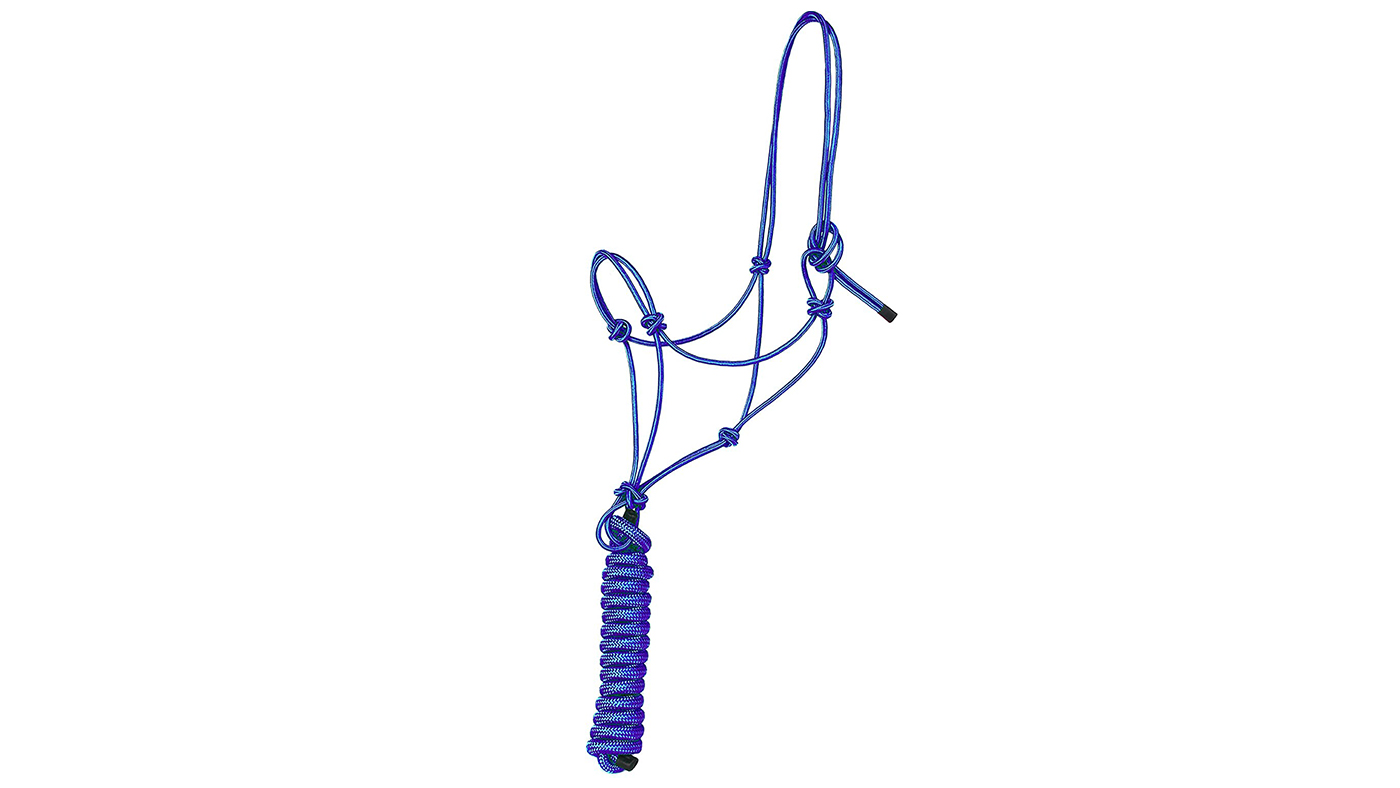
Majestic Ally ¼in Training Halter
Colours: Black, green, purple, red, blue or turquoise
Sizes: Full
This fully adjustable halter hand-tied is made from high quality stiff polyester ¼in (6mm) rope which stays firmer to its original form for longer without fading, stretching, weakening or breaking. Comes with a matching 10ft leadrope.
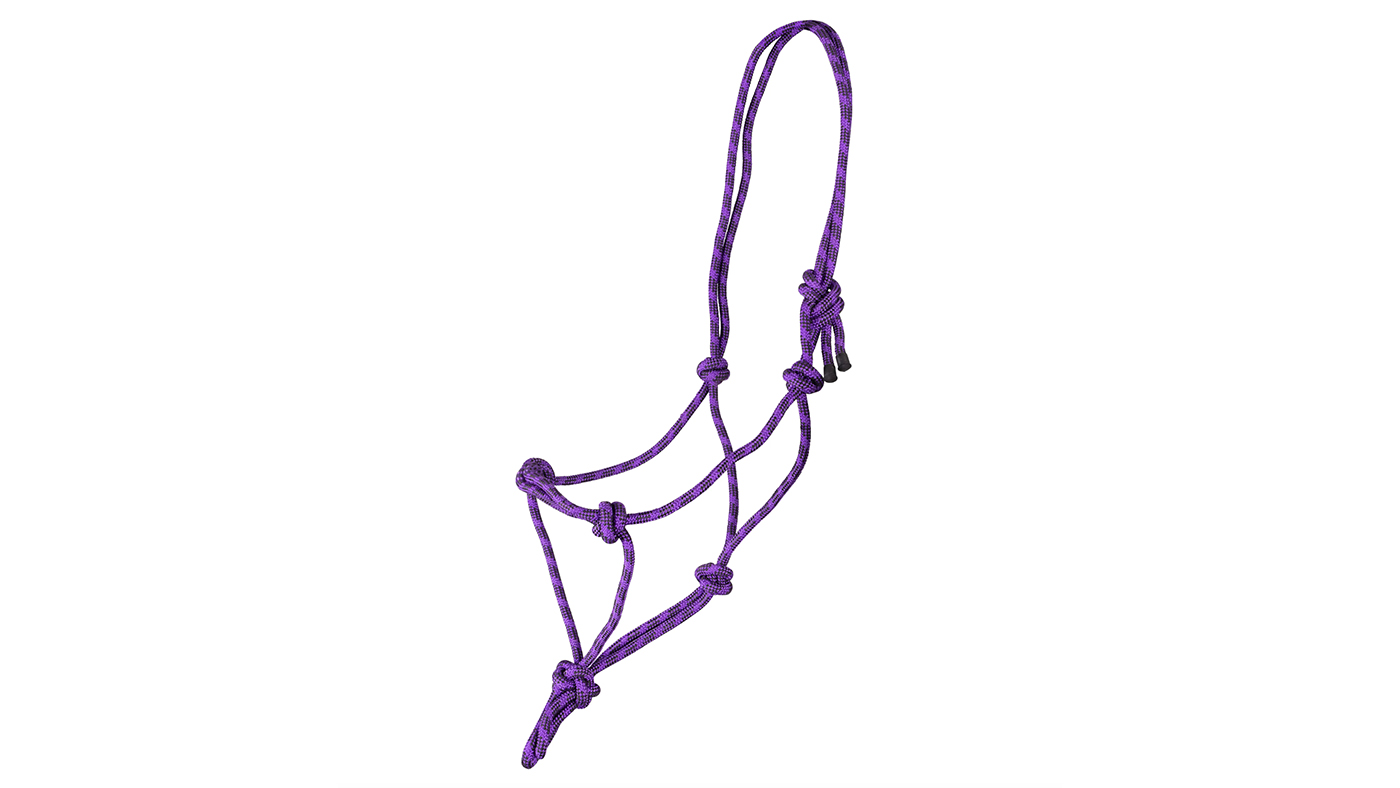
Shires Rope Control Headcollar
Colours: Black/white, navy/white, pink/black or purple/black
Sizes: One size
Lightweight and simple to fit, this rope halter is made from a durable polyester that gives you a bit more control than a traditional headcollar.
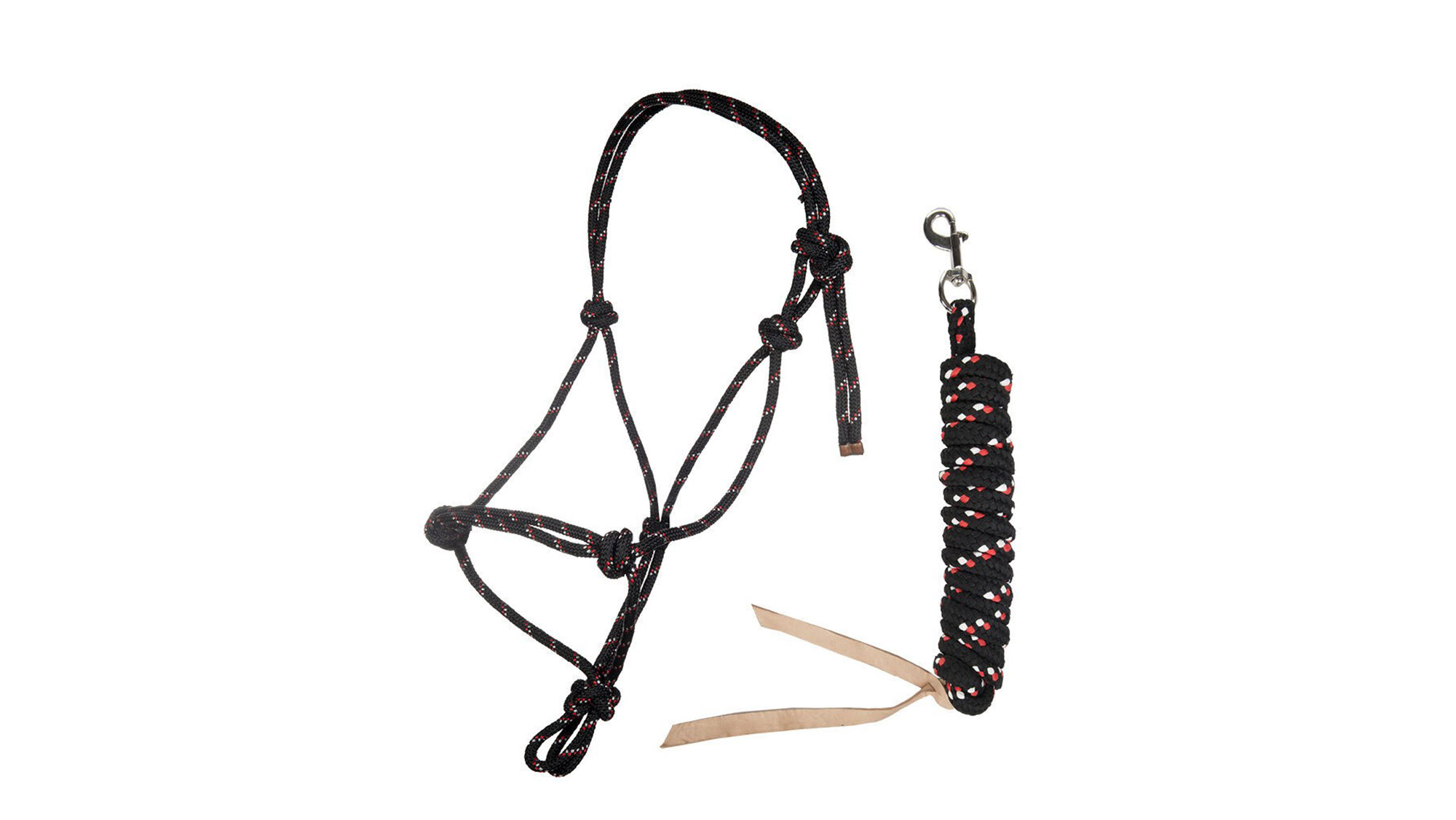
HKM Rope Halter Set
Colours: Black or blue
Sizes: Pony, cob or full
This rope halter and lead rope set from HKM is made from polypropylene, it is easy to adjust and has 12ft leadrope with a snap clip.
Longer lead ropes for use with a rope halter
When selecting a rope halter for groundwork, consider purchasing a longer lead rope (10-22ft). This added length is beneficial for delivering aids to your horse whether he is close by or further away.
The ropes commonly used in natural horsemanship are often heavier than standard lunge lines, which contributes to more precise communication. Some rope halters are sold with a rope, too, so factor that in when you’re looking at the prices.
How to tie a rope halter
Tying a rope halter correctly ensures that it doesn’t loosen or come undone, but it also allows you to undo it easily if your horse has pulled and tightened the knot. The image below shows how to tie a halter correctly.

The rope halters ties on the cheek on the near side
The rope should go through the loop towards you (blue arrow). It then follows behind the loop (pink arrow) and back through in front of the loop (yellow arrow) so that the tail points backward.
Rope halter vs traditional headcollar
Rope halters offer greater sensitivity, versatility, and effective pressure release. Traditional web/nylon or leather headcollars are known for comfort, durability, and style variety.
The final choice depends on your specific needs and the horse’s preferences. However, unlike traditional headcollars, rope halters lack break points, so they are not recommended for tying horses up. It is best to reserve them specifically for training and groundwork sessions.
You might also like:

Natural horsemanship: ‘just good, common sense horsemanship’ or something else?

9 of the best leather headcollars for travelling, competing and everyday wear
Subscribe to Horse & Hound magazine today – and enjoy unlimited website access all year round