Hickstead is one of the most famous showjumping venues in the world, and we’ve uncovered some facts about the course and arena that will interest, intrigue and impress any showjumping fan.
Hickstead directors Lizzie and Edward Bunn had an email recently from someone keen to know the dates of the 2027 Al Shira’aa Hickstead Derby Meeting. The concerned spectator said her son had just confirmed his wedding date for next summer and she wanted to make sure there wasn’t a clash as “I have a horrible feeling I might have to miss the wedding”.
A fair point, but the good lady was reassured that she would indeed be able to enjoy a fabulous day – and also watch her son get married.
That’s how much the Derby means to people, and this year’s meeting is on the horizon; four days of top equestrian sport culminating in the main event on Sunday, 21 June. But of course preparations have been ongoing for the event since last summer specifically – and for decades. The International Arena may look like a nice grass ring but the work, and money, that goes into it is phenomenal.
Fascinating Hickstead facts
Here a few things you probably didn’t know about what goes on behind the scenes at the All England Jumping Course.
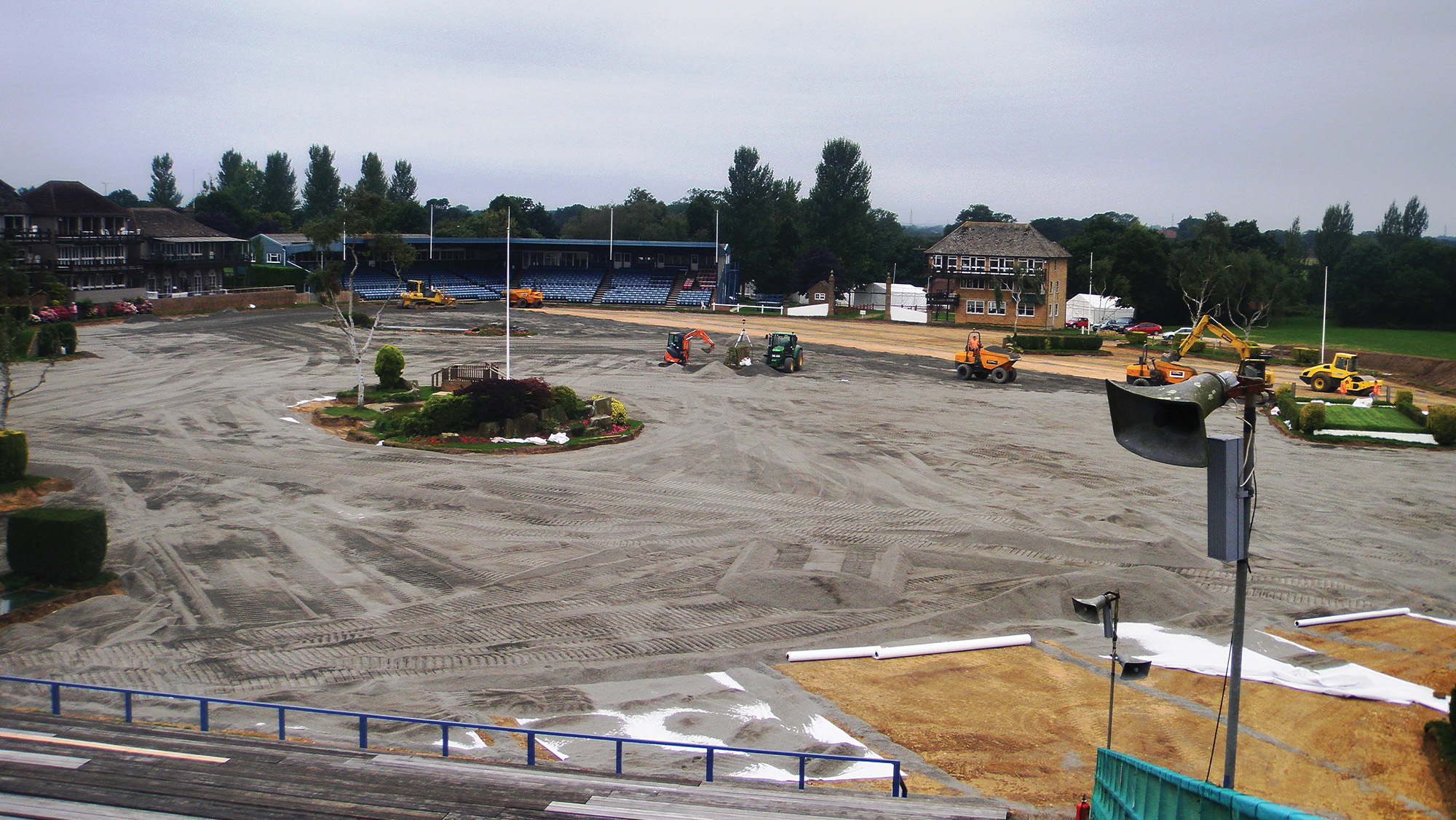
Underneath the grass of the International Arena lie 1,900 tonnes of shingle and 2,100 tonnes of sand.
1. The International Arena is, Lizzie explains, “an all-weather arena with a grass top”. After some very wet summers, the Bunns took action, and spent almost £1m, in 2010. They dug about 18 inches down, across the whole ring, then put down 1,900 tonnes of shingle with drainage. A membrane went in on top, then the topsoil that had been taken out, 2,100 tonnes of drainage sand, and grass back on top. Last September, when it rained so much the back arenas were puddling, the going in the main ring was just about perfect.
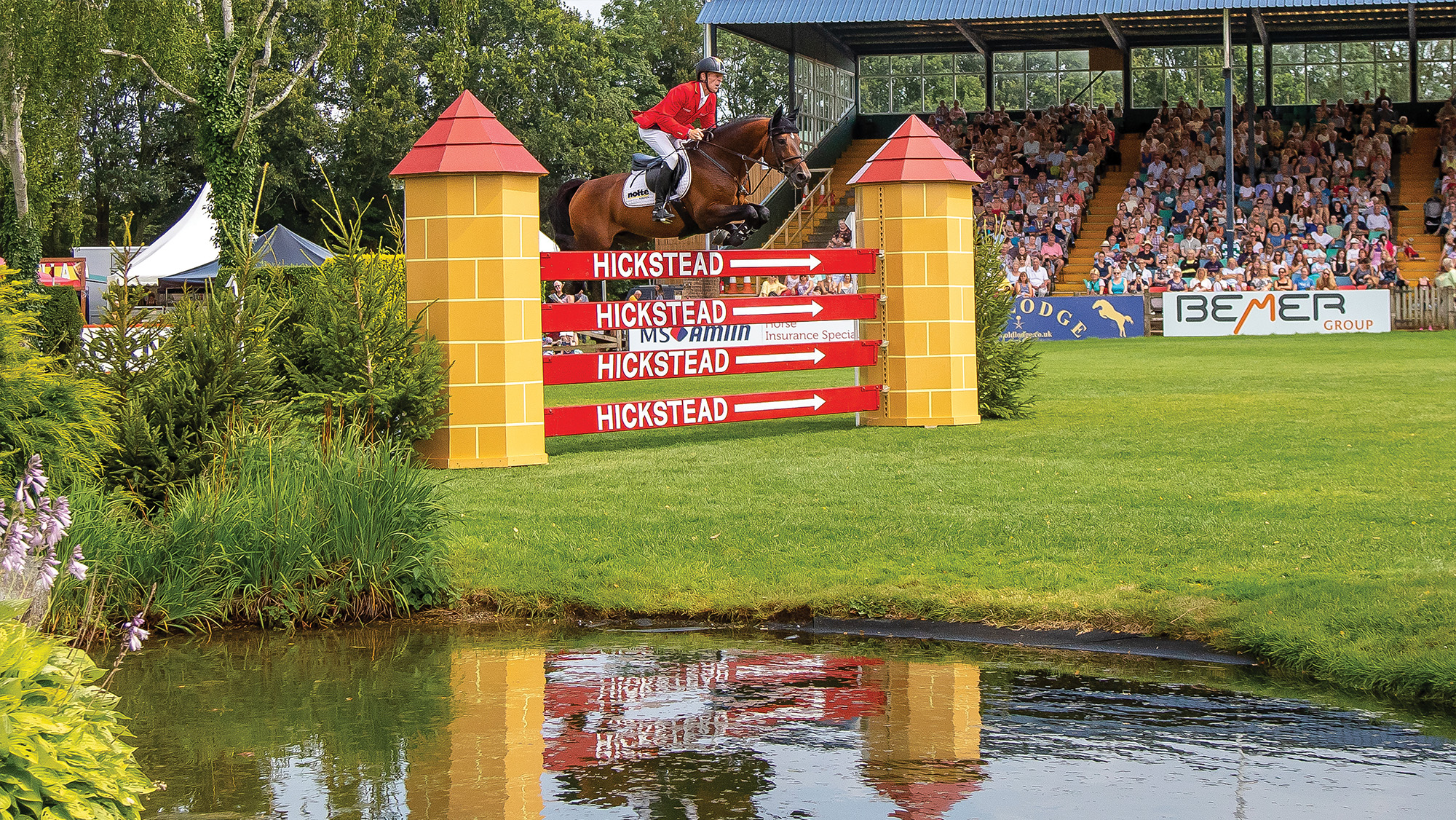
Three types of grass seed are blended to create the surface on the famous course. Credit: Elli Birch/Boots And Hooves
2. Three types of grass seed are blended to create the famous emerald sward; one for thickness, one for root depth and one for colour. Watering is of course key, and at the right times; the grass has to be a bit “thirsty” early on so the roots go deep enough. This root depth – about 12cm is perfect – is crucial as it is this depth that absorbs the weight of a half-tonne horse landing, releases it and springs back.
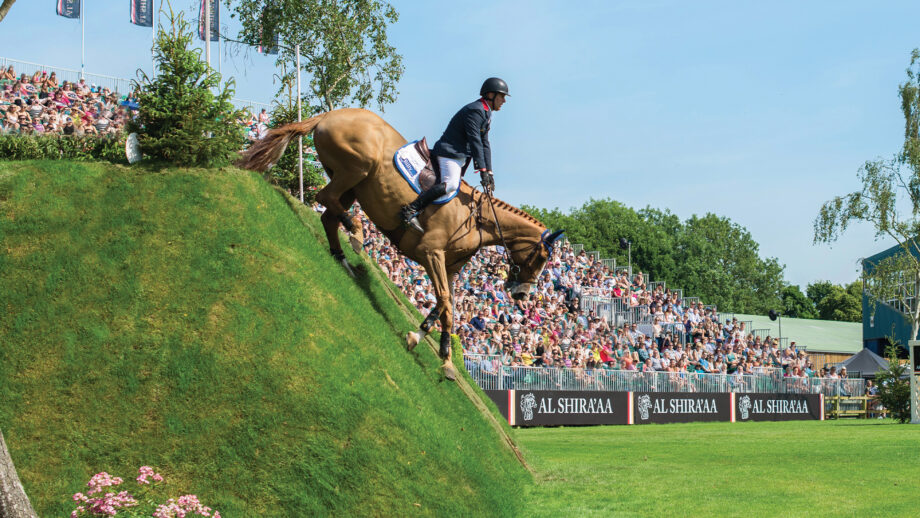
3. The Derby bank is the centrepiece of the arena. Used in only three classes each year – the Derby, the British Speed Derby and the Ashby Underwriting Eventers’ Challenge – it still needs more maintenance than probably everything else.
It’s built of a U-shaped blockwork wall, filled with rubble, covered in clay and turfed.
It spends most of the year tucked up in an astroturf jacket paid for by Netflix’s The Crown, which filmed at Hickstead some years ago; this comes off at Easter, then the old turf is stripped off and the face rebuilt if the old clay has gone brittle.
Then the bank’s checked daily. Grass doesn’t like growing on the side of a hill so it’s a tricky job; it has to be covered if the weather gets too wet, naked if it’s hot so the turf doesn’t sweat, kept moist enough for the grass to grow and dry enough to suit the clay – and an eye has to be kept for any ants that might feel like nesting in the turf.
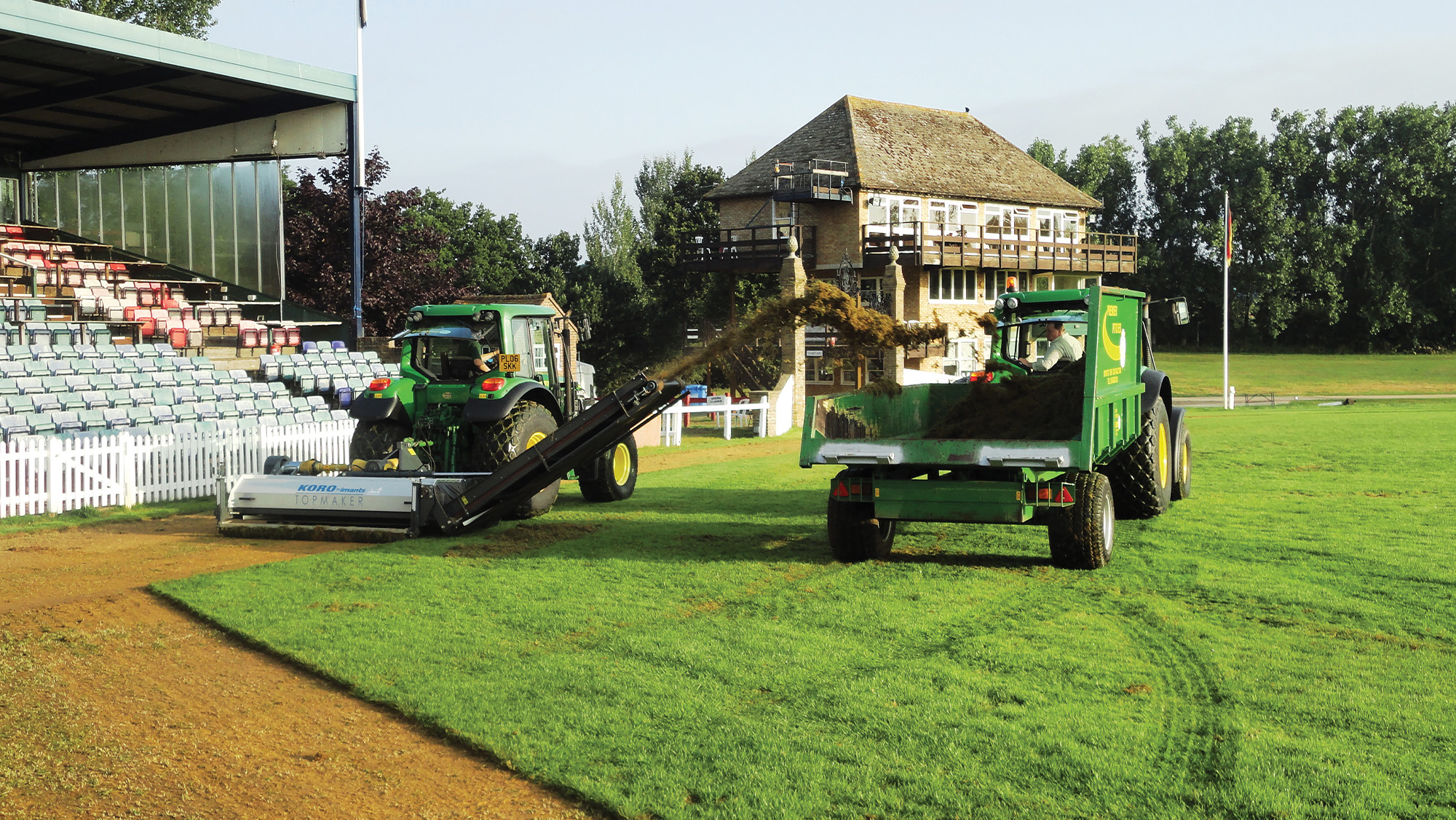
The Bunn’s have spent £1m upgrading the International Arena.
4. After the Derby meeting, there’s only four and a half weeks until the Royal International Horse Show, so there’s a huge amount more work to be done. The ring is fertilised before each show, so it kicks in straight afterwards, and the seed is left in hessian sacks to pre-germinate so it hits the ground growing. Then there’s watering, decompacting and vertidraining to do, and mowing, ensuring the grass is short enough to thicken but not so short that the root depth is lost.
5. There are tricky bits of the course to deal with; the Devil’s Dyke was returfed in mid-May, timed to perfection six weeks before the Derby. The road crossing had been regraded and scarified; removing the top layer of dead matter and reshaping and levelling the soil, then reseeded. Even the Cornishman, the 4ft8in wall that’s the first fence in the Derby, had had its modest turf topping renewed. It’s the original wall that’s featured in every Derby for the past six decades, and needs less maintenance than some areas – although there has probably been some repointing done.
6. Someone is out in the main ring every day, checking and assessing; not just the look and feel of the ground but to check for issues such as any enterprising badger who might have come in to dig for worms.
“It’s a haven for wildlife!” Lizzie says. “We used to have great crested newts in the water jump and because you’re not allowed to handle them, a man used to come out from the Sussex Amphibian and Reptile Group and rehome them. We had ducklings on the lake once in the Derby and had to stop the jumping while they crossed the ring.”
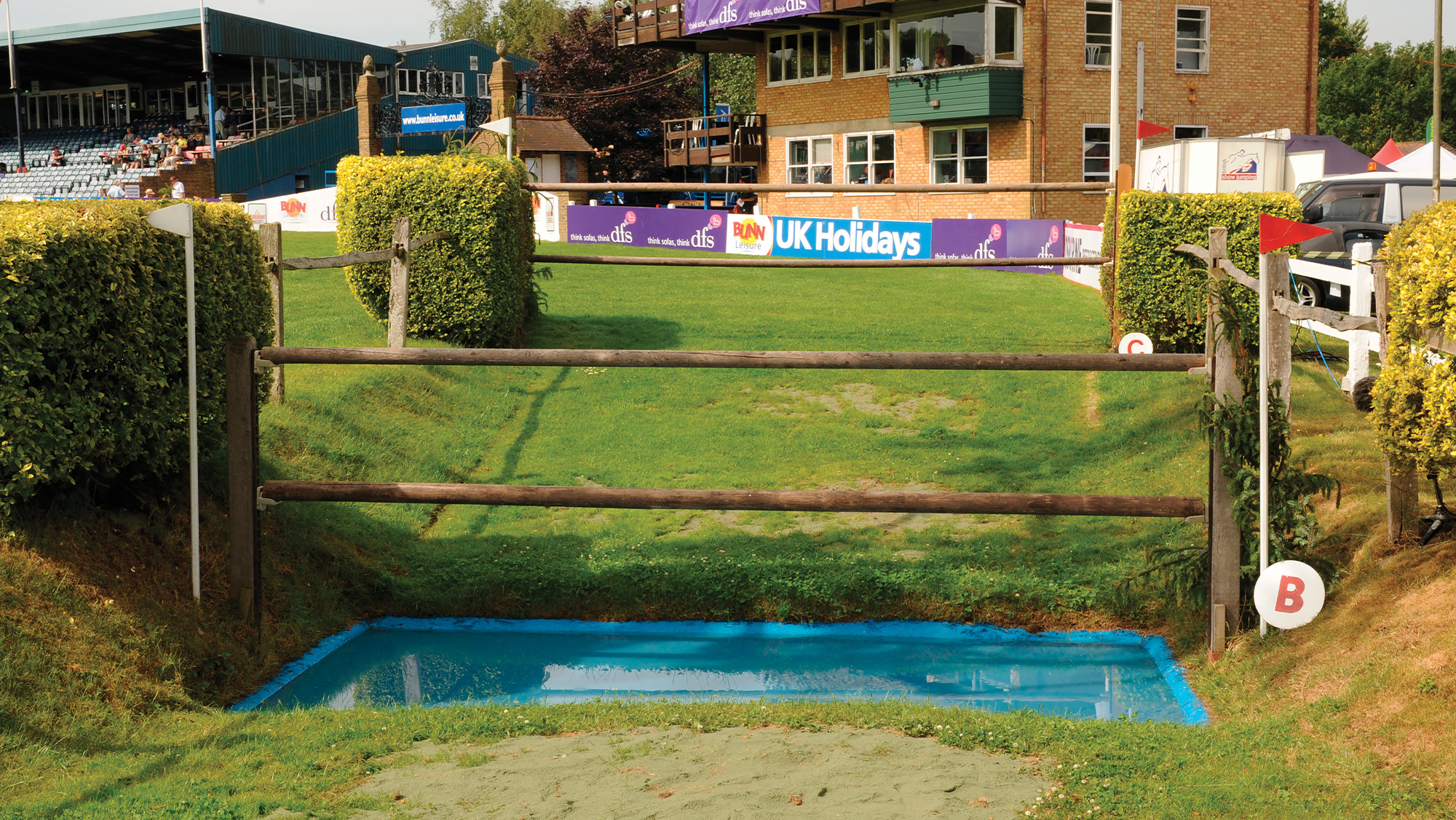
The water in the Devil’s Dyke is dyed.
7. The water in the Devil’s Dyke ditches is dyed blue, to help horses judge it; the surface here is concrete, which is cleaned and repainted every year, then a new layer of rubber on top. The open water was renovated a few years ago; it was shortened to 15ft to comply with FEI rules.
“You used to be able to swim a width underwater,” Edward says. “It was three feet deep.”
Now it’s only inches deep, and lined with rubber matting, but it’s still, with its presentation and dressing, as imposing a fence as you’ll find.
Hickstead in numbers
1.8ha: the size of the International Arena
2m difference in gradient from left to right
60 acres of lorry parking and stabling
100,000 litres: the Hickstead water storing tanks’ capacity
5,484 horses competed at the All England Jumping Course in 2025
1,538 showjumping horses were at last year’s Derby meeting
Almost £2m: the cost of the new stable facilities
300 rolls of turf used annually in the International Arena
- To stay up to date with all the breaking news from major shows throughout the year, subscribe to the Horse & Hound website
You may also enjoy reading:
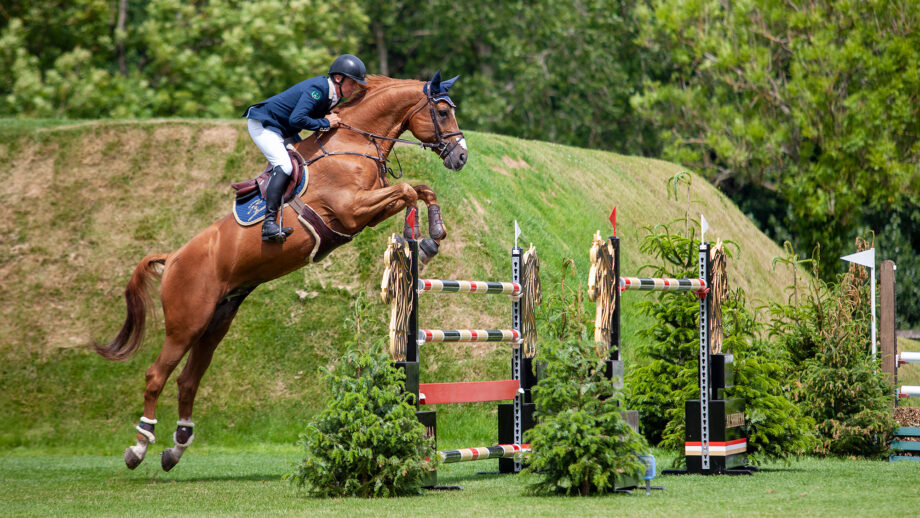
How to watch the Hickstead Derby Meeting 2026 live from anywhere in the world
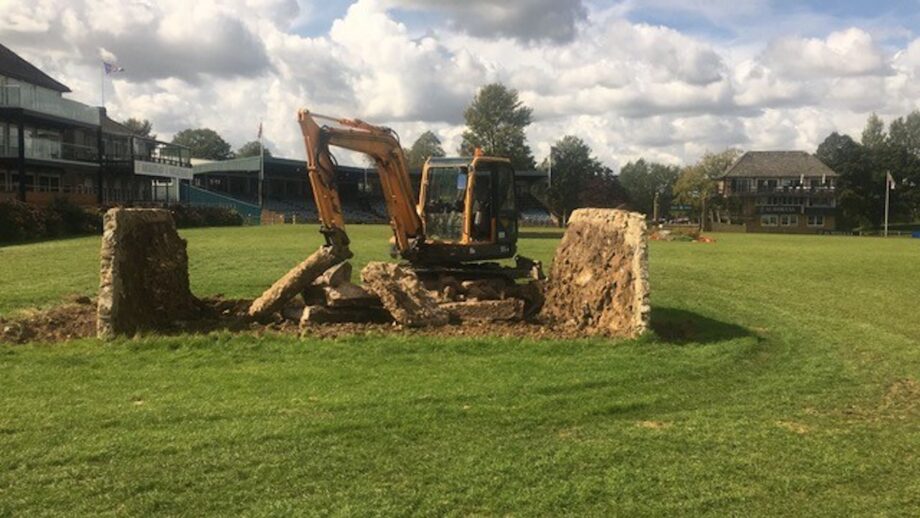
End of an era as Hickstead’s famous Irish bank is removed

Michael Whitaker’s Hickstead Derby memories: ‘I nearly had a heart attack when I saw how steep the bank was’

Hickstead Derby Bank: how NOT to do it
The Hickstead Derby Bank has had its fair share of difficult descents over the years, so we look back at

Hickstead Derby Bank: all you need to know
The story of the iconic Hickstead Derby Bank — the biggest competition bank in the world
Subscribe to Horse & Hound magazine today – and enjoy unlimited website access all year round