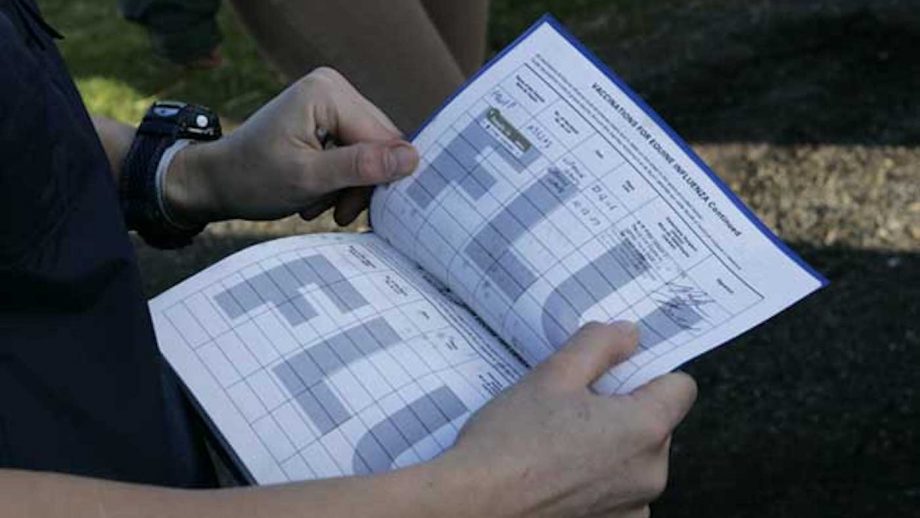
Shows are stepping up checks and competitors are reminded that they will be turned away if a horse’s vaccination status does not comply with the applicable rules.
In the first week of June, the equine infections disease surveillance (EIDS) team at Cambridge Vet School confirmed 15 outbreaks of equine flu across 13 regions. As H&H went to press this afternoon (8 June), there had been a total of 95 outbreaks in 2026, of which 82 have been confirmed since 20 April.
Jenna Payne, chief executive of the Association of Show and Agricultural Organisations (ASAO), joined the team of vets and experienced stewards on the horse gate checkpoint at Devon County Show (20 to 22 May).
She told H&H they were anticipating a few problems but were in no way on the scale they experienced.
“The first morning was a parade of hopeful rule‑benders. We turned away around 15 horseboxes, most for the same reason: passports that didn’t match the horses entered,” she said.
“Thankfully, the show secretary had armed us with exhibitor lists, making it easy to cross‑reference names and spot the mismatches.
“By day two, people got more inventive. By day three, nobody even tried. Word travels fast when a team is thorough.”
Some of the examples they saw included the number of horses on board differing from the number they were told, horses not matching passports, and microchips not tallying with passports.
She said that if people had forgotten to bring passports, they used live video calls to verify passports and vaccination histories, and some vet practices emailed PDF histories when needed.
“For every difficult encounter, we had many more exhibitors thanking us for being thorough. Those who were fully compliant were genuinely appreciative that the rules were being upheld fairly and consistently,” she said.
Her tips for show organisers this summer is to communicate with exhibitors, have experienced passport checking teams available and a clear lead to adjudicate on discrepancies and to cross-reference passport names with exhibitor lists.
She also encouraged shows to count horses on every vehicle, use a microchip reader and have a spare, and create a holding bay to avoid a horsebox blocking the queue.
“However, if we’re looking for a simple, effective step towards cleaning up our shows, introducing a passport/vaccination check at number collection would be an excellent place to start,” she said.
Mrs Payne added that a lot of other shows are already picking this up and doing similar – and she hopes word will spread.
These include Royal Cornwall (June 4 to 5), which checked all passports on arrival, Royal Bath & West (28 to 30 May), which checked on number collection, and Great Yorkshire Show (14 to 17 July), which has always checked on collection of numbers.
Passports are being checked at British Dressage, British Eventing (BE) and British Showjumping events. BE chief executive Rosie Williams told H&H that BE has “ramped up its checks” and is being “very clear with everybody” that correct vaccinations “have to be in place and if they are not, we will send you home”.
Lucy Grieve, veterinary projects officer at the British Equestrian Veterinary Association, told H&H thorough passport checks at shows and events “are an essential part of safeguarding equine health”.
“Organisers need to be confident that every horse arriving is correctly identifiable and meets the equine influenza vaccination requirements, particularly given the ongoing surge in outbreaks across the UK,” she said, noting that horses must be accompanied by their passports when being transported.
“While these passport checks are vital, they can be time-consuming and resource-intensive for event staff. A national digital equine identification system would significantly streamline and improve the accuracy of the process by allowing vaccination records to be verified in advance, reducing administrative burden and improving compliance.
“Such a system would also enhance traceability in the event of a disease outbreak, enabling faster identification and notification of horses that may have been exposed; strengthening the UK’s ability to prevent and control the spread of infectious disease.
“The Government has promised such a system for many years now but has failed to deliver due to lack of funds.”
- To stay up to date with all the breaking news from major shows throughout the year, subscribe to the Horse & Hound website
You may also be interested in:

‘We’re delighted to bring loyal readers this benefit’: H&H magazine subscribers get free website access
‘Good owners vaccinate their horses against flu for their welfare, not just to compete,’ says equine vet
Equine flu: what horse owners need to know during the current outbreak in Britain
Rising equine flu cases lead to special measures at Royal Ascot