Booking a saddle fitting and getting your horse’s saddle checked is something all horse owners should be doing regularly, but it can fall by the wayside until there’s an issue. It doesn’t matter whether you’ve got a second-hand GP saddle, a custom-made dressage saddle or something in between, good saddle fit is essential to your horse’s welfare.
We asked Ruth Spencer, a master saddle fitter who also serves on the board of Society of Master Saddlers (SMS) assessors, to explain how often you really need to get your saddle checked and answer some other need-to-know questions about saddle fitting.
How often should you get your saddle checked?
As a general rule, saddles should be checked at least every six to 12 months.
“This is in line with guidance from the Society of Master Saddlers,” Ruth explains, “however, it isn’t a one-size-fits-all approach. Horses in regular work, young horses, those changing shape through training, or those coming back into work after time off may need more frequent checks.
“In contrast, a mature horse in consistent, light work with a stable condition may be fine with annual checks – but it’s important not to become complacent, as subtle changes can still occur over time,” she warns.
What factors affect saddle fit?
A horse’s shape is not static, so saddle fit can change for a variety of reasons, but riders can also affect how the saddle fits and performs, Ruth explains.
These factors include:
- changes in horse weight
- muscle development (or loss)
- fitness levels
- age
- workload
- seasonal factors, such as availability of grazing
- changes in rider weight
- rider position or balance
Additionally, the saddle itself can alter over time through flocking compression, wear or tree movement.
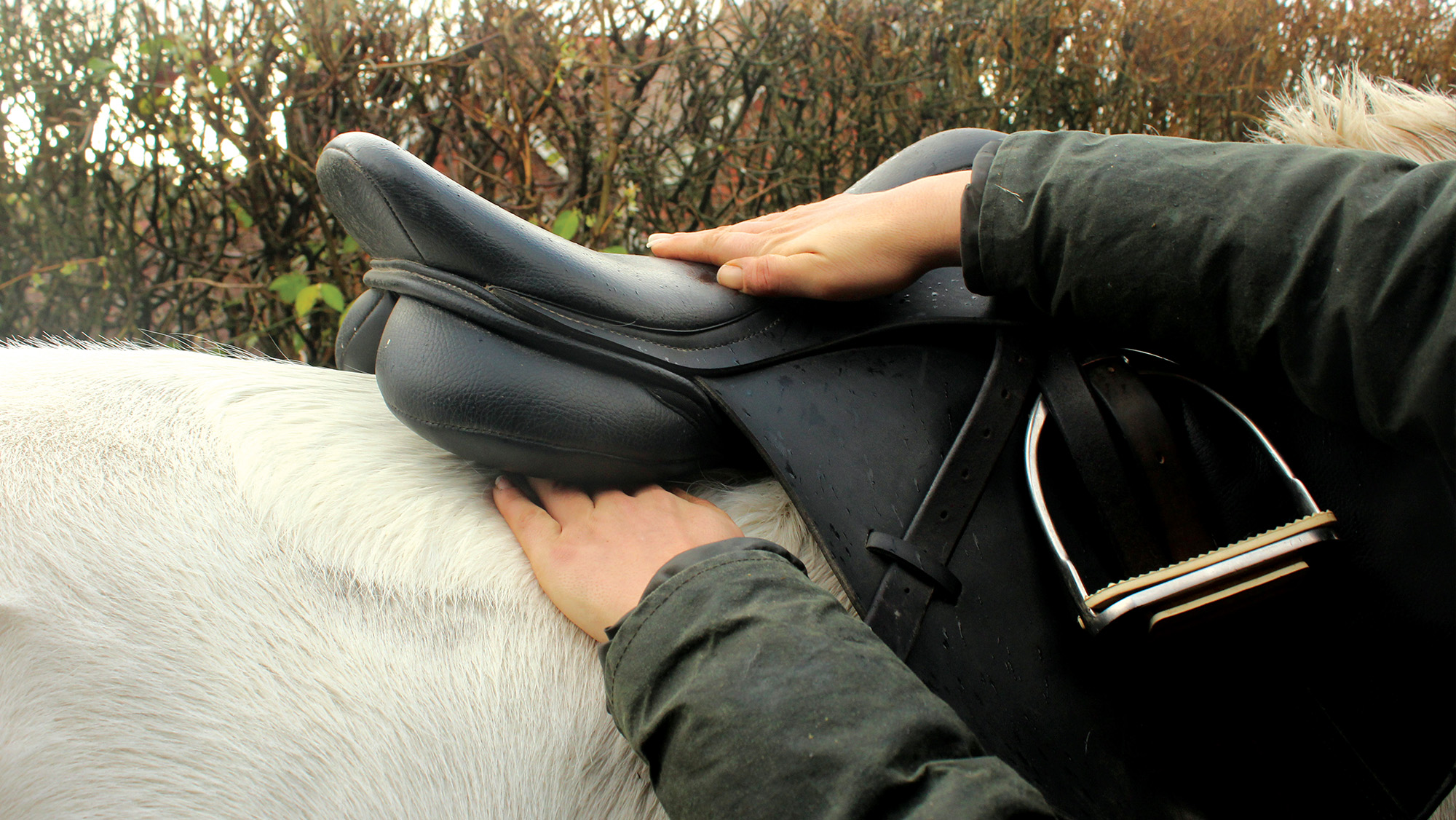
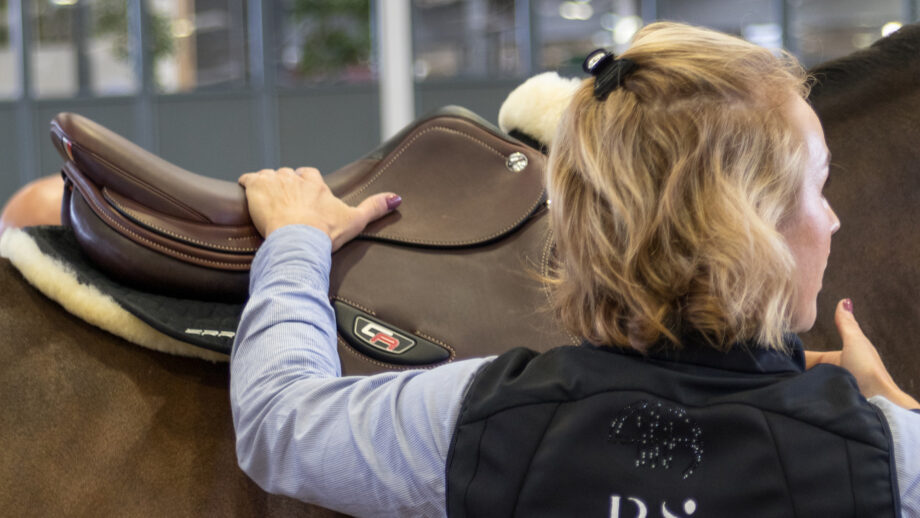
Running your hand under the panels regularly will help pick up any early signs of change. Credit: Andrew Sydenham
What can owners do between checks to ensure good fit?
There are several simple but effective checks owners can do regularly, Ruth reveals.
You should look for:
- Even contact and balance – the saddle should sit level and not tip forward or back
- Clearance and symmetry – check there is adequate clearance over the withers and that the saddle sits evenly on both sides
- Horse’s way of going – monitor changes in performance, willingness, or behaviour under saddle
“Consistently running your hands under the panels and observing your horse before and after work can help you pick up early signs of change,” she advises.
Signs a saddle doesn’t fit as well as it should
Common indicators include:
- uneven sweat patterns
- dry patches
- ruffled hair under the saddle
- reluctance to be tacked up
- resistance under saddle
- hollowing
- change in performance
- muscle wastage
- soreness
- sensitivity when grooming around the saddle area
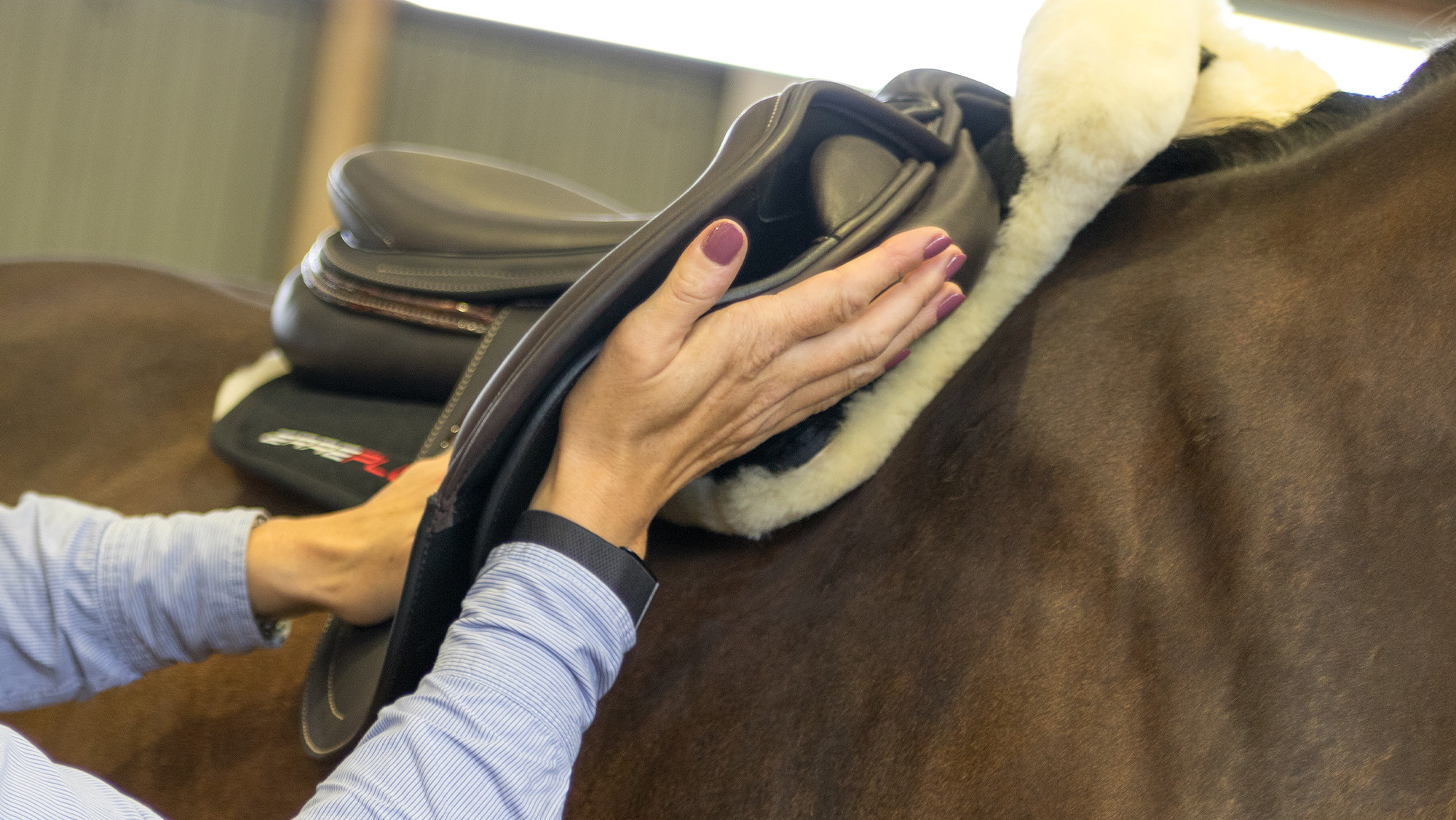
A well-qualified, independent saddle fitter should be able to assess a wide range of saddles.
Who can check saddle fit?
Owners should look for a fitter qualified through the SMS, such as a qualified saddle fitter (QSF). This ensures they have undergone recognised training, assessment, and adhere to professional standards. You can find more information about saddle fitting qualifications at mastersaddlers.co.uk.
Ruth adds that “ongoing professional development and insurance are also important indicators of a reputable practitioner”.
Regarding specific brands, Ruth says that a well-qualified, independent saddle fitter should be able to assess a wide range of saddles.
“Some brands do have specific design features, however, so a fitter with experience or training in that brand can be beneficial in some cases,” she adds.
“Ultimately, the priority should be the fitter’s qualifications, experience, and ability to work objectively in the horse’s best interest.”
How long does a standard saddle fit check take?
A standard saddle check typically takes 45–90 mins. It should include assessing the horse statically and in motion, templating, evaluating the saddle on and off the horse, checking flocking and balance, and observing the rider where possible.
Any necessary adjustments, such as flocking, may be carried out on the day or scheduled for a later date.
How much does saddle fitting cost?
As with many costs of keeping a horse, prices can vary depending on location and the level of service, Ruth explains, but costs “typically range from around £50 to £100 for a standard check, with additional costs for adjustments such as reflocking”.
She advises that it is always worth clarifying what’s included in the fee before booking an appointment.
“I struggle to find someone willing to check a saddle they haven’t sold me” – any advice?
Ruth agrees that this is a common frustration, but says “there are good fitters who will assess any saddle objectively”.
She suggests searching the SMS register to find qualified professionals in your area.
“When contacting fitters, be upfront about your needs – many will offer a check-and-advice service even if you’re not looking to purchase. Building a relationship with a trusted fitter over time can also make future appointments easier,” says Ruth.
“It’s worth remembering that an ethical, professional fitter’s priority should always be the welfare of the horse, regardless of where the saddle was purchased.”
- For unlimited access to advice on how best to care for your horse, subscribe to the Horse & Hound website
You may also enjoy:

9 saddle pads that will help prevent slipping

8 anatomical girths for freedom of movement and saddle stability

The Horse & Hound Podcast 143: Emily King | When to call a qualified saddle fitter

All in a day’s work for a master saddle fitter… *H&H Plus*

Subscribe to Horse & Hound magazine today – and enjoy unlimited website access all year round