As an owner, you know your horse better than anyone – and you know when they’re trying to tell you something. The signs may be subtle, but they are there. It could be a performance plateau, reluctance to work, grumpy behaviour, muscles that feel taut, or a shortened gait.
It can be frustrating, difficult to explain – they’re just “not quite right” – and even trickier to know what to do next. One possibility is that your horse is lacking antioxidants.
What are antioxidants?
Consider antioxidants as your horse’s cellular defence team. Their primary function is to protect your cells from free radicals, which are highly reactive and unstable atoms that can cause significant structural damage to cells.
Their role in cellular defence is particularly relevant for the muscular challenges horses can face due to training and their genetic background.
Maintaining a healthy balance of antioxidants is essential for your horse’s body to function at its best. This balance is particularly important because even small amounts of oxidative damage can start to interfere with how cells work, often before you notice any obvious signs.
Why is natural vitamin E important?
Vitamin E is a key antioxidant that helps to neutralise free radicals produced during metabolism, exercise and stress. It also has an important role in muscle function, nerve function, immunity and reproduction, says NAF head nutritionist Kate Hore.
“It’s important to feed the right type and right level as not all vitamin E is the same,” she explains. “The natural form (RRR-alpha-tocopherol, also known as d-alpha-tocopherol) has the greatest bioavailability in the horse, making it the more effective option where strong antioxidant support is needed.”
Fresh grass is a good natural source of vitamin E, but once grass is preserved to hay or haylage the level drops significantly. This makes natural vitamin E particularly relevant for horses that:
- are on a diet high in preserved forage
- have limited turnout
- are in regular work
- regularly travel
- need additional support during recovery
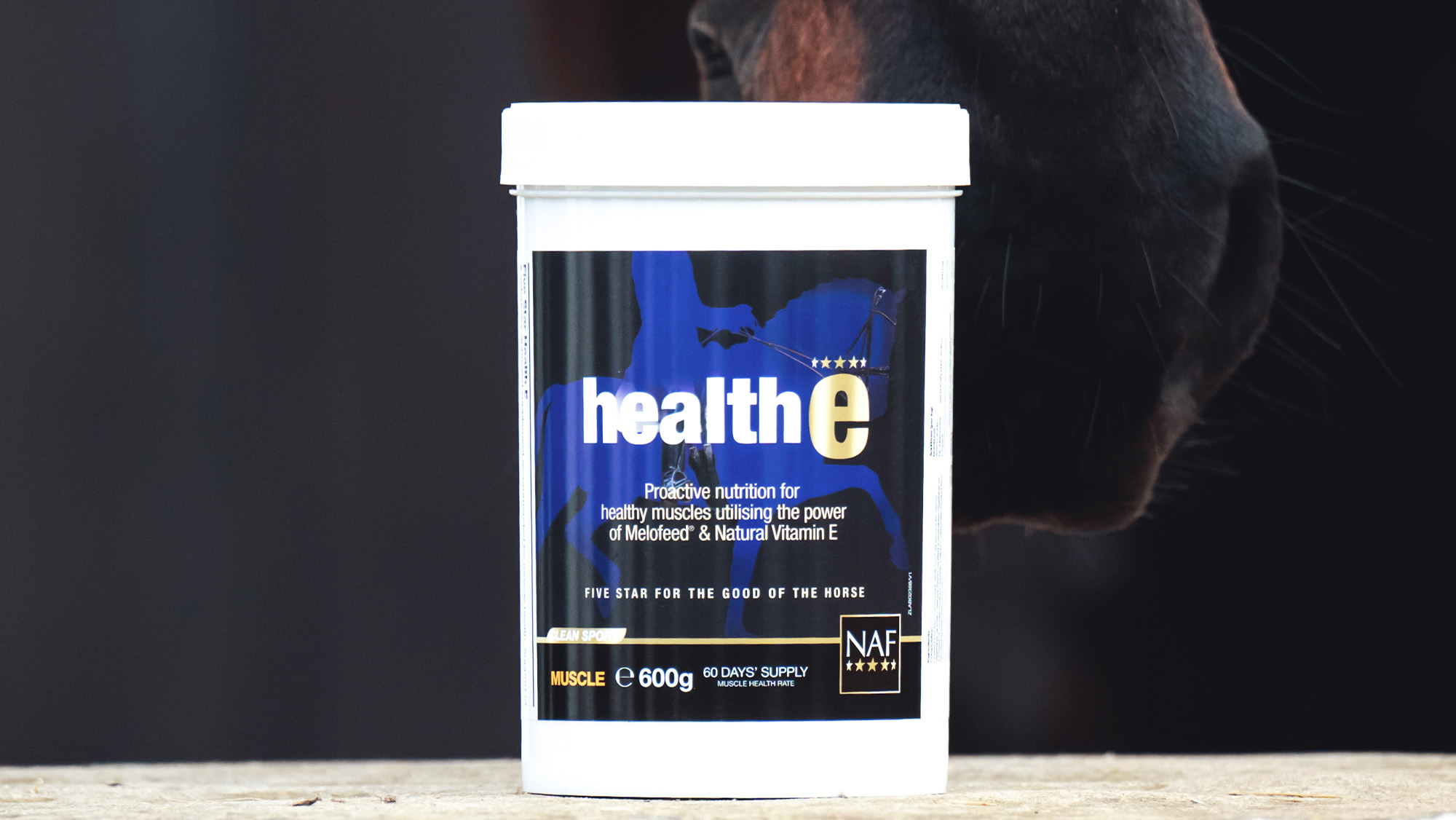
What is HealthE and which type of horse is it for?
“NAF HealthE takes a holistic approach to antioxidant provision,” Kate explains. “It combines evidence-based rates of powerful natural vitamin E with the body’s primary antioxidant (superoxide dismutase), and works in synergy with organic selenium yeast, alongside essential amino acids and plant-based omega-3 fatty acids to support cell integrity, recovery and resilience.
“HealthE is for horses with compromised muscle function, or for any horse or pony where powerful antioxidants may be indicated. It supports energy metabolism and muscle function in the case of rhabdomyolysis.”
If you’re unsure whether your horse may benefit from NAF HealthE, ask your vet or seek free nutritional advice at nafequine.com