The authorities are here to help us towards making horses and equestrians safer on our roads, but we must continue to ask for their help.
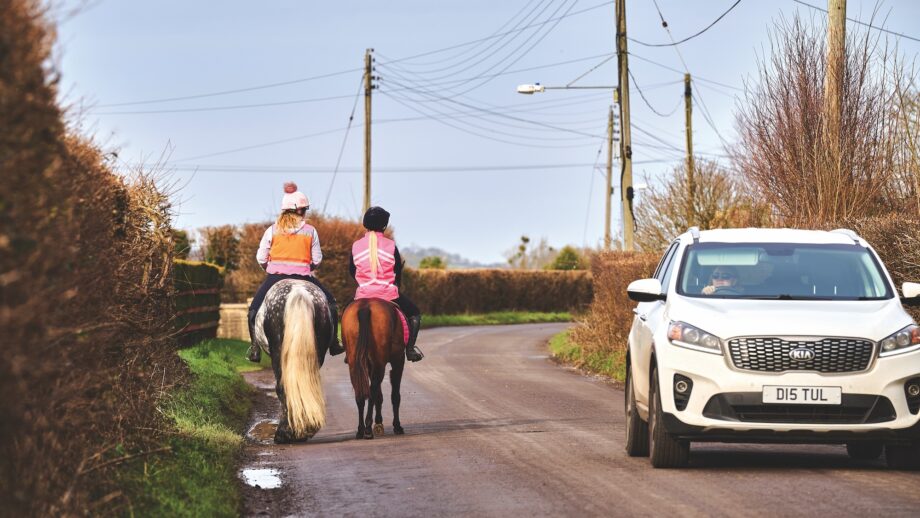
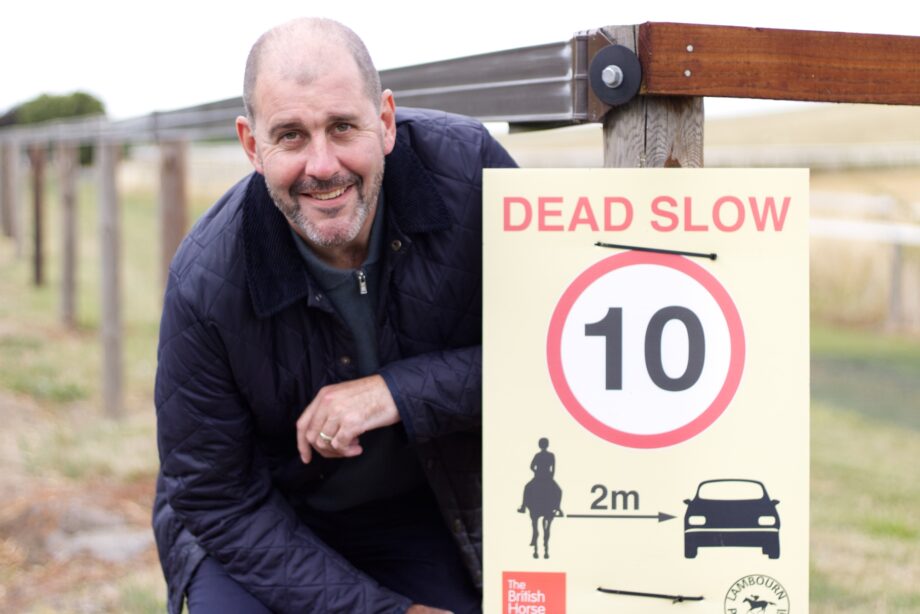
This was a key message to come from police and Parliament at an event on 20 April to mark 10 years of the British Horse Society’s (BHS) Dead Slow equestrian road safety campaign.
House of Commons deputy speaker Caroline Nokes and Sussex Police chief constable Jo Shiner were among those to address guests.
Lifelong rider Ms Nokes said she entered Parliament not wanting to be “pigeonholed” as “the horsey one”, but realised during the horsemeat scandal of 2013 that she might be of help to ministers.
“I wasn’t; they weren’t interested!” she said. “But I tell you that only to make you reflect that MPs are human. MPs are, by and large, very interested in the issues that interest their constituents.
“If 5% of the population have some connection with horses, and there are 650 MPs, that means roughly 30 of them might know what they’re talking about when it comes to equestrianism. So your target market is the other 600 or so.
“Go and see them, take your GoPro footage and make them live the experience of riding along a road when a car passes too close and too fast. We’re all perfectly capable of understanding the reality of how that might feel.”
“Keep badgering”
Ms Nokes said the difficulty is making ministers listen, but said the top parliamentarians are those who “keep badgering”, such as Newbury MP Lee Dillon, who has repeatedly introduced equestrian road safety in parliament and continues to do so.
“My message to Lee is, don’t give up, don’t let it drop,” she said. “There’s nothing worse as a government minister than returning to the dispatch box, week in week out, and being asked the same question again and again.
“When Mr Dillon rises to ask another question about road safety and what’s being done to wrap a communications plan around the changes to the Highway Code, or to include measures around equestrianism road safety in the driving theory test for the driving test, or a national board about road safety bringing together all organisations.
“And when that minister looks up, sees it’s Mr Dillon again, they will return to their civil servants and say, ‘Please, can we just do something.’”
Ms Nokes said the BHS is “excellent” at encouraging riders to email MPs but she said she would go further and ask equestrians to visit in person.
“There is nothing quite as powerful as hearing the story,” she said.
Not a limited problem
“We have to convey at every opportunity that this is not a limited problem. The statistics are scary and increasing, and we have to make sure it’s understood as widely as possible, because even somebody living in a city may end up on a rural road and encounter a horse for the first time.
“Parliamentarians can be there to help you. We’re not all strange creatures who only inhabit the Westminster bubble. It has to be about comms on a national scale, and consistency. Keep showing up, keep boring us in our constituency surgeries. Eventually, we’ll take action.”
Ms Shiner is also a rider – and a cyclist and tractor driver – who has worked closely with the BHS on the campaign. She shared a video on horse road safety that has been shared with all police forces and is being pushed out more widely, and spoke about “close pass” operations being carried out by forces across the country.
Ms Shiner cited the “fatal five” causes of road accidents, including drink and drugs, but also antisocial driving.
“There seems to be much less patience on the roads these days, not just for horses, for anybody,” she said. “People just don’t seem to have common decency on our roads any more.
Targeting antisocial driving
“So we really are targeting antisocial driving. As a chief constable, you’d think my inbox would be full of violence or other offences, but it’s our communities pushing back, often equestrian or cycling communities, saying, ‘We really need you to sort out this antisocial driving’ often on country roads, where our equestrian colleagues and friends are likely to be put at risk.”
Ms Shiner said funding has been secured to help for a national operation in this area and action includes trialling AI road cameras.
“We need to work together to make sure in the future we’re reducing the risk and most importantly, changing minds,” she said. “We desperately need a national road safety board. That’s within the national road strategy from the Government and I look forward to the first meeting.
“But we must make sure all incidents are reported, however minor – a minor incident is a near miss of a major incident. We must continue to encourage reporting, because much of police activity is based on intelligence gathered, and if we don’t know about it, we can’t do something about it. We must make sure we continue to point in the same direction, embrace future challenges and opportunities and really remember why we’re doing this.
“We all here have a passion for road safety, but the reason we’re doing this is to save the lives of horses and human beings who tragically will have their lives changed for ever if we don’t continue to do the work we do.”
- To stay up to date with all the breaking news from major shows throughout 2026, subscribe to the Horse & Hound website
You may also be interested in:
‘This issue is not going away’: MP takes next step for equestrian road safety

A momentous month for equestrian road safety as Government pledges to consider horses again
Owners of horse killed on hack campaign in her memory – as riders not mentioned in new national road safety strategy

Horse’s death a ‘heartbreaking reminder’: parliament road safety campaign is just the start, riders promised
Subscribe to Horse & Hound magazine today – and enjoy unlimited website access all year round