
Spring is a wonderful time of year, but it can also be a challenging season for horses and horse owners. Recent weather trends are still impacting turnout and forage quality, but as the weather improves and turnout increases, so too can the number of particles, such as pollens, dust and other airborne irritants, horses are exposed to.
Respiratory health is important for both performance and general wellbeing and so plans to support the respiratory system should not be left up in the air. If a horse is sensitive to these airborne particles, it’s likely that they’ll experience the same sensitivities each year, possibly with an increasing severity.
One way to prepare a horse’s respiratory system for the increased presence of particles is feeding a supplement that is specifically formulated to support respiratory health.
NAF Five Star Respirator Boost
Introducing a respiratory supplement, such as NAF Five Star Respirator Boost, to the diet before seasonal issues take hold will provide targeted nutritional support to help maintain clear, healthy airways, suggests NAF’s Head Nutritionist Kate Hore.
Respirator Boost includes a blend of powerful traditional herbs and natural oils that work alongside vitamin C, to support lung capacity.
Key benefits
- Vitamin C – unlike humans, horses do not require vitamin C in their general diet, as they can synthesise it themselves from glucose. However, it’s a useful antioxidant and supplementation is recommended for horses facing respiratory challenges
- Herbal antioxidants – rosemary, ginger and turmeric work with vitamin C to support the body’s response to seasonal challenges
- Soothing support – glycerine is included to maintain comfort through the respiratory tract, similar to the effect of a throat sweet
- Highly palatable and easy to add to a daily feed
- Fast-acting – if you don’t notice a difference within 48 hours, NAF offers a money-back guarantee
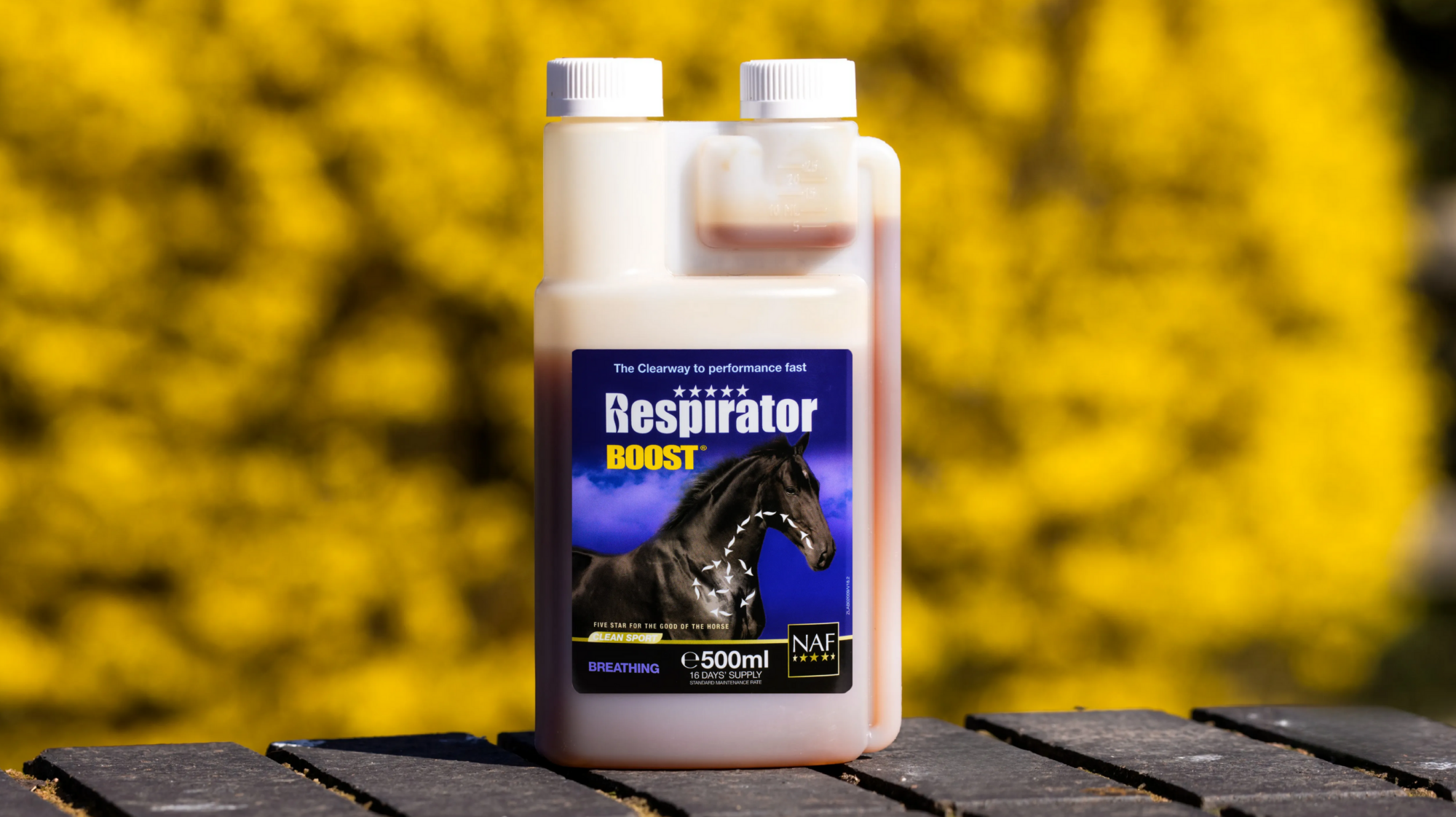
NAF Five Star Respirator Boost should be mixed into feed with warm water.
When to feed a respiratory supplement
To help your horse breeze through the warmer months starting now will maintain their lungs in a clear, healthy condition before seasonal issues have the chance to take hold, particularly if they’re sensitive.
“Supplements should be introduced gradually for fussy feeders,” explains Kate who adds that feeding from the floor aids natural drainage. “Respirator Boost is best mixed into the feed with warm water.”
If your horse is new to you or living in a new environment, Kate recommends looking for signs that their respiratory function may be compromised.
“Reduced performance or lower exercise tolerance can often be the only clue in horses not expressing clinical signs,” says the BETA ENFAR-registered nutritionist. “Otherwise, you may notice increased breathing efforts, natural discharge from the nostrils, head movements that are unusual for your horse or noticeable breath sounds.”
More ways to support respiratory wellbeing
- Provide dust-free forage, such as soaked or steamed hay
- Avoid straw bedding and choose low-dust alternatives
- Keep stables ventilated and clean
- Modify exercise regimes to avoid peak times
- Limit turnout during high pollen or dusty periods
- Monitor your horse’s body weight – excess weight can have a negative effect on breathing
If you are concerned about persistent symptoms or changes in breathing, seek veterinary advice. For free nutritional advice, visit nafequine.com