Rebecca Penny shares her thoughts on new classes and tack rule changes as the new showing season gets underway
Finally, it feels like we are getting a break from the relentless rain, and a new season is fast approaching. With it comes change, some of it a positive step forward, and some of it more contentious. I fully support rules that protect equine welfare, yet not every update inspires confidence.
On the positive side, the increasing popularity of the London International has brought some exciting additions. The two new working sports pony classes are a welcome inclusion. So, too, are the first pony of hunter type and cradle stakes at the Royal International (RIHS) as these classes give our younger riders a fantastic introduction to top-level showing.
I’ve managed to attend a couple of winter shows with some newly broken ponies, and I popped along to an unaffiliated event. It was lovely to see classes with 20-plus entries so early in the year, even though I was supposedly out for a quiet outing for purely educational purposes.
Veteran classes have also been introduced to the Horse of the Year Show (HOYS) line-up this year, which is undoubtedly a great addition. However, I’m sure I wouldn’t be the only one disappointed to see these classes restricted to amateur riders.
Amateurs are being given more and more opportunities, which is fantastic. However I still believe HOYS should be a showcase for the best horses in the country, regardless of the owner’s status.
It feels like a real kick in the teeth for competitors who don’t fit into that bracket, particularly owners with older horses or ponies that they no longer wish to compete in open classes, but who they have kept and cared for over many years.
Where is the science?
Some of the National Pony Society’s (NPS) newly adopted tack regulations for 2026 raise serious questions.
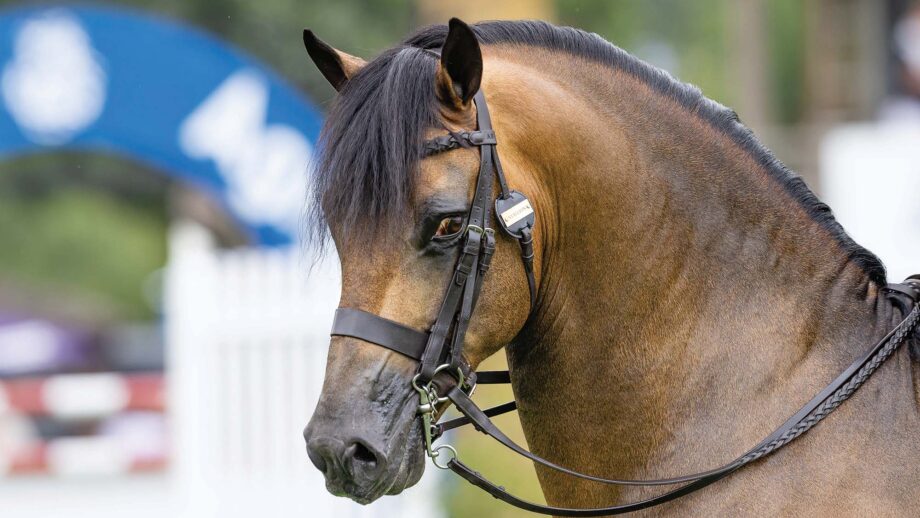
Take the blanket ban on the Swedish crank noseband, solely adopted by the NPS. This design is entirely legal under FEI rules and widely used in British Dressage.
The FEI is an organisation that has invested significant time, expertise and financial resource into researching tack, biomechanics and equine welfare, so why has the society taken a different stance? What evidence, consultation, or research underpins this decision?
In-depth studies show a properly fitted crank noseband exerts no more pressure than a cavesson. Issues occur predominantly when it is misused, either by incorrect fitting or over-tightening. The use of the FEI noseband measuring tool to spot check seems to be the approach all other associations have followed.
The fact that the NPS has independently adopted this rule also creates conflict when a HOYS qualifier is held at an NPS show, as HOYS rules take precedence, meaning a crank noseband could be used in that class. How can two conflicting tack rules be applied at the same show?
In the context of navigating a crowded ring on a large breed stallion with 20 or more ponies cantering at speed, mares passing in close proximity and heightened levels of excitement, I can understand why a rider might prefer to use a correctly fitted crank noseband. It is typically padded, and designed to distribute pressure in a more stable way should a pony become unsettled and try to cross his jaw.
In such a scenario, a small adult rider, particularly one riding within the permitted 20% weight ratio, has a better chance of maintaining safety and ensuring an enjoyable experience.
It also seems illogical that these regulations can restrict experienced adult riders where control and safety are critical. Yet in stark contrast, novice M&M first ridden classes allow children as young as six or seven to have more freedom over their bitting choice, even though their balance and ability to maintain consistent contact are still developing.
This inconsistency highlights both practical and safety concerns. Rules should be informed, practical, and evidence-based. Ignoring riding realities and established research risks compromising both rider safety and horse welfare.
● What do you think of recent rule and class changes? Let us know at hhletters@futurenet.com, including your name, nearest town and county, for the chance to have your views published in a future issue of Horse & Hound magazine
- To stay up to date with all the breaking news from major events, as well as exclusive insights from top names, subscribe to the Horse & Hound website
You might also enjoy reading:

Do you know a cavesson from a Kineton? The complete guide to nosebands
Transparency or a ‘state of limbo’? HOYS returns to 2024 judging format

New series with £1,000 top prize to reward consistent combinations
From STARS to HOYS: 13 show ring opportunities for amateurs in 2026
Subscribe to Horse & Hound magazine today – and enjoy unlimited website access all year round