British grand prix dressage rider and trainer Anna Ross on dressage being under public scrutiny and the potential for AI to support judging in the future
Dressage is back in the spotlight and, while the FEI has issued its penalties and attempted to move on, the court of public opinion is rather less forgiving.
The Times in particular seems to have developed a keen interest in dressage, which isn’t something the sport is used to. Recently their chief sports writer, Owen Slot, wrote a piece questioning footage from the warm-up at the World Cup qualifier in Amsterdam. The videos have sparked renewed debate about training practices in the sport. The question the public is asking is simple: is what’s shown in these videos normal training? If it is, should it be?
As Richard Davison said in his recent column, everyone has a different idea of where the welfare line sits. One person may eat meat but refuse factory-farmed meat or battery eggs. A vegetarian might find the idea of eating meat unacceptable, while for a vegan, the consumption of eggs and dairy is equally wrong. All believe they are acting with good intentions, but who is “right”?
The same question applies to training. How much pressure is too much, and how do we measure it? These are uncomfortable conversations that, historically, our sport has not been particularly fond of. Yet we’re not short of expertise to guide us. The UK alone has many respected researchers working in equine welfare and performance. The knowledge is there if we choose to listen.
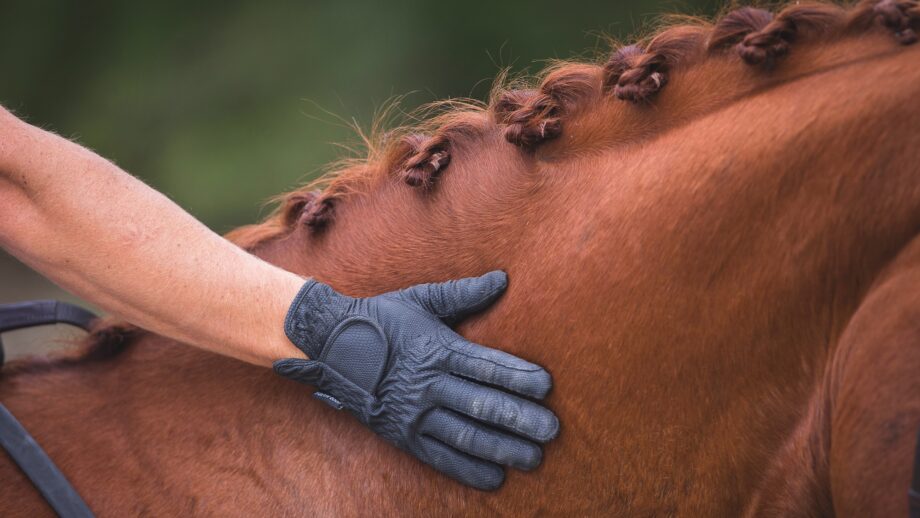
It’d be disingenuous to pretend to the public that we train horses without pressure. From the moment we handle a foal, pressure and release form the basis of communication. A hand on the chest asks the foal to step away. The foal yields, we release, and so the lifelong conversation begins.
Horses organise their societies in a similar way. Life within a herd isn’t always harmonious; it’s normal for horses to test the leader. But when criticism comes, the immediate response from stakeholders is often to point out how well the horses are cared for.
At the top level, an international horse may travel with more entourage than a Formula One team: vet, farrier, physio, saddle-fitter, nutritionist, trainer… But what has long been considered “good care” is not always the same as what is best for the horse. Would the spotless horse quite like to be muddy for a while? Might the heavily rugged horse be happier with less? And might the much-loved good-doer be healthier a little leaner?
Love and good intentions matter, but they aren’t always enough. If we are serious about our partnership with horses, then education and a willingness to question ourselves have to be part of the deal.
I don’t claim to have all the answers, but after a lifetime with horses it often comes back to that all-important quality: feel. Watching how the horse responds and making decisions from there.
Judging under pressure
To the untrained eye, dressage judging can look almost zen-like. Judges murmur to their writers as the test flows past (although riders seem only ever to hear “six” as we strain our ears going by).
In reality, it’s more like a mental triathlon at speed, with the wrath of the internet waiting to pounce. In the grand prix alone, there’s an extraordinary amount of counting: tempi changes, pirouette steps, piaffe transitions. All of this while judges are also expected to assess rhythm, balance, straightness and
harmony. It’s impossible to judge everything perfectly.
The critics often forget that judges are evaluating in real time, without the benefit of slow-motion replays or a second look. While someone online may have watched the same moment 100 times on a large screen, the judge saw it once, in a fraction of a second.
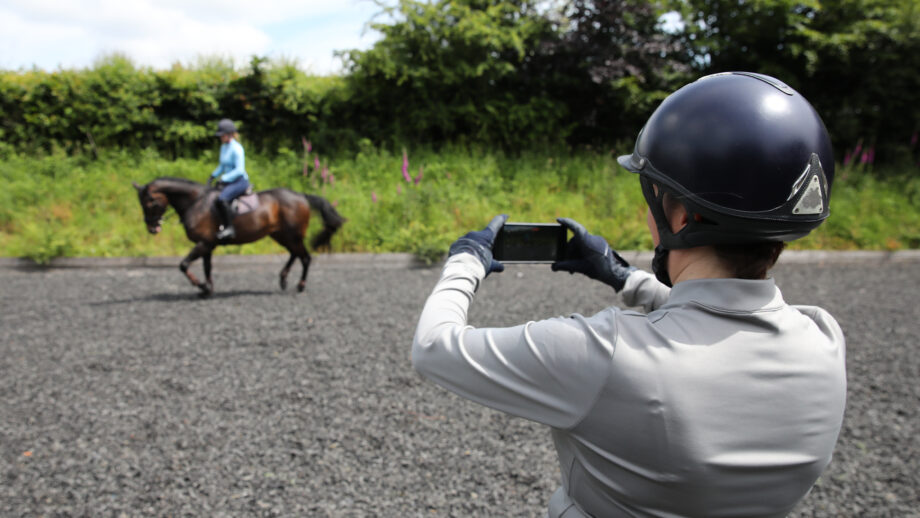
Perhaps this is where technology could help. Artificial intelligence (AI) could handle the mechanical elements: counting strides, verifying the number of changes, flagging any “misses”, and checking whether pirouettes or piaffe stayed within the correct parameters. In other words, AI could deal with the mathematics while human judges focus on what humans are actually good at: evaluating quality.
Used well, technology might make the sport fairer while freeing judges to concentrate on the nuances that really define great riding: harmony, subtlety and feel. There will, of course, be naysayers. But if AI could also take on winter yard duties – say, pushing wheelbarrows over frozen ground or breaking the ice on water buckets – I suspect even the most sceptical horse people might be tempted to sign up.
- What role, if any, should technology play in the future of dressage judging? Write to us at hhletters@futurenet.com, including your name, nearest town and county, for the chance to have your views published in a future issue of Horse & Hound magazine
To stay up to date with all the breaking news from major events, as well as exclusive insights from top names, subscribe to the Horse & Hound website
You might also enjoy reading:
Showing the public – and ourselves – that horses can enjoy their sport
How much can artificial intelligence boost our training – or is ‘feel’ everything?
We shouldn’t take riding horses for granted and we should tell others why we love it, says Pammy Hutton

Richard Davison calls for extra steps to ensure riders suspended for horse abuse change their training methods
Richard Davison: ‘Upholding the integrity of equestrian sport amid a media frenzy’
Subscribe to Horse & Hound magazine today – and enjoy unlimited website access all year round